
 Menu
Menu

Vestibular Rehabilitation
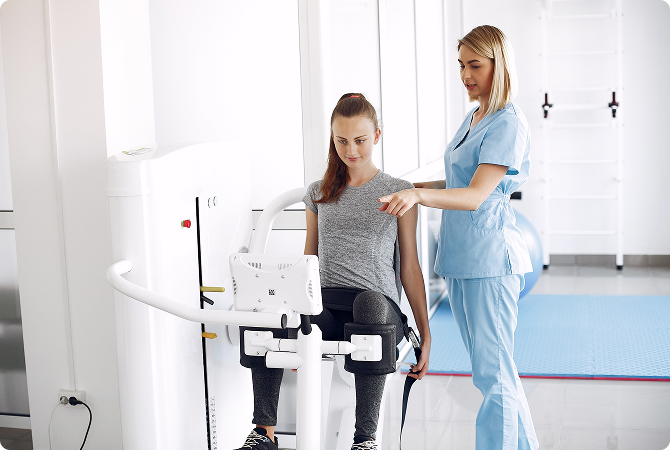
Rebuilding Stability with Vestibular Rehabilitation
Feeling unsteady, lightheaded, or off balance can make even simple movements feel uncertain. Turning your head, walking through a busy space, or bending down may suddenly require more attention than before.
Vestibular rehabilitation is a specialized form of physical therapy focused on restoring balance, improving stability, and helping your body adapt to movement again.
This program is designed to support recovery — not just manage symptoms — by retraining how your balance systems work together.
How Balance Works
Your sense of balance depends on three systems working together:
- The inner ear (vestibular system)
- Your vision
- Feedback from your muscles and joints
When these systems communicate clearly, movement feels steady. When communication is disrupted, you may notice dizziness, imbalance, or motion sensitivity.
Vestibular physical therapy focuses on improving how these systems coordinate during movement.
Why Symptoms Can Persist
After a vestibular disruption — such as an inner ear issue, concussion, or balance-related condition — your body may begin avoiding certain movements to prevent symptoms.
Over time, this avoidance can increase sensitivity. Head turns may feel uncomfortable. Walking in crowded areas may feel overwhelming. Quick movements may trigger unease.
Vestibular rehabilitation therapy (VRT) works by gradually reintroducing movement in a controlled way. This process helps your nervous system adapt and regain confidence in motion.
How Vestibular Rehabilitation Therapy Supports Recovery
Unlike passive treatments, vestibular rehabilitation exercises are active and movement-based.
Your program may include:
- Head and eye coordination exercises
- Gaze stabilization training
- Balance challenges on stable and unstable surfaces
- Gradual exposure to symptom-triggering positions
- Walking and mobility training
These exercises are progressed based on tolerance. The goal is not to eliminate all sensation immediately, but to improve how your body responds to movement over time.
Care is individualized. Exercises are selected based on your specific presentation and recovery needs.
Who This Program Is For
Vestibular rehabilitation may benefit individuals who are experiencing:
- Persistent dizziness
- Motion sensitivity
- Balance changes while walking
- Unsteadiness in busy or visually complex environments
- Recovery after inner ear conditions
- Balance concerns following concussion
For detailed information about specific conditions such as vertigo, please visit our dedicated condition page.
Common Questions About Vestibular Rehabilitation
What is vestibular rehabilitation therapy?
Vestibular rehabilitation therapy (VRT) is a structured physical therapy program designed to improve balance, reduce dizziness, and retrain coordination between the inner ear, eyes, and body.
Can physical therapy help with dizziness?
Yes. Physical therapy for dizziness focuses on movement retraining and gradual exposure exercises that help improve stability and reduce motion sensitivity.
Will exercises make my symptoms worse?
Some exercises may temporarily increase mild symptoms because they gently challenge the system. Programs are progressed carefully based on your tolerance.
How long does vestibular rehabilitation take?
The duration of vestibular therapy varies depending on the underlying issue and how your body adapts. Progression is based on response and functional improvement rather than a fixed timeline.
Related Programs
- Fall Prevention & Balance Programs
- Chronic Pain Management
- Pre- & Post-Surgical Rehabilitation
Learn More About Physical Therapy
If you’d like more information about what to expect during physical therapy, visit our Patient Resources page.
Get Started
If dizziness or balance changes are affecting your daily life, a physical therapy evaluation may help identify contributing movement factors and next steps for care.


