Techniques/Modalities

Home > Events > Techniques / Modalities

Manual Therapy

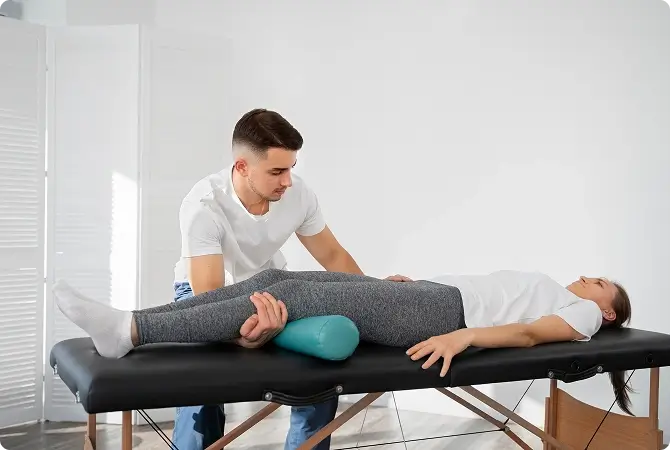
Manual therapy hands-on care

Manual therapy is a hands-on approach used in physical therapy to help improve comfort, reduce stiffness, and restore movement. It focuses on treating joints and soft tissues in a controlled way and may help improve range of motion and overall function.

Manual therapy is available at iMotion Physical Therapy in Fremont, Los Gatos, and San Jose, and it is often used as one part of a personalized plan of care.

How can manual therapy help?

Manual therapy (sometimes called hands-on physical therapy) may be helpful when pain, tightness, or stiffness is limiting how your body moves. It may support:

  • improved comfort during movement
  • reduced stiffness
  • improved joint mobility
  • improved range of motion
  • recovery after surgery
  • improved movement quality during daily activities

Manual therapy may be especially helpful for people dealing with joint stiffness, muscle tightness, or limited range of motion.

Manual therapy is often combined with other parts of physical therapy—such as guided exercise, movement training, and education—based on your needs and goals.

What to expect during manual therapy

Manual therapy is typically performed in short, focused segments. Your therapist may use hands-on techniques for a few minutes at a time, then reassess your movement to see how your body responds. Techniques are always adjusted based on your comfort and clinical needs.

It’s also normal to feel temporary soreness after treatment—similar to how you might feel after using muscles that haven’t been active in a while. If you experience soreness, it should improve as your body recovers, and your therapist can adjust your plan if needed.

Is manual therapy safe?

Yes. Manual therapy is a non-invasive treatment performed by trained physical therapists. Your therapist will assess your condition and select techniques that are appropriate for your symptoms, diagnosis, and comfort level.

Your therapist will explain what they’re doing and adjust the technique based on your feedback.

Common types of manual therapy

Manual therapy techniques may include:

Mobilization (Joint Mobilization) — for stiff or restricted joints

Mobilization is a gentle hands-on technique used to improve movement in a stiff or restricted joint. It is performed in a controlled way and may help improve mobility and comfort.

Soft Tissue Massage — for muscle tightness and restricted soft tissues

Soft tissue massage in physical therapy is focused and treatment-based (not spa-style). It is used to address muscle tightness and restricted soft tissues and may help improve comfort and mobility in the area being treated.

Manual Traction — gentle decompression to support movement and comfort

Manual traction involves applying a gentle, controlled pulling force to help reduce pressure and improve movement in certain areas of the body. It is commonly used for the neck but may also be used in other areas when appropriate.

Manual therapy is one part of your plan of care

Manual therapy is one tool your therapist may use to support your recovery. Your care plan is tailored to your goals and designed to help you improve movement, comfort, and function safely over time.

Manual therapy is a hands-on treatment approach used by physical therapists to help improve mobility, reduce stiffness, and support better movement and function.

Manual therapy is typically performed in a controlled and patient-specific way. You may feel pressure or stretching, but your therapist will adjust the technique based on your comfort level.

Soft tissue massage in physical therapy is treatment-based and focused on improving mobility and function. It is different from spa massage because it is performed as part of a clinical plan of care.

Your physical therapist will evaluate your movement, symptoms, and goals, then recommend the techniques that best fit your needs as part of your treatment plan.

Laser Therapy

Laser therapy treatment on lower leg

Laser therapy is a non-invasive treatment that uses focused light energy to support the body’s natural recovery process. LightForce® Class IV laser therapy is also referred to as photobiomodulation (PBM), a process where light interacts with tissue to support cellular activity.

At iMotion Physical Therapy, laser therapy is offered as an add-on service and is most effective when used in conjunction with physical therapy as part of a complete plan of care.

What is Laser Therapy used for?

Laser therapy is commonly used across rehabilitation and sports medicine settings for both acute and chronic musculoskeletal conditions. Your therapist will determine whether laser therapy is appropriate for your specific plan of care and goals.

What does Laser Therapy feel like?

Most patients describe laser therapy as comfortable. You may feel gentle warmth in the area being treated. LightForce notes that the primary safety risk is eye exposure, which is why protective eyewear is always required during treatment.

How long does Laser Therapy take?

Laser therapy sessions are typically short and targeted. Treatment usually takes only a few minutes, depending on the area being treated and the nature of the condition.

Because laser therapy delivers therapeutic energy efficiently, it can often be completed quickly within your visit.

How Laser Therapy fits into your plan of care

Laser therapy is not a replacement for physical therapy. It is used as an additional tool that may help improve comfort and support your ability to participate in movement-based treatment.

While laser therapy is encouraged in conjunction with physical therapy, anyone who is medically cleared may purchase laser therapy sessions, even if they are not currently receiving PT at iMotion.

Your therapist will guide you through a plan that may include:

  • hands-on therapy (when appropriate)
  • strengthening and mobility exercises
  • movement retraining
  • education for long-term results

Pricing & Packages (Cash-Based Service)

Laser therapy is a cash-based service and is not covered by insurance.

We offer:

  • Single laser therapy sessions
  • Discounted laser therapy packages

Our team can review current pricing and help you choose the best option based on your needs and treatment frequency.

Yes. LightForce states their therapy lasers are FDA-cleared for temporary relief of pain and increased micro-circulation. Protective eyewear is required during treatment.

Laser therapy is typically a quick add-on treatment and often takes only a few minutes.

Many patients feel little to no sensation, or a gentle warmth in the area being treated.

Not necessarily. Laser therapy is an optional add-on. Your therapist will recommend it only when it fits your condition, goals, and plan of care.

No. Laser therapy at iMotion is not covered by insurance and is provided as a cash-based service.

Yes. While laser therapy is often most helpful when paired with a full physical therapy plan, anyone who is medically cleared may purchase laser therapy sessions, even if they are not currently receiving PT at iMotion.

Call your nearest iMotion Physical Therapy clinic and ask about adding LightForce® Laser Therapy to your plan of care.

Shockwave Therapy

Shockwave therapy

Shockwave therapy—also known as Extracorporeal Shockwave Therapy (ESWT)—is a non-invasive treatment that uses acoustic (sound) waves applied through the skin to support recovery in certain musculoskeletal conditions. It is often used for longer-lasting (chronic) pain, especially in tendon-related issues where symptoms may be slower to resolve.

At iMotion Physical Therapy, we provide shockwave therapy using the Shock Vitalize device as an added treatment option when appropriate.

What is Shockwave Therapy used for?

Shockwave therapy is commonly used for chronic musculoskeletal conditions, particularly those involving tendon pain and tendon attachments to bone. Cleveland Clinic notes ESWT is primarily used for chronic conditions, especially medium to large tendons and their insertions.

At iMotion, shockwave therapy may be used as part of care for conditions such as:

  • Plantar fasciitis (heel pain)
  • Tennis elbow (lateral elbow pain)
  • Neck/shoulder tightness, including the upper trapezius (upper shoulder) area

Shockwave therapy is commonly used as therapy for plantar fasciitis and tennis elbow, and it may be recommended based on your evaluation and goals.

Your therapist will determine if shockwave therapy is appropriate based on your symptoms, goals, and plan of care.

Who is a good fit for Shockwave Therapy?

Shockwave therapy may be a good fit if you:

  • have tendon-related pain that has lasted several weeks or longer
  • have persistent stiffness or discomfort that isn’t improving as expected
  • want an added treatment option to support your recovery plan

What does Shockwave Therapy feel like?

During treatment, you may feel tapping, pulsing, or pressure in the area being treated. Some patients find it mildly uncomfortable, especially over sensitive tissue, but intensity can typically be adjusted based on your tolerance.

What to expect after shockwave therapy

You may have temporary soreness or tenderness in the treated area after your session. This is normal for many patients. Your therapist will guide you on what activities to do (or avoid) that day based on your plan of care.

How long does Shockwave Therapy take?

Shockwave treatments are usually brief and targeted, and are often completed within a few minutes depending on the area being treated and your therapist’s plan.

How Shockwave Therapy fits into your plan of care

Shockwave therapy is not a replacement for physical therapy. It is often used as an additional tool to support progress—especially when combined with a plan that includes mobility work, strengthening, and movement retraining.

Your therapist will guide you through an individualized plan designed to help you return to daily activity, work, and recreation as safely as possible.

Shockwave therapy is widely used as a noninvasive treatment option for certain musculoskeletal conditions.

Your therapist will screen for whether it’s appropriate based on your condition and medical history.

Evidence supports shockwave therapy for certain conditions. For example, research has found shockwave therapy to be effective for improving pain, function, and quality of life in plantar fasciitis under specific treatment protocols.

Results can vary depending on the condition being treated and how long symptoms have been present.

The number of sessions depends on your condition and how your body responds. Your therapist will recommend a plan based on your goals and clinical findings.

Shockwave therapy can cause temporary discomfort during treatment. The intensity can usually be adjusted, and your therapist will communicate with you throughout the session.

No. Shockwave therapy is most effective when used alongside a full physical therapy plan, including movement-based treatment and guided strengthening.

Schedule an evaluation and your therapist will recommend the best options for your condition and goals.

Compression Therapy

Compression therapy

Compression therapy is a recovery-focused treatment that uses dynamic air pressure to gently compress the legs in a rhythmic pattern. At iMotion Physical Therapy, we use Hyperice Normatec® leg compression boots to help support circulation and recovery and improve overall comfort—especially after activity or a physically demanding day.

What is Compression Therapy?

Compression therapy with Normatec® uses inflatable chambers inside the boots to create a sequential “wave” of pressure up the legs. Hyperice describes Normatec as a dynamic air compression system designed to increase circulation and support recovery.

This is a comfortable, passive treatment where you sit back and relax while the boots cycle through controlled compression.

What can Compression Therapy help with?

Compression therapy may be a helpful option if you experience:

  • leg heaviness or tightness
  • general muscle soreness after workouts
  • fatigue from standing or walking for long periods
  • recovery needs between physical therapy sessions

Your therapist can help determine if compression therapy makes sense based on your goals and activity level.

What does Compression Therapy feel like?

Most patients describe Normatec® as a firm but comfortable squeezing sensation that moves up the legs in cycles. The pressure level can be adjusted based on your comfort.

How long does Compression Therapy take?

Compression therapy sessions typically last 15–30 minutes, depending on your needs and what your therapist recommends.

What should I wear?

For the easiest setup, we recommend:

  • shorts, or loose pants that can be rolled above the knee
  • comfortable clothing that allows you to relax during treatment

You will be seated or reclined while using the boots.

How Compression Therapy fits into your plan of care

Compression therapy is not a replacement for physical therapy, but it can be a helpful add-on. Many patients use it before or after therapy to help their legs feel more comfortable as they return to exercise, activity, or daily movement.

It may be paired with:

  • strengthening and mobility exercises
  • movement retraining
  • hands-on treatment (when appropriate)
  • education for long-term progress

You will be seated or reclined while using the boots.

Important note

Compression therapy at iMotion is intended as a comfort and recovery add-on. If you have a medical condition that affects circulation, a history of blood clots, or significant swelling, check with your medical provider to confirm whether compression is appropriate.

Normatec® is a dynamic air compression system by Hyperice that delivers rhythmic pressure through multiple overlapping zones in the legs to support circulation and recovery.

Compression therapy is designed to support circulation through dynamic, sequential pressure in the legs.

Your therapist can help determine if it’s a good fit for your specific recovery needs.

Compression therapy should not be painful. It may feel firm, but it should stay within a comfortable range. If anything feels uncomfortable, your therapist can adjust the settings.

Frequency depends on your goals, activity level, and plan of care. Your therapist can recommend how often to use compression therapy based on how your body responds.

Yes. Compression therapy can be helpful for anyone who experiences leg fatigue, tightness, or soreness—whether it’s from exercise, long workdays, or returning to activity.

Ask your therapist or front desk team about adding Hyperice Normatec® compression therapy to your visit.

Ultrasound Therapy

Kinesiology tape application

Ultrasound therapy is a treatment used in physical therapy that applies high-frequency sound waves to targeted areas of the body. During treatment, a therapist uses a handheld device (called a transducer) and ultrasound gel to deliver the sound waves through the skin.

At iMotion Physical Therapy, ultrasound may be used as an added treatment when appropriate, often alongside exercise and hands-on care.

What is Ultrasound Therapy used for?

Therapeutic ultrasound has been used in physical therapy to support care for certain musculoskeletal conditions. For example, continuous therapeutic ultrasound has been used for conditions such as osteoarthritis, soft tissue shoulder conditions, and myofascial pain.

Your therapist will recommend ultrasound only if it matches your symptoms, clinical findings, and plan of care.

What does Ultrasound Therapy feel like?

Ultrasound therapy is typically gentle and comfortable. Some patients notice mild warmth in the treated area, while others feel very little during the treatment itself. Not feeling a strong sensation does not mean the treatment isn’t working—your therapist selects the settings based on your condition and treatment goals

How will I know if it’s helping?

Many patients notice the benefit after treatment, such as feeling less stiff, moving more comfortably, or being able to tolerate stretching and exercise more easily. Your therapist will also reassess your mobility and symptoms during your visit to see how your body responds and decide whether ultrasound should remain part of your plan of care.

How long does Ultrasound Therapy take?

Ultrasound treatment is usually brief and can often be completed in just a few minutes as part of your session, depending on the area being treated and your therapist’s plan.

Is Ultrasound Therapy safe?

Therapeutic ultrasound is widely used in rehabilitation settings, and your therapist will determine whether it is appropriate based on your condition and medical history.

How Ultrasound Therapy fits into your plan of care

Ultrasound therapy is not a replacement for physical therapy. It is one tool that may be used to support your comfort and movement as part of a complete treatment plan that may include:

  • strengthening and mobility exercises
  • movement retraining
  • hands-on treatment (when appropriate)
  • education and guidance for long-term progress

Ultrasound therapy should not be painful. It is generally comfortable, and your therapist can adjust settings based on your comfort and clinical needs.

That depends on your condition and overall plan of care. Your therapist will recommend the best approach based on your symptoms, goals, and progress.

No. Ultrasound is an add-on technique. It is most helpful when paired with movement-based treatment, strengthening, and a personalized plan for recovery.

Schedule an evaluation or ask your therapist whether ultrasound may be appropriate for your plan of care.

Cupping Therapy

Mulligan technique

Cupping therapy is a hands-on technique that uses suction cups placed on the skin to create gentle negative pressure. In physical therapy, cupping is often used to help reduce muscle tightness, improve mobility, and support recovery as part of a larger treatment plan.

At iMotion Physical Therapy, cupping may be used as an added technique when it fits your symptoms, goals, and plan of care.

What is Cupping Therapy used for?

Cupping therapy is commonly used to support:

  • muscle tightness and tension
  • stiffness and restricted mobility
  • recovery and movement comfort during rehabilitation

Many patients report feeling looser and more comfortable in the treated area after cupping.

What does Cupping Therapy feel like?

Most patients feel a pulling or pressure sensation under the cups. It should not feel sharply painful. Your therapist will adjust the intensity based on your comfort level.

What to expect after cupping

Cupping commonly leaves circular marks that can look like bruises. These marks are typically temporary and fade over time.

Some patients may also feel mild soreness in the treated area, similar to how you might feel after targeted soft tissue work.

Is Cupping Therapy safe?

Cupping is generally considered low-risk when performed appropriately, but it isn’t used in every situation. Cupping should not be performed over areas with open wounds, skin irritation, infection, or burns.

Your therapist will always screen to make sure cupping is appropriate for you.

How Cupping Therapy fits into your plan of care

Cupping therapy is not a replacement for physical therapy. It is one technique that may be used to support mobility, comfort, and movement quality—especially when combined with:

  • strengthening and mobility exercises
  • movement retraining
  • hands-on treatment (when appropriate)
  • education to support long-term progress

Cupping usually feels like pressure or pulling. It should stay within a tolerable, comfortable range, and your therapist can adjust the intensity.

Marks are temporary and fade over time.

Yes. Mild soreness can happen for some patients, especially in areas that were already tight or sensitive.

Yes. If cupping is appropriate for your condition and goals, your therapist may incorporate it into your session.

Schedule an evaluation or ask your therapist whether cupping may be a helpful addition to your plan of care.

Kinesiology Taping

TENS or e-stim device

Kinesiology taping is a technique used in physical therapy to provide support to muscles and joints without restricting movement. It uses a thin, flexible tape applied to the skin to help support movement, reduce discomfort, and improve function during daily activities and rehabilitation. (hss.edu)

At iMotion Physical Therapy, kinesiology taping may be recommended as one part of your personalized plan of care.

What is kinesiology taping used for?

Kinesiology taping may be used to support recovery and movement in a variety of situations, including:

  • reducing discomfort during daily activity
  • supporting a joint or muscle while it heals
  • helping manage swelling in certain cases
  • improving movement awareness and body mechanics
  • improving confidence as you return to exercise, sports, or normal routines

Your physical therapist will determine whether kinesiology taping fits your symptoms, goals, and overall plan.

How can kinesiology taping help?

Kinesiology taping may support your recovery in a few key ways:

Decreasing swelling

Injury, surgery, or overuse can result in swelling. Kinesiology tape is commonly applied in a way that supports fluid movement in the area and may help reduce swelling and improve comfort. (physio-pedia.com)

Relieving pain

Some patients find that kinesiology taping helps reduce discomfort during movement by offering light support and improving movement tolerance during daily activities. (hss.edu)

Stabilizing joints (without limiting movement)

Kinesiology taping may provide added support to certain joints or muscles while still allowing natural motion—unlike rigid athletic tape, which is designed to restrict movement. (hss.edu)

Supporting scar tissue mobility (when appropriate)

In some cases, your therapist may use taping techniques to support mobility and comfort in areas affected by stiffness or tissue restriction following injury or surgery.

What does kinesiology taping feel like?

Kinesiology tape is lightweight and flexible, and most patients get used to it quickly. Once applied, it should feel supportive but not tight or restrictive.

Your therapist will apply the tape in a way that works with your body’s movement. If anything feels uncomfortable or irritating, let your therapist know so it can be adjusted.

How will I know if kinesiology taping is helping?

Many patients notice benefits like:

  • feeling more supported during movement
  • less discomfort during daily tasks
  • improved confidence using the affected area
  • easier participation in exercise or therapy activities

Your therapist will assess your movement and symptoms to decide whether kinesiology taping should be a part of your plan.

How long does kinesiology tape stay on?

Kinesiology tape is designed to stay on for more than one day, but at iMotion Physical Therapy we typically recommend wearing it for up to 48 hours to help reduce the risk of skin irritation. Your therapist will give you guidance on how long to keep it on and how to remove it safely.

Is kinesiology taping safe?

Kinesiology taping is generally safe when applied by a trained professional. If you have sensitive skin, allergies, or a history of skin irritation, let your therapist know before taping.

Kinesiology taping should not be applied over open wounds, active skin infections, or irritated skin.

Kinesiology taping is one part of your plan of care

Kinesiology taping is one tool your therapist may use to support your recovery, alongside treatments such as:

  • hands-on therapy (when appropriate)
  • mobility and strengthening exercises
  • movement training
  • patient education

Your plan is tailored to your needs and designed to help you move better and feel more confident over time.

Kinesiology tape is a thin, flexible therapeutic tape used to support muscles and joints without limiting range of motion. (hss.edu)

Not exactly. Kinesiology tape is designed to stretch and move with the body, while traditional athletic tape is often more rigid and used to restrict movement for stability. (hss.edu)

Kinesiology taping does not replace physical therapy or exercise. It may help support movement and comfort, but the best long-term results come from a complete plan of care.

In many cases, yes. Your therapist can give you tips for keeping the tape on and removing it safely.

Your physical therapist will evaluate your symptoms and movement and recommend taping if it fits your treatment goals.

Schedule an evaluation or ask your therapist whether kinesiology taping may be a helpful addition to your physical therapy plan.

Mulligan Technique

TENS or e-stim device

Mulligan’s Concept is a manual therapy approach used in physical therapy to help reduce pain and improve joint mobility through hands-on treatment combined with active, natural movement. It was developed by New Zealand physical therapist Brian Mulligan and is based on the idea that certain movements may become painful or restricted, and may improve when the right mobilization is paired with functional motion.

At iMotion Physical Therapy, Mulligan’s Concept may be recommended as one part of your personalized plan of care.

What is Mulligan’s Concept used for?

Mulligan’s Concept may be used to support recovery and function in a variety of situations, including:

  • reducing pain and stiffness
  • improving joint mobility in a tolerable way
  • supporting more comfortable daily activity
  • addressing “positional faults” that may contribute to symptoms
  • helping with both acute and chronic joint pain

How can Mulligan’s Concept help?

Mulligan’s Concept includes two key methods:

Mobilizations With Movement (MWMs)

Used for the extremities (arms and legs). A gentle mobilization is applied while you perform a movement, which may help improve mobility and decrease discomfort.

Sustained Natural Apophyseal Glides (SNAGs)

Used for the spine. Mobilization is combined with active movement to support improved mobility and reduce symptoms.

A core guideline of Mulligan’s Concept is simple: treatment should not be painful. Techniques are applied in a way that supports comfort and control instead of forcing through pain.

What does Mulligan treatment involve?

Depending on your needs, Mulligan care may include tools such as:

  • foam pads
  • mobilization belts

These methods are designed to create effective changes that carry over outside the clinic, including home-based mobility work when appropriate.

What does Mulligan’s Concept feel like?

Mulligan techniques are designed to feel comfortable and controlled. In most cases, you may feel:

  • gentle pressure or support at the joint
  • smoother, easier movement while the technique is performed
  • improved comfort compared to what you felt before

If anything feels uncomfortable or aggravates symptoms, the approach can be modified.

How will I know if Mulligan’s Concept is helping?

Many patients notice improvements such as:

  • less pain with activity
  • increased range of motion
  • reduced stiffness
  • improved tolerance of daily tasks
  • improved confidence using the affected area

Progress is monitored over time to determine what best supports your recovery.

Mulligan’s Concept is one part of your plan of care

Mulligan’s Concept is one tool that may be used to support your recovery, alongside treatments such as:

  • hands-on therapy (when appropriate)
  • mobility and strengthening exercises
  • movement training
  • patient education

Your plan is tailored to your needs and designed to help you move better and feel more confident over time.

Mulligan’s Concept is a manual therapy approach that combines joint mobilization with active movement to help improve mobility and reduce pain.

A key rule of Mulligan’s Concept is that treatment should not be painful. The technique can be adjusted based on comfort and response.

Mulligan’s Concept may be used for both acute and chronic conditions, depending on the cause of symptoms and the overall plan of care.

TENS / E-stim

TENS or e-stim device

Electrical stimulation is a treatment used in physical therapy to support pain relief and recovery for a variety of conditions. It typically uses small, self-adhesive electrodes placed on the skin near the area being treated. These electrodes connect to a unit that delivers a gentle electrical current designed to interact with sensory and/or motor nerves.

At iMotion Physical Therapy, electrical stimulation may be recommended as one part of your personalized plan of care.

What is electrical stimulation used for?

Electrical stimulation may be used to support recovery and function in a variety of situations, including:

  • helping reduce pain (acute or chronic)
  • decreasing muscle tightness or spasm
  • improving tolerance to movement and daily activity
  • supporting muscle activation and retraining (when appropriate)

What’s the difference between TENS and NMES?

We may use different types of electrical stimulation depending on the goal of treatment.

TENS (Transcutaneous Electrical Nerve Stimulation)

TENS is most commonly used for pain relief. It works by stimulating sensory nerves to help reduce the sensation of pain and improve comfort during movement.

NMES (Neuromuscular Electrical Stimulation)

NMES is sometimes used to help activate a muscle that is weak or difficult to engage, especially during rehabilitation or after injury.

What does electrical stimulation feel like?

Most patients describe electrical stimulation as a mild sensation, such as:

  • tingling
  • buzzing
  • a light pulsing feeling

When used for muscle activation, the sensation can feel stronger and the muscle may visibly contract. It may be slightly uncomfortable at times, but it should not be painful. Intensity can be adjusted to your comfort level throughout treatment.

What happens during electrical stimulation treatment?

Electrical stimulation is typically performed while you’re seated or lying comfortably, with settings adjusted based on your goals and tolerance.

How will I know if electrical stimulation is helping?

Many patients notice changes such as:

  • less pain during activity
  • improved tolerance to exercise or therapy
  • reduced muscle tightness or spasm
  • improved ability to use or activate a muscle during rehab (when NMES is used)

Your response may be immediate, gradual, or vary depending on what is being treated

Is electrical stimulation safe?

Electrical stimulation is generally safe when used appropriately. Before treatment, we screen for contraindications to make sure it is a safe option for you.

Electrical stimulation may not be appropriate for individuals with certain medical conditions or implanted devices. Your provider will review your health history and determine whether electrical stimulation is appropriate for your plan of care.

Electrical stimulation is one part of your plan of care

Electrical stimulation may be used alongside other physical therapy treatments such as:

  • hands-on therapy (when appropriate)
  • mobility and strengthening exercises
  • movement training
  • patient education

Electrical stimulation can support recovery, and it works best as part of a complete plan of care.

Electrical stimulation should not be painful. Most patients feel a mild tingling or pulsing sensation, and the intensity can be adjusted to your comfort level.

TENS is one type of electrical stimulation that is commonly used for pain relief.

Electrical stimulation may be used for a variety of conditions, including repetitive stress injuries, ligament sprains, muscle strains, acute sports or auto accident-related injuries, and certain neurological conditions such as stroke.

Treatment time can vary depending on your plan, but it is often used as a short portion of a therapy session.

Aquatic Therapy

TENS or e-stim device

Aquatic therapy is a type of physical therapy treatment that takes place in water, typically in an in-clinic pool. It is also commonly known as hydrotherapy or aquatic rehabilitation. Because water provides natural support and gentle resistance, aquatic therapy can be a helpful option for improving comfort with movement while you recover.

At iMotion Physical Therapy, aquatic therapy is currently offered at our San Jose location.

What is aquatic therapy used for?

Aquatic therapy may be used for a variety of therapy goals, including:

  • improving comfort with movement during rehabilitation
  • building muscle strength and endurance in a supported environment
  • improving coordination and balance
  • assisting with locomotion and gait training
  • improving flexibility, mobility, and overall conditioning

How does aquatic therapy work?

Aquatic therapy sessions are structured and take place entirely in the water. Most sessions begin with a warm-up using gentle, low-resistance exercises for both the upper and lower extremities. This may include brief walking and light stretching.

From there, exercises may progress into more challenging cardiovascular and core-based activities, such as running, squatting, arm swings, and leg swings.

Exercises are selected and progressed based on your symptoms, goals, and movement quality.

After the session, you may also go through a cool-down. Many clinics include tools such as a massage hose, which can feel similar to a deep tissue massage and help you relax after your workout.

What can I gain from aquatic therapy?

Water’s natural properties create a therapeutic environment that can support movement and recovery. Water-based therapy has also been used for centuries across many cultures.

The ancient Romans and Greeks bathed in hot springs for relaxation and to improve circulation. Hippocrates believed hot springs could heal sickness. Swiss monks were well known to use thermal waters to treat sick people. The Japanese use hot springs to treat skin problems and relieve chronic pain.

Aquatic therapy can help with:

  • building muscle strength and endurance
  • reducing stress and promoting relaxation
  • increasing aerobic capacity for better health
  • improving coordination and balance
  • improving flexibility and movement
  • assisting with locomotion and gait

Aquatic therapy may be added to your current physical therapy plan based on your needs and your therapist’s recommendations.

Why choose aquatic therapy?

Aquatic therapy offers benefits that can be difficult to replicate on land, including:

Relief

Aquatic therapy can help provide relief for many conditions, including arthritis, chronic pain, lower back pain, orthopedic injuries, sprains, strains, and tendonitis.

Improved breathing

The respiratory muscles may work harder during aquatic therapy, which can help support improved breathing.

Relaxation

Aquatic therapy provides a soothing environment for aching muscles and joints.

Buoyancy

Water’s natural buoyancy reduces the effects of gravity, which can make movement feel easier and less uncomfortable.

Hydrostatic pressure

Hydrostatic pressure provides support during movement and can help you feel more stable while performing exercises.

Resistance

Water provides natural resistance that can be used to strengthen muscles and support rehabilitation.

Wave propagation/turbulence

Wave propagation and turbulence allow your physical therapist to gently manipulate your body during exercises and movement training.

What should I expect during aquatic therapy?

Aquatic therapy is performed in the water using guided exercises selected for your needs and tolerance. Your program may include a warm-up, strengthening and movement activities, and a cool-down depending on your plan of care.

Aquatic therapy is one part of your plan of care

Aquatic therapy is one tool your physical therapist may use to support your recovery, alongside treatments such as:

  • mobility and strengthening exercises
  • movement training
  • patient education
  • hands-on therapy (when appropriate)

Your plan is tailored to your needs and designed to help you move better and feel more confident over time.

Aquatic therapy is a form of physical therapy performed in water—usually in an in-clinic pool—to support mobility, recovery, and improved comfort with movement.

Many people find aquatic therapy relaxing and supportive, especially because movement in water often feels easier than movement on land.

Yes. At iMotion Physical Therapy, aquatic therapy is currently offered at our San Jose location.

IASTM

TENS or e-stim device

Instrument Assisted Soft Tissue Mobilization (IASTM)

Instrument Assisted Soft Tissue Mobilization (IASTM) is a manual physical therapy technique used to reduce pain and improve movement. It involves using specialized plastic or metal tools to gently glide along the skin and soft tissue in targeted areas.

At iMotion Physical Therapy, IASTM may be recommended as one part of your personalized plan of care.

What is IASTM used for?

IASTM may be used to address soft tissue restrictions and pain associated with a variety of conditions, including:

  • neck and back pain
  • muscle tightness and myofascial restrictions
  • tendon irritation (including Achilles, patellar, and rotator cuff tendonitis)
  • plantar fasciitis and heel pain
  • tennis or golfer’s elbow
  • IT band syndrome
  • muscle strains and ligament sprains
  • post-surgical or traumatic scar tissue restrictions

IASTM may also be used for other overuse injuries and movement-related pain, depending on your symptoms and goals.

How can IASTM help?

Most hands-on physical therapy techniques are performed using the therapist’s hands, but instruments can offer additional benefits. IASTM tools can help identify and address areas of soft tissue tightness and restriction with added precision.

With certain levels of pressure applied to muscles, tendons, or ligaments, IASTM may trigger a mild inflammatory response. While that may sound counterintuitive, this response can support the body’s natural healing process.

IASTM may also help improve mobility in areas affected by adhesions or scar tissue that can develop after surgery, injury, repetitive use, or immobilization.

What can I expect with IASTM?

During IASTM, a specialized tool is used over the target area. You may feel pressure or a scraping sensation in areas of tightness. The technique can be adjusted based on your comfort and response.

It is also common to experience temporary redness, tenderness, or mild soreness after treatment.

How will I know if IASTM is helping?

IASTM has been shown to help support improvements such as:

  • reduced pain with movement
  • improved muscle recruitment
  • increased range of motion
  • improved motor control

Progress is monitored over time to determine what is most helpful for your recovery.

IASTM is one part of your plan of care

IASTM is one tool that may be used alongside treatments such as:

  • mobility and strengthening exercises
  • movement training
  • patient education
  • hands-on therapy (when appropriate)

IASTM is often followed by exercise or movement training to help carry improvements into daily activity.

Your plan is tailored to your needs and designed to help you move better and feel more confident over time.

IASTM stands for Instrument Assisted Soft Tissue Mobilization, a technique that uses specialized tools to treat soft tissue restrictions.

IASTM can feel intense in areas of tightness, but it should be tolerable. Pressure and technique can be adjusted based on your comfort.

IASTM may be used for a wide range of conditions, including tendonitis, muscle strains, sprains, plantar fasciitis, scar tissue restrictions, and pain related to soft tissue tightness.

The number of sessions varies depending on your condition and goals. Your plan of care will be based on your evaluation and response to treatment.

Myofascial Release

TENS or e-stim device

Are you living with stiff or tight muscles? If so, you may be experiencing myofascial pain caused by muscular irritation. Myofascial release treatments at iMotion Physical Therapy may help reduce pain and support improved movement, so you can return to daily life with more comfort.

If stiffness or tightness is limiting your day-to-day activities, myofascial release may be a helpful option.

How can myofascial release help?

Myofascial release is a type of physical therapy treatment in the form of massage that helps alleviate pain by relieving tension within the affected muscles. Our physical therapists are trained in myofascial release and understand what specific pressure points to focus on in order to bring fascia back to a more elastic form.

What conditions can myofascial release treat?

When muscles become constricted or tight, it can significantly impact mobility and lead to pain and limitations with movement. Myofascial release works to reverse this by loosening constricted muscles and allowing for easier movement.

There are several conditions that can be treated with myofascial release. Some of the most common include:

Myofascial pain syndrome

This is the most commonly treated condition through myofascial release, and it can affect many muscles. The trigger points are determined and then massaged out.

Injury

Injuries can also cause muscle stiffness. The affected area is massaged to loosen the muscles and allow for a quicker healing process.

Chronic headaches/migraines

Myofascial release has also been known to relieve the pain of chronic headaches and migraines by massaging tightened muscles around the head and neck.

Carpal tunnel syndrome

Patients with carpal tunnel syndrome can benefit from myofascial release by having the muscles in the hands, wrists, and/or arms massaged in order to improve function and mobility.

Fibromyalgia

This condition can also cause stiffness in multiple muscles. The affected areas are determined and then massaged.

Temporomandibular joint disorder

The muscles around the jaw are massaged through myofascial release in many patients with temporomandibular joint disorder. This decreases pain and inflammation, as well as increases mobility of the jaw.

Venous insufficiency

Myofascial release can help reduce the amount of blood pooled in the veins and allow for more efficient blood flow, decreasing the pain felt in the veins.

If you have been diagnosed with one of the conditions listed above, contact iMotion Physical Therapy today.

What can I expect with myofascial release?

Myofascial release is performed through hands-on pressure and massage to areas of tightness. Pressure can be adjusted based on your comfort.

Myofascial release is one part of your plan of care

Myofascial release may be included as part of your treatment plan depending on your needs. It is often paired with other physical therapy treatments such as:

  • mobility and strengthening exercises
  • movement training
  • patient education
  • hands-on therapy (when appropriate)

Myofascial release is a physical therapy technique in the form of massage that helps alleviate pain by relieving tension within affected muscles and fascia.

If stiff or tight muscles are limiting your daily life, myofascial release may be beneficial. Your physical therapist can help determine whether it fits your treatment plan.

If stiffness or tightness is limiting your daily life, request an appointment. We’ll evaluate your symptoms and discuss whether myofascial release may be a helpful part of your plan of care.

Mowry Clinic

(Neuro & Parkinson's Rehab)

555 Mowry Ave, Ste E Fremont, CA 94536

Lake Clinic

(Orthopedic Rehab)

39737 Paseo Padre Parkway, Fremont, CA 94536

San Jose Clinic

(Land & Aquatic Therapy)

730 Empey Way San Jose, CA 95128

Los Gatos Clinic

(Land Therapy)

14901 National Ave, Suite 102 Los Gatos, CA 95032

Book Your Appointment