
 Menu
Menu

Elbow, Wrist, & Hand
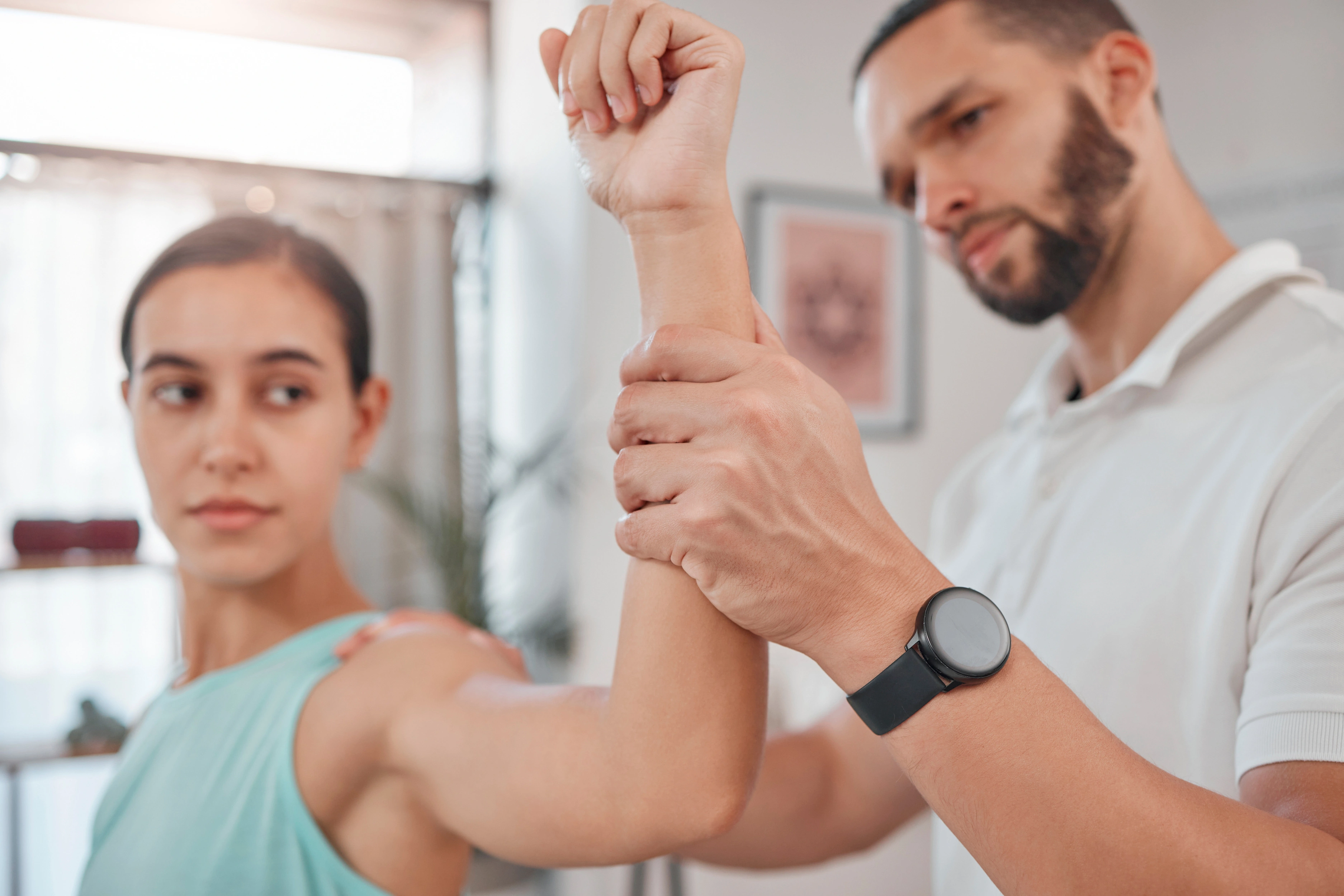
The elbow, wrist, and hand work together to help you move, lift, reach, grip, and interact with the world around you. Nearly everything you do with your upper body—from large movements to fine detail work—depends on these areas working smoothly together.
When one area is irritated or not moving comfortably, the others often have to compensate. Because these joints are used constantly throughout the day, even small changes in movement can affect comfort, strength, coordination, and confidence with daily tasks.
A Simple Look At How They Work
The elbow allows the arm to bend, straighten, and rotate. This helps position the hand where you need it, whether you’re reaching overhead, pulling something toward you, or pushing away from a surface.
The wrist connects the forearm to the hand and allows controlled movement in multiple irections. It helps absorb force and fine-tune hand position during activities like lifting, typing, or weight-bearing.
The hand is made up of many small bones, joints, muscles, and tendons that support grip, coordination, and fine motor control. It allows you to hold objects, write, use tools, and perform precise movements.
Together, the elbow, wrist, and hand rely on bones, joints, muscles, tendons, ligaments, and nerves working as a connected system rather than as separate parts.
How The Elbow, Wrist, And Hand Affect Daily Life
When the elbow, wrist, or hand isn’t moving comfortably, everyday activities can become harder, slower, or more tiring. People may notice difficulty with:
- Gripping or holding objects
- Lifting, pushing, or pulling
- Typing, writing, or using a phone
- Reaching, carrying, or supporting body weight
- Work tasks, household chores, or recreational activities
Symptoms may develop gradually or suddenly and often change throughout the day depending on activity level and use.
What You Might Be Noticing
You don’t need to know exactly what’s “wrong” to get started. These common experiences can help guide you to the right place:
- Pain after a fall or sudden injury → Elbow, Wrist, and Hand Injuries
- A twist, overstretch, or soreness with use → Strains and Sprains
- A known break or recovery after a cast or splint → Fractures
- Pain that builds with training, exercise, or sport → Sports Injuries
- Numbness, tingling, or “pins and needles” → Nerve-Related Conditions
How Physical Therapy Can Help
Physical therapy for the elbow, wrist, and hand focuses on improving how these areas move and work together during daily activities. Care is guided by function—how you move, what feels ifficult, and what you need to do each day—rather than by diagnosis alone.
Physical therapy may help support:
- Comfortable movement and joint mobility
- Strength and coordination
- Tolerance for daily tasks, work, and activity
- Recovery after injury, strain, or immobilization
Many elbow, wrist, and hand problems improve with the right plan and a gradual return to activity.
Frequently Asked Questions
The elbow, wrist, and hand work as a connected system. When one area is irritated or limited, nearby joints and muscles often change how they move to compensate.
Yes. Symptoms often change based on activity level, posture, and how much the arm or hand is being used.
Not always. Many movement-related issues can be evaluated based on symptoms and function, especially when pain or stiffness changes with activity.
Yes. Physical therapy focuses on improving movement, strength, and daily function, regardless of whether a specific diagnosis has been identified.
Learn More About Physical Therapy
If you’d like more information about what to expect during physical therapy, visit our Patient Resources page.
Get Started
If elbow pain, wrist pain, or hand pain is affecting your daily life, a physical therapy evaluation can help identify contributing factors and guide appropriate next steps for care.


