
 Menu
Menu

Shockwave Therapy
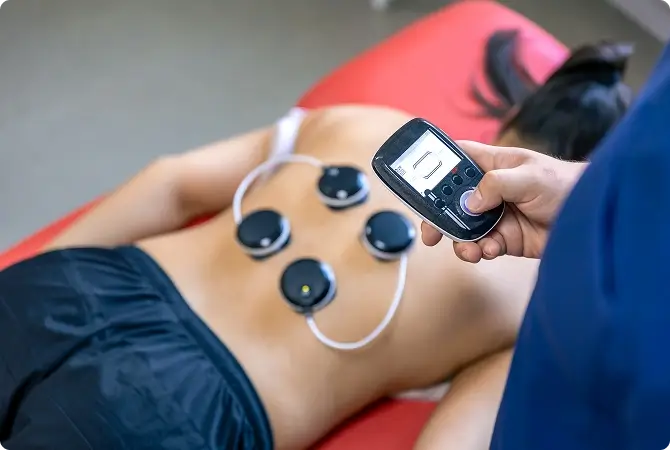
Shockwave therapy—also known as Extracorporeal Shockwave Therapy (ESWT)—is a non-invasive treatment that uses acoustic (sound) waves applied through the skin to support recovery in certain musculoskeletal conditions. It is often used for longer-lasting (chronic) pain, especially in tendon-related issues where symptoms may be slower to resolve.
At iMotion Physical Therapy, we provide shockwave therapy using the Shock Vitalize device as an added treatment option when appropriate.
What is Shockwave Therapy used for?
Shockwave therapy is commonly used for chronic musculoskeletal conditions, particularly those involving tendon pain and tendon attachments to bone. ESWT is primarily used for chronic conditions, especially medium to large tendons and their insertions.
At iMotion, shockwave therapy may be used as part of care for conditions such as:
- Plantar fasciitis (heel pain)
- Tennis elbow (lateral elbow pain)
- Neck/shoulder tightness, including the upper trapezius (upper shoulder) area
Shockwave therapy is commonly used as therapy for plantar fasciitis and tennis elbow, and it may be recommended based on your evaluation and goals.
Your therapist will determine if shockwave therapy is appropriate based on your symptoms, goals, and plan of care.
Who is a good fit for Shockwave Therapy?
Shockwave therapy may be a good fit if you:
- have tendon-related pain that has lasted several weeks or longer
- have persistent stiffness or discomfort that isn’t improving as expected
- want an added treatment option to support your recovery plan
What does Shockwave Therapy feel like?
During treatment, you may feel tapping, pulsing, or pressure in the area being treated. Some patients find it mildly uncomfortable, especially over sensitive tissue, but intensity can typically be adjusted based on your tolerance.
What to expect after shockwave therapy
You may have temporary soreness or tenderness in the treated area after your session. This is normal for many patients. Your therapist will guide you on what activities to do (or avoid) that day based on your plan of care.
How long does Shockwave Therapy take?
Shockwave treatments are usually brief and targeted, and are often completed within a few minutes depending on the area being treated and your therapist’s plan.
How Shockwave Therapy fits into your plan of care
Shockwave therapy is not a replacement for physical therapy. It is often used as an additional tool to support progress—especially when combined with a plan that includes mobility work, strengthening, and movement retraining.
Your therapist will guide you through an individualized plan designed to help you return to daily activity, work, and recreation as safely as possible.
Frequently Asked Questions
Shockwave therapy is widely used as a noninvasive treatment option for certain musculoskeletal conditions.
Your therapist will screen for whether it’s appropriate based on your condition and medical history.
Evidence supports shockwave therapy for certain conditions. For example, research has found shockwave therapy to be effective for improving pain, function, and quality of life in plantar fasciitis under specific treatment protocols.
Results can vary depending on the condition being treated and how long symptoms have been present.
The number of sessions depends on your condition and how your body responds. Your therapist will recommend a plan based on your goals and clinical findings.
Shockwave therapy can cause temporary discomfort during treatment. The intensity can usually be adjusted, and your therapist will communicate with you throughout the session.
No. Shockwave therapy is most effective when used alongside a full physical therapy plan, including movement-based treatment and guided strengthening.
Not sure if shockwave therapy is right for you?
Schedule an evaluation and your therapist will recommend the best options for your condition and goals.


