
 Menu
Menu

Kinesiology Taping
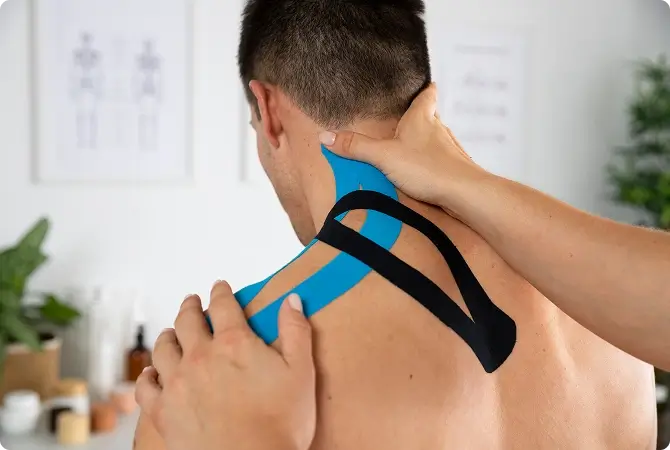
Kinesiology taping is a technique used in physical therapy to provide support to muscles and joints without restricting movement. It uses a thin, flexible tape applied to the skin to help support movement, reduce discomfort, and improve function during daily activities and rehabilitation.
At iMotion Physical Therapy, kinesiology taping may be recommended as one part of your personalized plan of care.
What is kinesiology taping used for?
Kinesiology taping may be used to support recovery and movement in a variety of situations, including:
- reducing discomfort during daily activity
- supporting a joint or muscle while it heals
- helping manage swelling in certain cases
- improving movement awareness and body mechanics
- improving confidence as you return to exercise, sports, or normal routines
Your physical therapist will determine whether kinesiology taping fits your symptoms, goals, and overall plan.
How can kinesiology taping help?
Kinesiology taping may support your recovery in a few key ways:
- Decreasing swelling: Injury, surgery, or overuse can result in swelling. Kinesiology tape is commonly applied in a way that supports fluid movement in the area and may help reduce swelling and improve comfort.
- Relieving pain: Some patients find that kinesiology taping helps reduce discomfort during movement by offering light support and improving movement tolerance during daily activities.
- Stabilizing joints (without limiting movement): Kinesiology taping may provide added support to certain joints or muscles while still allowing natural motion—unlike rigid athletic tape, which is designed to restrict movement.
- Supporting scar tissue mobility (when appropriate): In some cases, your therapist may use taping techniques to support mobility and comfort in areas affected by stiffness or tissue restriction following injury or surgery.
What does kinesiology taping feel like?
Kinesiology tape is lightweight and flexible, and most patients get used to it quickly. Once applied, it should feel supportive but not tight or restrictive.
Your therapist will apply the tape in a way that works with your body’s movement. If anything feels uncomfortable or irritating, let your therapist know so it can be adjusted.
How will I know if kinesiology taping is helping?
Many patients notice benefits like:
- feeling more supported during movement
- less discomfort during daily tasks
- improved confidence using the affected area
- easier participation in exercise or therapy activities
Your therapist will assess your movement and symptoms to decide whether kinesiology taping should be a part of your plan.
How long does kinesiology tape stay on?
Kinesiology tape is designed to stay on for more than one day, but at iMotion Physical Therapy we typically recommend wearing it for up to 48 hours to help reduce the risk of skin irritation. Your therapist will give you guidance on how long to keep it on and how to remove it safely.
Is kinesiology taping safe?
Kinesiology taping is generally safe when applied by a trained professional. If you have sensitive skin, allergies, or a history of skin irritation, let your therapist know before taping.
Kinesiology taping should not be applied over open wounds, active skin infections, or irritated skin.
Kinesiology taping is one part of your plan of care
Kinesiology taping is one tool your therapist may use to support your recovery, alongside treatments such as:
- hands-on therapy (when appropriate)
- mobility and strengthening exercises
- movement training
- patient education
Your plan is tailored to your needs and designed to help you move better and feel more confident over time.
Frequently Asked Questions
Kinesiology tape is a thin, flexible therapeutic tape used to support muscles and joints without limiting range of motion.
Not exactly. Kinesiology tape is designed to stretch and move with the body, while traditional athletic tape is often more rigid and used to restrict movement for stability.
Kinesiology taping does not replace physical therapy or exercise. It may help support movement and comfort, but the best long-term results come from a complete plan of care.
In many cases, yes. Your therapist can give you tips for keeping the tape on and removing it safely.
Your physical therapist will evaluate your symptoms and movement and recommend taping if it fits your treatment goals.
Interested in kinesiology taping?
Schedule an evaluation or ask your therapist whether kinesiology taping may be a helpful addition to your physical therapy plan.


