
 Menu
Menu

Hand Pain
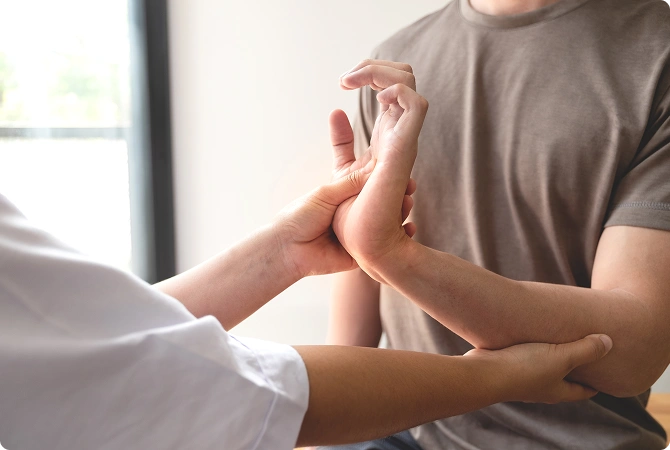
Hand pain can disrupt daily life more quickly than many other joint issues. Your hands are involved in nearly every task, from opening containers and typing to cooking, driving, and managing small objects. When discomfort develops, even routine movements can start to feel unreliable.
Hand pain may begin after a specific injury, such as a fall or strain. In many cases, however, symptoms develop gradually. Repetitive gripping, prolonged use of tools or devices, joint-related changes, and nerve irritation can all contribute over time. Because the hand contains multiple small joints, tendons, and intricate soft tissue structures, symptoms may vary in both location and intensity.
The hand also functions as part of a larger movement system. It relies on coordination with the wrist and elbow for strength and control. When one region becomes irritated or stiff, the others often compensate. Addressing persistent hand pain therefore requires looking beyond the fingers alone and considering overall upper extremity movement.
How Physical Therapy Helps
Physical therapy for hand pain focuses on restoring comfortable movement while improving strength, coordination, and task tolerance.
Treatment may include:
- Improving joint mobility in the fingers and hand
- Strengthening grip and pinch control
- Retraining fine motor coordination
- Building endurance for repetitive tasks
- Guiding a gradual return to work or hobbies
Care is individualized based on how your symptoms show up during daily activity. Rather than focusing only on short-term symptom relief, treatment aims to improve how your hands perform under real-world demands. The goal is for tasks such as typing, lifting, writing, or cooking to feel steady and manageable again.
Common Features
Hand pain often presents with patterns such as:
- Difficulty gripping or pinching
- Finger stiffness, particularly after periods of rest
- Reduced endurance during fine motor tasks
- Swelling after prolonged use
- Symptoms that fluctuate throughout the day
Many people notice discomfort increases with sustained activity and improves with movement breaks.
Symptoms You May Experience
Symptoms can vary depending on the underlying cause and may include:
- Aching or localized soreness in the fingers or palm
- Joint stiffness that eases with gentle movement
- Swelling in one or more fingers
- Reduced grip strength
- Numbness or tingling in specific fingers
Symptoms may shift based on activity level, positioning, or repetition.
Hand Conditions We Treat
Physical therapy may support recovery for:
Each of these conditions has its own page with more detailed information about causes and treatment approaches.
Frequently Asked Questions
Yes. Nerves that travel through the wrist and elbow supply sensation and strength to the hand. When irritated, they can contribute to tingling, numbness, or weakness in specific fingers.
Joint stiffness commonly increases after periods of rest. Gentle movement often helps restore mobility and improve comfort.
If hand pain limits gripping, writing, typing, or other daily tasks, or if symptoms continue to worsen, an evaluation can help identify contributing factors and guide treatment.
Many forms of hand pain respond well to conservative care focused on restoring mobility, strengthening supportive muscles, and improving how the hand tolerates activity.
Learn More About Physical Therapy
If you’d like more information about what to expect during physical therapy, visit our Patient Resources page.
Get Started
If hand pain is affecting your daily activities, a physical therapy evaluation can help you move forward with a clear and personalized plan.


