
 Menu
Menu

Stroke
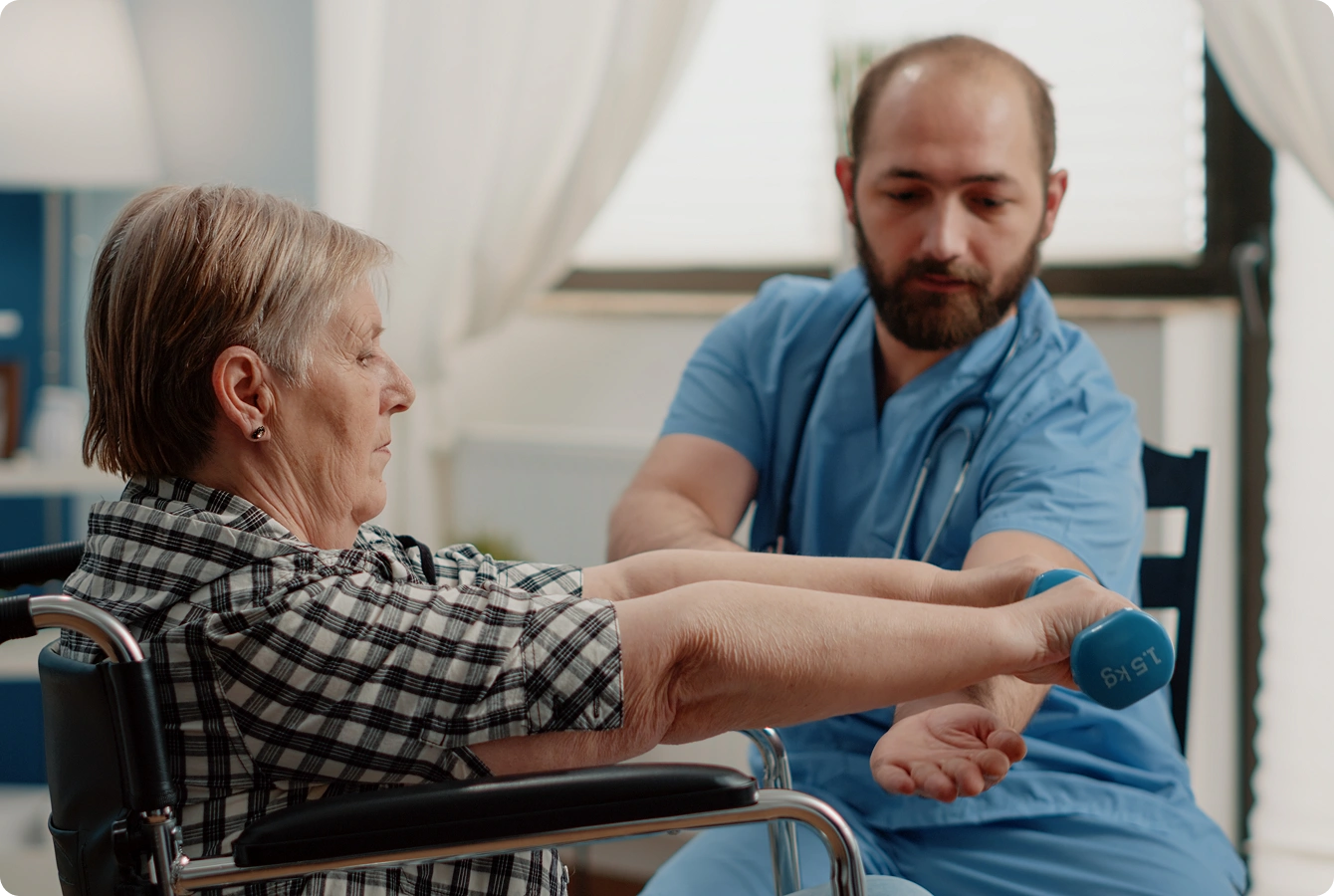
A stroke occurs when blood flow to part of the brain is interrupted, preventing brain tissue from receiving oxygen and nutrients. When this happens, brain cells can become damaged, affecting how the body moves, speaks, thinks, or responds.
Stroke symptoms often begin suddenly. A person may notice weakness on one side of the body, difficulty speaking, facial drooping, vision changes, or problems with balance. Because the brain controls movement, coordination, sensation, and communication, even small areas of injury can influence walking, arm use, posture, speech, or everyday tasks.
The effects of a stroke vary depending on which part of the brain was affected and how quickly medical treatment was received. Some individuals experience mild changes in strength or coordination, while others notice more significant changes in how they move or function.
What Happens After a Stroke?
After the initial hospital care, attention shifts toward recovery. This phase focuses on rebuilding movement and physical function through structured rehabilitation.
Stroke recovery often involves adjusting to changes in how the body moves and responds. Movements that once felt automatic, such as standing, walking, or reaching may now require more focus and effort.
Rehabilitation is frequently collaborative. Physical therapists, occupational therapists, and speech-language pathologists may work together to address mobility, daily function, communication, and swallowing needs as part of a coordinated recovery plan.
How Physical Therapy For Stroke Helps
Physical therapy for stroke builds on the recovery phase by using structured, task-based practice to improve mobility, walking ability, and overall movement control.
Physical therapy may help by:
- Improving walking pattern, stride symmetry, and gait stability
- Supporting balance and reducing fall risk
- Strengthening affected limbs and improving motor control
- Addressing muscle tightness or changes in tone
- Improving posture and trunk stability
- Practicing safe transfers (standing up, sitting down, stairs, bed mobility)
- Increasing activity tolerance and endurance
When speech or communication changes are present, collaboration with our Speech-Language Pathology team may also be part of the recovery process.
Common Features
Following a stroke, certain movement patterns are commonly observed, including:
- Weakness on one side of the body (hemiparesis)
- Reduced coordination in an arm or leg
- Changes in walking speed or stride length
- Balance instability
- Slower or less controlled movement
- Increased muscle stiffness or tone
These patterns often help guide how therapy sessions are structured.
Symptoms You May Experience
Symptoms associated with stroke may include:
- Sudden numbness or weakness in the face, arm, or leg (often on one side)
- Difficulty speaking or understanding speech
- Sudden confusion
- Vision changes in one or both eyes
- Dizziness or loss of balance
- Severe headache (in certain types of stroke)
In the weeks and months that follow, ongoing challenges with movement, communication, endurance, or daily activities are common.
Related Conditions We Treat
Stroke is part of a broader group of neurologic movement conditions that may benefit from neurological physical therapy, including:
Frequently Asked Questions
Rehabilitation often begins as soon as medically appropriate, sometimes during the hospital stay. Early, guided movement is commonly part of comprehensive stroke recovery.
Stroke recovery timelines differ for each person. Improvement may occur over weeks or months depending on the location and severity of the stroke and participation in rehabilitation.
Stroke recovery differs for each person. Physical therapy focuses on improving mobility, safety, coordination, and independence rather than guaranteeing full reversal of symptoms.
Each side of the brain typically controls movement on the opposite side of the body. When one area is affected, weakness or coordination changes often occur on the opposite side.
Yes. Post-stroke fatigue is common and can affect endurance and activity tolerance. Therapy programs are structured to balance activity and recovery safely.
Yes. Stroke can affect communication and swallowing depending on the area of the brain involved. Speech-language pathology may be recommended as part of comprehensive rehabilitation.
Many individuals continue to benefit from structured movement practice and rehabilitation beyond the early recovery phase. Progress depends on individual goals, safety considerations, and overall health.
Learn More About Physical Therapy
If you’d like more information about what to expect during physical therapy, visit our Patient Resources page.
Get Started
If stroke-related movement or communication changes are affecting your walking, balance, or independence, a physical therapy evaluation can help determine appropriate next steps for care.


