
 Menu
Menu

Sprains/Strains
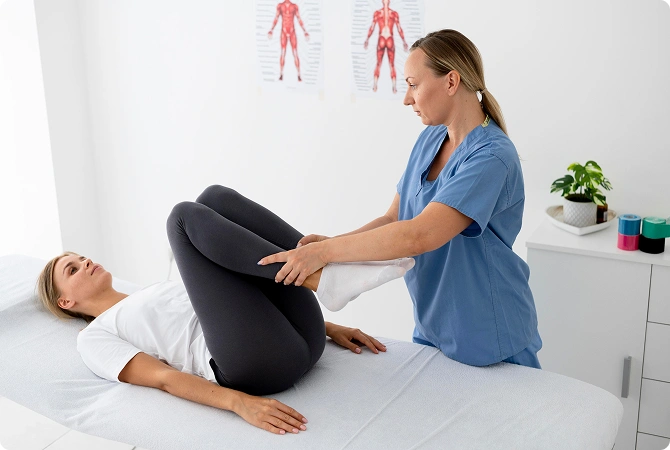
A hip strain or hip sprain refers to irritation or injury of the soft tissues around the hip. People often notice pain after a sudden movement, overexertion, or activity that felt fine at the time but became uncomfortable later. Symptoms may appear right away or develop gradually over the following hours or days.
Hip strains and sprains are common and can happen during sports, exercise, work tasks, or everyday movements. While the terms sound similar, they’re often used to describe different soft tissues—but from a movement and recovery perspective, the focus is usually on how the hip responds to activity and load.
How Hip Strains & Sprains Can Affect Movement And Daily Life
When the hip’s soft tissues are irritated, movements that rely on strength, flexibility, or quick changes in direction may feel more difficult or uncomfortable.
People commonly notice changes with:
- Hip pain after activity, exercise, or sudden movement
- Walking, especially longer distances or faster pace
- Standing up from a chair or getting out of a car
- Climbing stairs or inclines
- Lifting, squatting, or pivoting
- Returning to sports or higher-level activity
Some people adjust how they move—favoring one side or avoiding certain motions—which can affect comfort and confidence if it continues.
How Physical Therapy Can Help
Physical therapy for hip strains and sprains focuses on helping the hip tolerate movement and activity again without unnecessary strain. Care looks at strength, flexibility, coordination, and how the hip handles load during daily tasks.
Physical therapy may help by:
- Supporting healing through guided, progressive movement
- Improving hip strength and flexibility
- Addressing movement patterns that place excess stress on tissues
- Helping you return to daily activities or exercise gradually
- Reducing the risk of repeated strain during movement
Care is individualized based on how symptoms respond and what activities matter most to you.
Common Features Of Hip Strains & Sprains
Although experiences vary, hip strain and sprain symptoms often share certain patterns.
People may notice:
- Pain linked to a specific movement or activity
- Discomfort that worsens with use and eases with rest
- Stiffness or tightness around the hip
- Pain during stretching or resisted movement
- Symptoms that improve gradually with appropriate activity
These features help guide care without requiring imaging or definitive labels.
Symptoms You May Experience
People experiencing a hip strain or sprain may describe:
- Localized hip pain or soreness
- Tightness or pulling sensations
- Pain with walking, stairs, or standing
- Discomfort during exercise or activity
- Symptoms that change based on movement and load
Not everyone experiences swelling or sharp pain, and symptom intensity can vary from day to ay.
Frequently Asked Questions
What causes a hip strain or sprain can include sudden movements, overuse, awkward positioning, or returning to activity too quickly without adequate preparation.
A hip strain usually involves muscle or tendon tissue, while a hip sprain refers to ligaments. In practice, both affect how the hip moves and tolerates activity.
How long a hip strain takes to heal varies. Many people notice improvement as movement is gradually reintroduced and activity is progressed appropriately.
Complete rest isn’t always necessary. Many people feel better with guided, gradual movement rather than avoiding activity altogether.
Yes. Can physical therapy help hip strains and sprains is a common question, and many people use physical therapy to regain strength, mobility, and confidence with movement.
Related Conditions
Hip strains and sprains may overlap with other hip-related concerns. You can explore more information here:
Each page focuses on lived experience and function without repeating information.
Learn More About Physical Therapy
If you’d like more information about what to expect during physical therapy, visit our Patient Resources page.
Get Started
If hip pain after activity, muscle strain in the hip, or movement-related discomfort is limiting your daily routine, physical therapy may help. An evaluation can help identify contributing movement factors and guide appropriate next steps.


