
 Menu
Menu

Elbow Pain
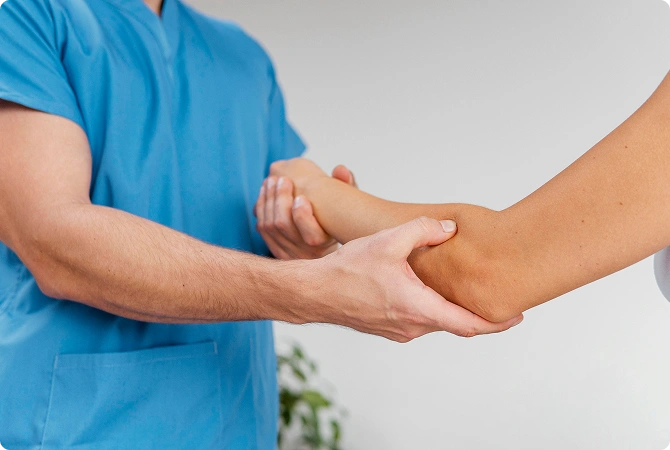
Elbow pain can make lifting, carrying, gripping, or pushing uncomfortable. Because the elbow positions your hand for nearly every task, discomfort in this joint often affects work, exercise, and daily routines.
Some people develop elbow pain after a strain or sudden change in activity. Others notice symptoms building gradually from repetitive gripping, lifting, or sustained arm positions. In many cases, irritation develops over time rather than from one specific event.
The elbow works closely with the wrist and shoulder. When movement becomes limited or overloaded in one area, the others may compensate. That is why persistent elbow pain is best addressed with a full upper extremity assessment rather than focusing on the joint alone.
How Physical Therapy Helps
Physical therapy for elbow pain focuses on improving how the elbow tolerates daily emands.
Care may include:
- Restoring joint mobility
- Improving forearm strength and endurance
- Addressing coordination between the shoulder, elbow, and wrist
- Gradually increasing load tolerance
The goal is to help your arm move more efficiently so daily tasks feel more manageable and less reactive.
Common Features
Elbow pain often involves:
- Discomfort along the inner or outer elbow
- Soreness with gripping or lifting
- Increased symptoms with repetitive use
- Stiffness after rest
- Forearm fatigue during activity
Symptoms may fluctuate depending on workload and activity level.
Symptoms You May Experience
You may notice:
- A dull ache around the joint
- Sharper discomfort with twisting or lifting
- Reduced range of motion
- Decreased grip strength
- Tingling into the forearm or fingers
Symptoms often change throughout the day based on how the arm is used.
Elbow Conditions We Treat
Physical therapy may help support recovery for:
Each of these conditions has its own page with more detailed information.
Frequently Asked Questions
Repetitive strain, sustained gripping, or sudden increases in activity can irritate tissues over time, even without a single triggering event.
If symptoms persist, limit daily tasks, or repeatedly flare up with use, starting treatment early can help identify contributing factors and guide treatment.
In some cases, yes. If nerve irritation is involved, you may notice tingling, weakness, or changes in grip strength.
In many cases, treatment decisions are based on symptoms and movement findings rather than imaging alone.
No. While tennis elbow is common, elbow pain can also be related to inner elbow irritation, joint stiffness, arthritis, or nerve involvement. A movement assessment helps determine what is contributing to your symptoms.
Learn More About Physical Therapy
If you’d like more information about what to expect during physical therapy, visit our Patient Resources page.
Get Started
If elbow pain is interfering with your daily routine, a physical therapy evaluation can help determine the next appropriate steps.


