
 Menu
Menu

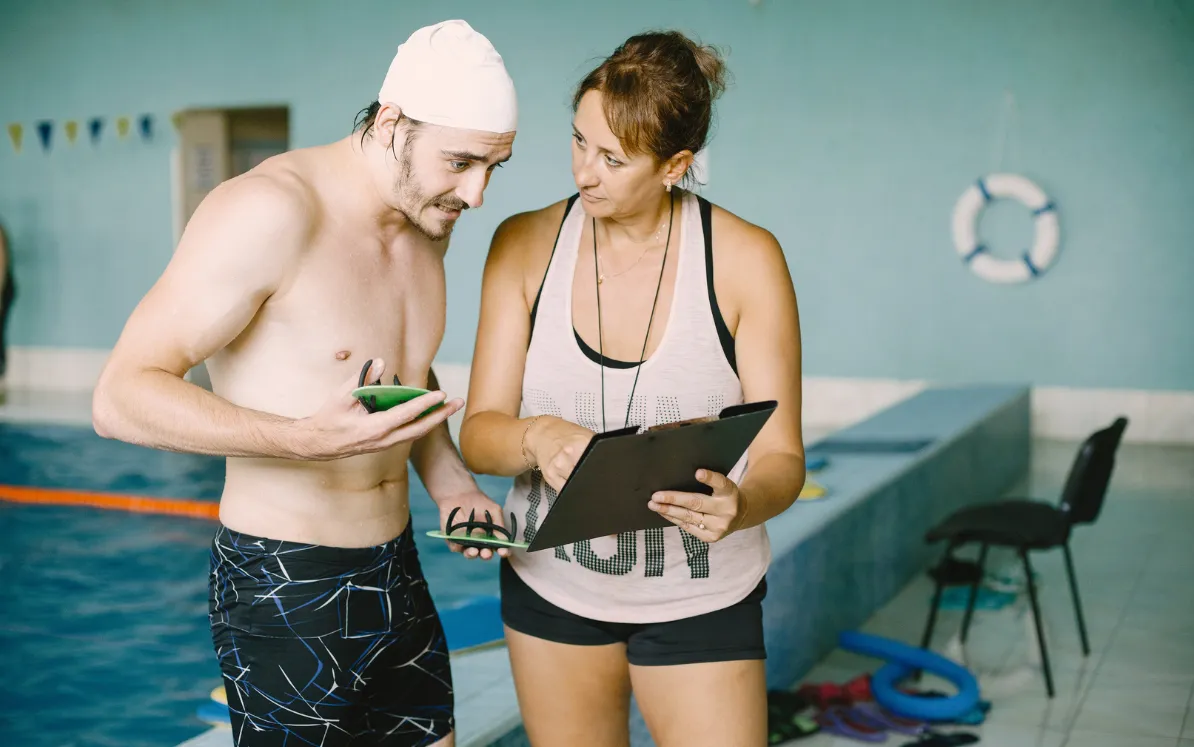
How Aquatic Physical Therapy Helps Improve Strength Without Joint Stress
It can be difficult to build strength following an injury or surgery or rebuild strength when you have joints that are painful when you do traditional exercises. Aquatic Physical Therapy offers a viable alternative, as the properties of water can be used to facilitate the body's actions and controlled movement and resistance. Water buoyancy decreases the body weight acting on the limbs, and water resistance allows muscles to aid in multi-directional movement actions.
Aquatic rehabilitation can provide a pain-free, stiffness-free, more comfortable environment for exercise for those who have a problem with pain, weakness, stiffness, balance, or limited mobility. A physical therapist will determine resistance, movement range and intensity based on a person's strength and objectives. This property makes aquatic therapy beneficial for early rehabilitation, as well as in the physical conditioning phase.
This is just another example of how a professional rehabilitation service can also help healthcare providers gain their patients' treatment options. Clinics providing aquatic therapy in combination with land-based therapy can provide patients with more personalised rehabilitation, better patient engagement and various stages of recovery by having structured programmes.
What Is Aquatic Physical Therapy?
Aquatic physical therapy is a rehabilitation technique that utilises a therapeutic pool that is set up to accommodate a physical therapist to lead the treatment. Instead of focusing entirely on using weights, machines, or the weight of the body itself to resist or move the body, therapy helps balance and move the body through the buoyancy, pressure and temperature of the water, as well as its natural resistance to the body's movement.
Buoyancy has a positive effect that decreases the load on weight-bearing joints. This can make exercises more comfortable for individuals who are uncomfortable with exercising on the floor while standing, walking, squatting or strengthening exercises. As someone pushes harder against the water or moves faster, there is gentle resistance due to water, increasing as they do.
The therapist can manipulate the level of the exercises by varying depth, movement speed, direction and positioning of the exercises in the water. This is because it allows patients to gradually ease their way into it without overloading delicate joints.
How Aquatic Therapy Helps Build Muscle Strength
Water offers resistance in just about all directions and enables muscles to serve a number of the body's movements rather than just against gravity. All the muscles around the limber parts need to react to the pull and resistance of the water when the patient walks, pushes, pulls, lifts the leg and moves the arms in the water.
This resistance can be used to help slowly build up the strength and decrease the impact from many land-based exercises. For instance, if someone doesn't have the ability to do repeated squats on land, then they can practise squatting with control in the water and at chest depth. The exercise can be easier to perform and still activate the leg and core muscles by reducing weight-bearing.
Gradually increasing strengthening may also be promoted with aquatic therapy. Once an individual's ability improves, the therapist can gradually or progressively add repetitions, increase speed of movement, resistance equipment or complex exercises. An increase in this progression allows for better muscular endurance and functional strength without putting high demand on the joints at that first jump.
Benefits of Aquatic Physical Therapy for Different Patients
Aquatic therapy can be modified according to the type of rehabilitation need. Within its controlled environment, movement may be easier to practise while offering meaningful resistance and cardiovascular activity.
Support for Joint Pain and Arthritis
Some strengthening exercises on land engaged in direct pressure through hip, knee, ankle or spine may cause inability for the person suffering from discomfort or arthritis to do the exercise. This weight-bearing load can be somewhat decreased when water is used, and patients can begin practising movements in water without as much pain as on land.
Low-impact activities like water exercise activities can be performed to promote joint mobility and build up affected areas, strengthening muscle function. Well strengthened muscles can help your overall functional movement and confidence in activities of daily living. As strength and tolerance build, patients can begin to progress to even more challenging land-exercise activities.
When appropriate for a patient's treatment goals, Physical Therapy Fremont, California clinics can use aquatic rehab as part of their overall plan to help manage movement impairments and build strength.
Rehabilitation After Surgery
Following orthopaedics, regaining strength and mobility may be a crucial step in getting back to normal functioning. Weakness, stiffness, discomfort or loss of confidence during weight-bearing exercises can be challenging for patients initially.
Aquatic therapy allows functional movements to be practised in a supportive environment within a professional context. For instance, during recovery, carefully planned exercises can be great for strengthening legs and gaining range of motion and balance.
It can be used as knee replacement rehab therapy to provide a load to the joint components when appropriate to strengthen and move the knee but not to unnecessarily overload the joint. It is always important to apply the right exercises and at the right time, based on the person's surgery and recommendations for care.
Support for Balance and Mobility Problems
Exercise on land may be difficult or even daunting due to balance and mobility issues. The additional support to the body provided by water can assist a patient to learn more confidently how to stand, shift their weight, step and walk out of the water.
This can be beneficial for those who have movement difficulties due to neurological or age-related syndromes. Rehabilitation programmes of functional movement, balance, coordination, strength, and independence can be beneficial to patients seeking Parkinson's physical therapy in Fremont.
Likewise, a person diagnosing Parkinson's physical therapy in Murrieta, CA, or seeking the services of professional therapists for Parkinson's disease should find a personalised programme that matches their symptoms and functional objectives instead of a set of exercises.
Aquatic Therapy Exercises That Can Improve Strength
There are a variety of regulated exercises that can be used in aquatic strengthening programmes that are based on the patient's capabilities. Because it promotes movement in the lower body and offers resistance and support, it is a popular beginning exercise: Water walking. Patients can gradually work at a faster pace or alter direction, stimulating other muscle groups as they walk.
Additional exercises that tone the lower body include leg lifts, controlled knee extensions, mini-squats, step-ups, and lunges with support. Water resistance arm movements can work the upper back, arms and shoulders. Controlled weight shifting, weighted posture or water resistance movements may be part of core exercises.
Standing on one foot on a suitable support, sideways weight-shifting or stepping patterns weighing the body in a controlled manner can be done. Exercises can be adjusted by the therapist according to pain, strength, balance, surgical status and function.
Those looking for a physical therapist in Fremont, CA, can determine if aquatic rehabilitation is right and then how it might be incorporated into a larger treatment plan.
How Aquatic Therapy Supports Long-Term Strength and Mobility
The purpose of aquatic therapy is not just to simply ease the way. It can selectively help the individual build their strength, mobility, endurance and self-confidence in order to enjoy increased involvement in daily living. Physical flow can be increased slowly as capabilities increase and aquatic exercises can be integrated with on-land rehabilitative activities.
Taking a step-by-step approach to work towards more achievable goals (e.g., walking for longer, climbing stairs, getting up out of a chair, improving recreational activities, and resuming work) can help the patient to progress. It is particularly important, because cultivating strength and mobility is usually more dependent on regular and properly progressed exercises.
Patients who experience manual therapy, neurological rehabilitation, orthopaedic rehabilitation, exercise-based therapy, and aquatic therapy all in the same setting are provided with a more complete patient experience, an asset for rehabilitation practices. Access to ongoing rehabilitation will also be easier to come by and keep up, thanks to convenient services such as PT Mowry Avenue.
Conclusion
Aquatic physical therapy is a practical method for building strength and less weight-bearing strain. Its buoyancy in conjunction with natural water-resistant features enables patients to practise strengthening, movement, balance and functional exercises in a supportive environment.
Aquatics therapy may be tailored to meet the needs of those suffering from joint pain, post-surgical conditions, balance problems or neurological issues. Under the expert guidance and progressive step-by-step approach, water-based exercise may be an essential component of a more comprehensive process of rehab aimed at maintaining strength and mobility for a long time.
For healthcare providers: Aquatic therapy can be an extended programme of services for patients and be combined with land-based therapy for professional providers. It can be used in conjunction with individual assessment along with evidence-based exercise-based programmes to aid patients in making meaningful strides and moving with greater ease, comfort and independence.
Frequently Asked Questions
Q1. How does aquatic therapy build muscle strength?
Aquatic therapy uses water resistance and buoyancy to challenge muscles safely, helping improve strength while reducing stress on joints.
Q2. What are the disadvantages of aquatic therapy?
Disadvantages may include pool access limitations, infection risks, fatigue, unsuitable water temperatures, and difficulty for people uncomfortable or unsafe around water.
Q3. Can aquatic therapy improve mobility?
Yes, aquatic therapy can improve mobility by supporting body weight, reducing joint pressure, increasing flexibility, and making movement easier and more comfortable.
Q4. Is aquatic therapy good after surgery?
Yes, aquatic therapy can support post-surgical recovery by improving strength, flexibility, balance, and mobility while reducing pressure on healing joints.
Q5. Does aquatic therapy help with knee pain?
Yes, aquatic therapy can reduce knee pain by lowering joint stress, improving muscle strength, increasing flexibility, and supporting controlled, low-impact movement.


