
 Menu
Menu

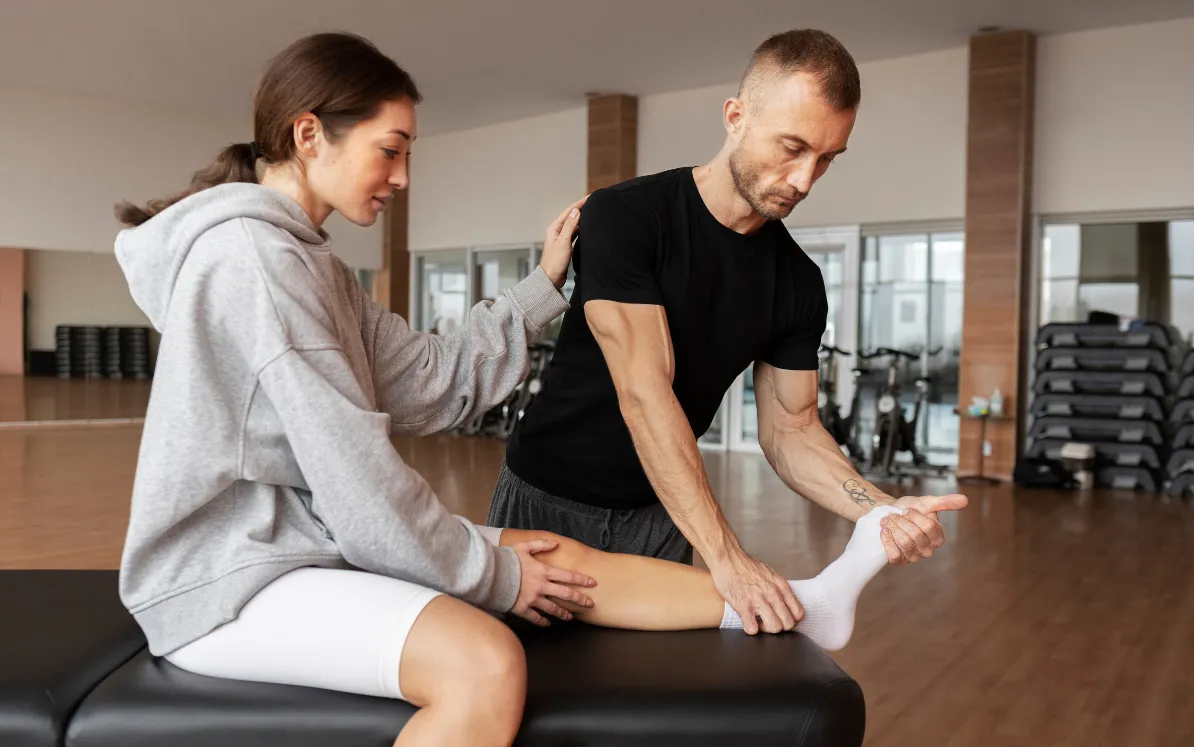
How a Sports Injuries Clinic Helps You Recover Faster and Move Better
Injury to a sport puts learning on hold, work, exercise and daily life on hold. It can be as simple as a sprain, muscle strain, or tendon injury, and recovery can differ significantly if you are not receiving proper care, whether it is a result of repetitive stress injury or what you would like to overcome. Prompt rehabilitation to return to sports and relying on rest alone can lead to weakness, stiffness, or lack of movement in certain areas that may create the potential for further issues.
A Sports Injuries Clinic offers a special unit of assessment and rehabilitation to help clients feel safe and rehabilitate as quickly as possible to get back to the sport they love with strength, mobility and confidence. Physical therapists are able to instruct a treatment regimen that fits the person's condition, activity level and goals based on an understanding of factors that may contribute to the injury.
Therapeutic exercise, manual therapy, neuromuscular re-education and other PT modalities may be combined with the rehabilitative care provided by a professional sports injury therapist. This programme will help patients move and increase the activities they enjoy more safely and slowly.
What Is a Sports Injuries Clinic?
A sports injuries clinic is a health care facility that specialises in sport injury assessment, treatment and rehabilitation for people who participate in sports and physical activity. These clinics are for a professional player; however, services may apply to anyone who has an injury which is related to exercise, sport, work or physical activity.
A physical therapist can evaluate joint mobility, strength of muscles, flexibility, balance, and posture and the way that joints move. These can then be taken to work out a rehabilitation programme targeted to the limitations on recovery.
Services can involve sports injury therapy, therapeutic exercise, manual therapy, neuromuscular training and specific modalities like electrotherapy. Some clinics provide an opportunity to rehabilitate individuals that require pre-surgery relaxation before they undergo surgery, as may be appropriate.
How a Sports Injuries Clinic Supports Faster Recovery
The Sports Injuries Clinic aids recovery by establishing a process and allows no waiting for symptoms to resolve. Treatment can help with pain and loss of motion, and over time, the physical skills needed to support normal functioning can be re-established.
Comprehensive Injury Assessment
The complete evaluation is an essential first step to rehabilitation. The therapist assesses the injury, symptoms and movement restrictions and then considers activity history. They can evaluate strength, flexibility, balance, joint motion, and/or functional tasks to better understand the impact of the injury on overall movement.
This evaluation may be used to set reasonable treatment objectives and serves as a baseline to measure progress and/or to document recovery. It can also be able to establish weakness or how the injury occurs on the way that probably contributed to the original injury.
Personalised Rehabilitation Plans
All injuries and patients are different, and tailored approaches to rehab should be applied. Depending on the programme, it may start off with easy movements first, then progress to strength, functional exercises and sport-specific exercises.
The programme can be modified to suit the improvement of the patient. This enables the intensity of the treatment to rise incrementally but not stress the recovered tissue excessively.
Therapeutic Exercise for Strength and Mobility
Therapeutic exercise is part of sports injury rehabilitation and is one of the foundations. Exercises can help increase the strength of muscles, flexibility, endurance and joint movement and help patients restore their functional capacity related to daily activities and sport.
The rehabilitation for, say, a lower-limb injury could advance from simple strengthening to more complex, functional exercises and simulations of the sport the person plays. Regular exercise can restore both the confidence and the ability to exercise.
Manual Therapy for Pain and Stiffness
Manual therapy is a technique that involves a hands-on approach dealing with stiffness, soft-tissue limitations and restricted movement. Depending on the individual condition, a joint mobilisation or soft-tissue techniques may be required for the treatment procedure.
Therapeutic exercise frequently can be complemented by manual therapy, which can facilitate comfort and participation in the patient's rehabilitation programme. Generally administered as part of a comprehensive treatment programme, not as a standalone treatment.
Neuromuscular Re-Education
Injuries may inhibit the normal functioning of the nervous system and muscles. After the pain subsides, a person may still walk in a different manner due to weakness, less confidence and/or altered gait.
Neuromuscular re-education addresses the importance of better coordination, movement control, balance and body awareness. These skills can be very significant when getting ready for returning to activities where a quick change of direction, jumping, running or other activity is required.
How Physical Therapy Helps You Move Better After an Injury
Beyond just the pain reduction, recovery is also about achieving health and wellness. Efficient motion is crucial to re-establishing normal functions and limiting further functional deficits. Rehabilitation with physical therapy involves several aspects of physical function.
Restoring Range of Motion
Injuries may lead to pain and swelling that can limit movement. This can also be stiffness from lack of activity. Physical therapy interventions may involve the proper mobility exercises and techniques to slowly restore range of motion (ROM) for the affected joint.
Rehabilitation of movement can simplify daily activities and benefit functional strengthening and rehabilitation.
Rebuilding Strength and Stability
A weakness of the muscle is common following an injury, especially if it did not have to support the body through a range of function for a period of time. Specific exercises to strengthen the muscles around a damaged joint may help to restore some of its stability.
It is important to consider progressive strengthening because if returning to play or demanding physical activity, it is more than just about being pain-free. The body needs good strength and control to meet demands imposed.
Improving Balance and Coordination
Ankle, knee, hip or other injuries can cause balance and coordination problems. Controlled balance exercises and/or movements that restore function are included in the treatment.
Improved coordination can enable patients to be more confident in their movement and set them up for challenging tasks. Once a patient's abilities improve, the difficulty for physical therapists can be gradually raised.
What to Expect During Sports Injury Rehabilitation
Quality sport and exercise rehabilitation will usually start with an assessment and then consideration of patient goals. The therapist presents their results and formulates a suitable treatment plan.
Initial sessions will likely be devoted to symptom management, return to appropriate activity/exercise and comfortable movement. Treatment during recovery is typically more concentrated on strengthening, balance, coordination and functional movement.
Patients can be prescribed exercises to do at home as well. Following the programme suggested will help with progress between appointments. There is an element of open communication required during rehab, especially if the exercise makes you feel unduly uncomfortable or if symptoms begin to vary.
Other lifestyle factors may also affect recovery as well. If activities at work may have an impact on an injury, people who are sitting at their desk most of the day may need some attention on their posture, need to move at specific intervals or need to attend to their work station habits.
How a Sports Injuries Clinic Helps Athletes Return to Activity
Re-entry to sport should be a progressive process. An athlete can feel pain-free before the injured tissues and surrounding muscles are strong enough to control the painful area. A suitable rehabilitation programme is available to help make a transition from basic recovery to full sport.
Strength, mobility and coordination may improve, allowing the physical therapist to introduce movements specific to the sport. When appropriate, using running drills, resistance exercises, balance activities and controlled changes of direction can be interwoven.
Specialised services, like Sport Injury Therapy Fremont or Los Gatos Sports Therapy, can also be utilised by local athletes gaining top rehabilitation services in the area. As a service to the community, offering specialised sports rehabilitation services will also bring new customers to the practice and cater to the needs of the athletes, recreational exercisers and active members of the community that the practice serves.
A clinic could also work with individuals who have more comprehensive rehabilitation requirements. Neurological programmes could incorporate, for instance, LSVT big and loud as clinically applicable to people with PD. Having several specialities makes it possible for a physical therapy company to supply total patient care.
Conclusion
Your journey of recovery after sustaining a sports injury will last more than just physical healing. The goal of effective treatment is to restore function, recondition strength, restore stability and prepare for safe return to activities of life or sport.
A sports injuries clinic can help the patient go from stage to stage and progress safely through recovery with a sports injury rehabilitation programme tailored to their specific needs. Depending on the individual, therapeutic exercise, manual therapy, neuromuscular re-education and appropriate methods like electrotherapy may all be a part of the solution.
Professional advice will help athletes, active adults and those recovering after physical trauma get back to their sport(s) with greater clarity. Comprehensive sports injury services can positively enhance patient care, draw in more patients to the healthcare practice and build its reputation in the community as a trusted provider of healthcare services related to sports injuries.
Frequently Asked Questions
Q1. How do athletes recover from injuries so fast?
Athletes recover quickly through expert treatment, structured rehabilitation, proper nutrition, adequate rest, consistent therapy, and carefully monitored exercises that support healing.
Q2. How does physical therapy help with recovery?
Physical therapy restores strength, flexibility, mobility, and balance while reducing pain, preventing complications, and helping athletes safely return to their activities.
Q3. What are the 5 stages of rehabilitation during the treatment of sports injuries?
The five stages include protection, restoring movement, rebuilding strength, improving sport-specific skills, and gradually returning to full sports participation.
Q4. Which sports injury has the longest recovery time?
Severe ACL tears, complex fractures, and major ligament injuries can require some of the longest recovery periods, often lasting several months or longer.
Q5. What deficiency causes slow healing?
Deficiencies in protein, vitamin C, vitamin D, zinc, or iron can slow tissue repair and wound healing, particularly when nutritional intake is inadequate.


