
 Menu
Menu

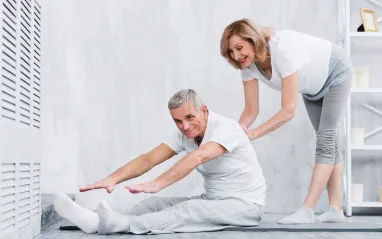
How Parkinson's Rehabilitation Helps Reduce Falls and Improve Confidence
Parkinson's can have an impact on movement, balance, co-ordination and the ability to comfortably complete daily jobs. Over time, daily activities may become more difficult because of symptoms of slowing, stiffness, variations in walking and balance. Worry about falling can also be a source of low self-confidence, affecting some people's engagement and independence.
Each person's movement capabilities, symptoms, and daily needs are the focus of rehabilitative services for Parkinson's. A one-to-one programme can concentrate on balance, walking, strength, flexibility and functional movements as well as provide instruction on techniques that could help make daily activities safer. Experienced specialists in Parkinson's therapy can also assist people in learning to control problems with their movements and stay active as they can be.
Understanding Parkinson’s Disease and Its Impact on Mobility
Parkinsons is a progressive disorder of the nervous system, which may affect the parts of the brain responsible for co-ordinating movement. There can be widespread differences among individuals in their mobility changes. Some individuals may have slower gaits, less arm swing, difficulty moving into or out of the job, stiffness and difficulty moving back and forth, or having “freezing” periods or postural changes.
The difficulty may be in various activities like getting out of a chair, walking through narrow spaces, climbing steps or turning sideways. They may lose confidence and stop with new activities which they find manageable.
Although physical rehabilitation does not halt the underlying process of Parkinson's disease, it can help people move and function better by being delivered as a therapeutic process adapted to the needs of the individual. Through regular assessment, therapists can come up with specific challenges to create the exercises and strategies to meet the individual’s needs.
How Parkinson’s Rehabilitation Can Support Safer Movement
One of the primary goals of rehabilitation is to restore necessary skills needed in the physical aspects of movement safely and efficiently. Several approaches may be combined in programmes according to symptoms, ability to function and individual aims.
Balance Training for Greater Stability
Performing balance exercises may allow people to practise maintaining their body position when standing and moving. Training can include weight shift, reach and changing direction as well as controlled transition from one position to another.
Balance training will not prevent falls but may help individuals to become more aware and in control. Therapists may also be able to spot contexts that might warrant other help or adjustments in the surroundings.
Gait Training to Improve Walking Patterns
Walking is common to Parkinson's disease. An individual can walk more slowly, walk shorter steps or may have trouble walking up and going. Gait training is targeted to practise walking patterns and strategy for typical problems.
Therapists might be employed to work in step length, rhythm, turning, posture and safe changes of direction. External cues can also be provided in an appropriate fashion if needed to help the person maintain a more regular gait cycle during walking.
Strength and Flexibility Exercises
Stiffness and weakness may hinder your ability to manage all the daily tasks. Strength exercises could focus on the lower limbs, hips, trunk/cervical spine and upper limbs to assist with functional activities.
Flexibility exercises may be used to facilitate the movement available within the range of motion that is needed. Strengthening and mobility exercises may complement one another and facilitate some physical activities (e.g., standing, walking and transferring).
Functional Movement Training
Functional training emphasises movements that are directly applicable to everyday life. This can involve sitting up out of a chair, turning, reaching or stepping over obstacles, and mobility around the home.
Learning or practising meaningful activities in a controlled environment helps individuals to create movement strategies that are transferable to everyday activities. This can help to make rehabilitation more practical and meaningful.
Parkinson’s Rehabilitation Techniques That May Improve Confidence
There is a positive correlation between confidence and self-efficacy in the ability to handle the movement difficulties. Psychological rehabilitation methods may involve external cues, task-specific practice, movement strategies and structured practice when using Parkinson's Rehabilitation Techniques.
LSVT BIG and Amplitude-Based Movement Training
LSVT-BIG and LOUD are evidence-based treatments that have been used in the rehabilitation of Parkinson's disease patients. The BIG component emphasises practising larger amplitude movement patterns and using the larger amplitude movement to perform functional activities.
When appropriate culturally and clinically, amplitude-based training can be a component of a person's programme. Some of the larger, deliberate movements can aid a person in developing an awareness of the size of the movement and transfer this knowledge to his/her daily activities.
Cueing Strategies for Walking and Freezing
The discomfort in the feet may make a person feel his or her feet stuck in place, especially when initiating walking or turning in any small space. Therapists can instruct the person on cueing techniques to elicit and/or sustain movement.
Cues can be used to provide visual, auditory and/or attentional strategies depending on each individual's needs. Knowing and understanding how and when to do these techniques can provide individuals with instruments to help them manage in challenging situations.
Task-Specific Rehabilitation
Task-specific rehabilitation has to do with training of task-specific activities that are meaningful in the person's life. Therapy may not only include isolated exercises but also exercises like walking to a certain location and the ability to stand on various surfaces and safely turn.
Engaging in a movement many times enhances familiarity and reinforcement of movement strategies for activities that might not be mastered at first.
How Rehabilitation Can Help Reduce Fall Risk
Falls can be caused by a variety of factors: balance problems, alterations in gait, weakness, and/or environmental hazards and/or turning or transferring problems. A rehab will focus on factors that can be changed, both physical and functional, that may be contributing to fall risk.
A therapist can evaluate the walking, balance, strength and movement patterns of a person and create a plan that will work for them. Learning also can have the subject of safer transport practices, proper use of mobility assistance devices, and the home environment, where potential hazards are identified.
The purpose is not just to make exercise harder. Any rehabilitation plans should test the individual to an appropriate level and allow for activities to be adapted to suit changing abilities while keeping the individual safe.
How Parkinson’s Rehabilitation Supports Daily Independence
One of the key priorities for some people with Parkinson's is being able to live independently. Rehabilitation can assist a person to practise skills that they need to live independently with, as well as develop strategies for managing the movement difficulties.
Better strength, balance, mobility and movement awareness can help with activities like walking around the home, in the community, preparing food, and getting dressed. All improvements in functional movement, no matter how small, can make daily activities easier.
In the health services sector, providing specialised neurological rehab can help in increasing access to targeted services in the community. Programmes that deliver Parkinson's physical therapy in Murrieta, CA, can offer structured support to people who are looking for rehabilitation in Murrieta, whilst services that deliver Parkinson's physical therapy in Fremont may offer assistance to people living in Fremont.
What to Expect From a Parkinson’s Rehabilitation Programme
The first stage of a rehab programme is usually a thorough evaluation of the individual's walking, functional abilities, flexibility, strength and balance. The therapist will also take into account the client's objectives, way of life and problems.
The treatment is then customised based on those findings. Therapeutic exercises, gait training, balance activities, and functional practice and education may be incorporated into sessions. These may be modified from time to time depending on the person's changing ability, symptoms and objectives.
Consistency is important. Patients might learn an exercise or movement pattern to do at home between visits. Typically, progress occurs with functional advances and by being able to conduct activities faster and safer, rather than through a set number of sessions.
Additional neurological rehabilitation can also be applied as supportive therapy to other physical therapy treatments. A clinic could offer back pain rehabilitation or knee replacement rehab therapy and back pain relief from front therapy in addition to Parkinson's programmes, for instance, which means that a clinic has the ability to assist the rehabilitation requirements of a more extensive variety of neighbourhood members.
When Should Someone With Parkinson’s Consider Rehabilitation?
Rehabilitation may not only be utilised when there are substantial mobility challenges but also at any phase of Parkinson's disease. The early evaluation could assist in setting up a proper exercise routine and pinpoint movement problems ahead of them jeopardising stability or sense of balance.
If a change in walking, balance, posture, strength, transfers, or confidence is occurring, it may be beneficial to discuss rehabilitation with an appropriate health care professional. It is also recommended that anyone who has fallen or had a near-fall have a professional evaluation of the cause of the fall or near-fall.
The programme should always take into account the person's current skills and their medical condition. However, communication between the rehabilitation professional, wider healthcare team and patient can ensure that therapy is appropriate in terms of requirements changing.
Conclusion
Parkinson's rehabilitation offers invaluable support to those who are having trouble with balance, walking, strength and everyday activities. Balance, gait, strengthening and functional activities, with cueing strategies like LSVT BIG and LOUD, can help develop more movement skills in individuals that will help them be more functional and independent.
A personalised programme cannot prevent falls; however, it can help to identify the factors affecting a person's ability to move safely and identify strategies to help the person manage the challenges of moving. There is a need for regular evaluation and appropriate progression due to the fluctuating nature of Parkinson's symptoms and abilities.
In rehabilitation companies, offering specialised Parkinson's services as part of a wider programme can assist in addressing the specific needs of the community. Neurological rehabilitation, for example, can also be integrated with other rehabilitations, such as back pain rehabilitation and a post-surgical rehabilitation, to give a patient a wider scope of professional rehabilitation and support, as well as provide some help with reaching a meaningful functional goal.
Frequently Asked Questions
Q1. How to improve balance in Parkinson's patients?
Balance exercises, gait training, strength exercises, and physical therapy can help improve stability, mobility, and confidence during daily activities.
Q2. Can Parkinson’s rehabilitation help reduce the risk of falls?
Yes, rehabilitation can address balance, gait, strength, and movement challenges, helping patients improve mobility and potentially reduce their risk of falls.
Q3. What exercises help people with Parkinson’s improve stability?
Weight-shifting, stepping, balance training, strengthening exercises, walking practice, and targeted movement exercises can help improve stability and functional mobility.
Q4. How can LSVT BIG and LOUD support Parkinson’s rehabilitation?
LSVT BIG focuses on larger, purposeful movements, while LSVT LOUD targets speech and communication, supporting movement and communication abilities.
Q5. When should someone with Parkinson’s consider physical therapy?
Physical therapy may be beneficial after diagnosis or when mobility, balance, walking, strength, or daily activities become challenging.


