
 Menu
Menu

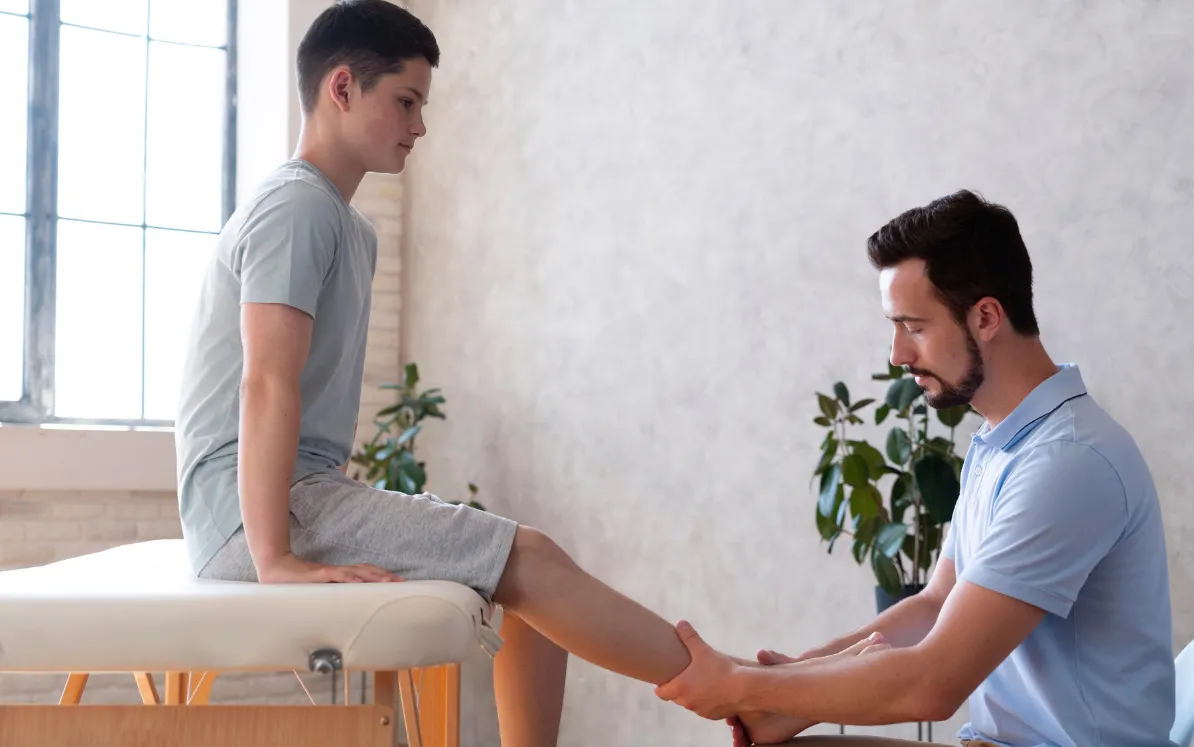
How Knee Replacement Rehab Therapy Supports Strength, Mobility and Recovery
For individuals who continue to experience knee pain, reduced mobility or stiffness that has begun to impact their daily activities, knee replacement surgery can bring relief. Surgery is just one aspect of rehabilitation, though. Rehabilitation is an important component in getting the knee moving, strong and functional after the procedure. A structured programme can assist a patient to safely resume walking, as well as getting back to activities like climbing stairs or even carrying out everyday activities with more confidence over time.
The treatment for knee replacement rehab therapy is tailor-made to the person, surgery, physical function or recovery objectives. The progressing steps of the treatment typically include developmental movement, mobility, and then strengthening, balance training and functional training. These changes in the patient's abilities happen at different rates for each person and should be individualised to a patient's ability and guided by a competent rehabilitation practitioner rather than a fixed timeframe.
Patients will have a better chance of having realistic expectations when they start their rehabilitation work and go through it consistently if they understand what rehabilitation involves.
Understanding Recovery After Knee Replacement Surgery
Recovery from knee replacement surgery typically involves multiple phases. Early on it's usually about controlling swelling and pain, trying to get the joint moving again and promoting gentle exercise. Even the patient will usually need some support getting around before she eventually learns to do so on her own.
With progression, rehabilitation can focus more on knee movement, strengthening, balance and movement function. There may be a programme of activities including getting up off the chair, moving further distances, walking up or down stairs and stairs as the patient achieves more control.
A recovery is unique to each person. Progress will vary depending on the person, including age, general fitness, strength prior to surgery, type of surgery and any health issues associated with the surgery. This can be done through systematic rehabilitation, which offers a systematic approach to overcoming these challenges.
A physical therapist can evaluate movement and track progress as it happens in recovery. Professional guidance can help tailor individualised exercises and strategies to those most appropriate for a patient's rehabilitation phase, which is especially helpful for patients looking for a physical therapist in Fremont, CA.
Why Rehabilitation Is Important After Knee Replacement
Muscles around the knee and leg may be weaker following surgery due to pain, a decrease in activity, and the impact of the surgery itself. If not rehabilitated properly, you may end up being stiff and weak, making it harder to resume your normal activities.
The goals of knee replacement rehab are to get you moving normally again and gradually putting the recovering leg under as much "burden" (stress) as possible. Muscle capacity can be improved with exercise, and mobility work can be used to assist with ease and range of motion. Balance and coordination exercises may also help patients increase their sense of security when walking and changing direction.
Rehabilitation may also be beneficial in educating patients on activity limitations. Excessive acceleration or overdoing can lead to increased pain, while no movement at all can lead to stiffness and weakness. Balancing activity and recovery is enhanced with a professionally supervised programme.
Physical therapy clinics can generate continuity of care with specialised treatment for post-surgical rehabilitation. Clinics can cater to a patient requiring specific orthopaedic rehabilitation needs, and the patient can receive the care and guidance of professionals during various stages of their recovery.
How Rehabilitation Supports Knee Strength
Subsequent to knee replacement, strength is an important aspect of returning to normal function. Having stronger muscles around the knee and hip would help with activities like walking, standing and using stairs.
Rebuilding Leg and Knee Muscle Strength
Leg weakness is common after knee replacement, especially the weakness in the quadriceps muscles and other muscles used to move the leg. There may be slow, gentle strengthening exercises and gradually increased ones as the patient becomes more tolerable.
A range of exercises could be chosen to target a particular muscle complex, and functional movement could also be enhanced. Sometimes resistance and exercise difficulty will need to be adjusted, depending on strength increases. The aim isn't just to increase muscle size; it is to strengthen muscles for real-life situations.
Strength gains typically take time and are incremental; thus, regular exercise is crucial. Patients must adhere to their therapist's programme and report if an exercise produces abnormal or persistent symptoms.
Improving Knee Stability and Joint Support
Exercise for strength and stability can optimise the willingness and stability of the leg control movement. Muscle control when walking, stepping up & down and turning is important.
Rehabilitation can involve controlled exercises which teach the patient to stay aligned and will help stop him or her from transferring weight onto the recovering leg. These skills can be developed with confidence in all daily activities and help to make the transition back to normal movement as safe as possible.
The therapist can adapt the exercises as they go, as long as the rehab programme remains challenging for the patient but not too hard on the recovering knee.
Key Techniques Used During Knee Replacement Rehabilitation
Multiple therapies are often used together for knee replacement rehab, rather than just any single therapy. Technique options depend upon patient mobility and strength, their symptoms and functional objectives.
Therapeutic Exercises for Progressive Recovery
One of the principal needs in post-operative rehab is therapeutic exercise. Initial exercises can concentrate on mildly exercising knee movement and activating less active muscles. Strengthening work of legs, hips and core can be added as well as more challenging functional movements in later exercises.
Balance practice might also be a key element of rehab leading to a return to walking ability. The therapist can evaluate the gait pattern and offer feedback on gait control, stride and support with the gait.
Progressive exercise means treatment can go on while recovery takes place. As the knee becomes progressively more mobile and more comfortable, exercises can be modified to increase the challenge and progressively prepare the patient for more challenging activities.
Balance and Coordination Training
Balance may be impaired following surgery due to weakness and/or less use and altered movement. Patients can acquire improved muscle control of the recovering leg by performing balance and coordination exercises.
Training can include manipulation of weight and standing movements and functional movements. The exercises may be especially beneficial for patients who have trouble walking or turning quickly.
The improvement of balance doesn't just mean that the individual can stand steadily. It may also enable patients to synchronise their movements when performing their ADLs and regain confidence in their operated leg.
Manual Techniques for Mobility and Comfort
If the patient's condition and stage of recovery are suitable, a therapist may employ suitable hands-on techniques to facilitate mobility and comfort. When exercise-based rehabilitation is not progressing, due to stiffness or limited movement, then these techniques can be used as an adjunctive approach.
Manual approaches should be used as indicated by individual assessment and in combination with active rehabilitation if indicated. Activity will continue to be an integral part of the treatment, as the patient must gain strength and learn to control their movement so that they can subsequently function individually.
A comprehensive rehabilitative service could then take a holistic approach, offering hands-on care with functional training and education taking place to complete the rehabilitation programme.
Managing Common Challenges During Knee Replacement Recovery
The process of recovery can present several problems: swelling, stiffness, decreased muscle strength, pain and difficulty in performing normal activities. They can all be problematic, and when things don't happen as fast as hoped, they can be even more frustrating.
A key strategy is to remember to work slowly and not expect to see instant results. Proper recovery may mean more intense progress followed by lengthier times of improvement that seem a bit slower. Measures such as following professional advice and keeping to a suitable level of activity can help to ensure that patients are consistent.
Patients should also be able to talk to their therapist. If the symptoms change or if an exercise becomes difficult or if a patient is concerned about the exercise, it gives important data regarding the adjustment of the rehabilitation programme.
People may also have other physical conditions that require attention during rehabilitation. For example, individuals seeking back pain relief fremont may need their overall movement patterns considered alongside knee recovery. Similarly, patients requiring neurological support may benefit from specialised services such as Parkinson's physical therapy from Fremont or care from therapists for Parkinson's disease, depending on their individual needs.
Orthopaedic and neurological services can then be combined in a coordinated manner in rehabilitation services to address the diverse needs of the local community. It also enables clinics to offer a more holistic approach of support rather than just concentrating on an individual stage of the physical recovery process.
When Should You Begin Knee Replacement Rehabilitation?
Rehabilitation usually starts at the time of surgery, and the surgical team determines when and how much movement and/or exercises should be performed. It will depend on the patient's condition, surgical procedure and the need for recovery.
Prompt rehabilitation will help patients make a recovery to regain movement and functioning. Early does not necessarily mean hurried, though. Exercises and activity should be progressed as per expert advice and the body's reaction.
The programme can be made more difficult as the recovery progresses. Patients will advance from initial mobility exercises to strengthening, balance, walking and functional exercises. The programme is checked frequently to ensure that it continues to be suitable.
Selecting a suitable provider is also crucial. Patients seeking Knee Replacement Rehab Therapy should take into account an area that has experience whereby they may receive personalised but targeted attention to patient care immediately following surgery.
Conclusion
Knee replacement rehab therapy is an important part of the recovery journey following knee replacement surgery. While the operation addresses the damaged joint, rehabilitation helps patients rebuild strength, improve mobility and regain the confidence needed for everyday activities.
A structured programme can support recovery through progressive strengthening, mobility exercises, balance and coordination training, functional activities and appropriate manual techniques. The goal is to help patients move safely and effectively while gradually increasing their ability to manage daily tasks.
Successful knee replacement rehabilitation requires patience and consistency. Each person's recovery is different, and treatment should be adapted according to individual progress rather than following a one-size-fits-all approach. Working with a qualified physical therapist can provide the guidance needed to progress safely and address challenges along the way.
For physical therapy businesses, specialised post-surgical rehabilitation services offer an opportunity to provide meaningful support to patients who need structured care after major orthopaedic procedures. Combining knee rehabilitation with services addressing other needs, such as back pain, sports injuries and neurological conditions, can help businesses support a broader community while delivering personalised and professionally guided care.
Frequently Asked Questions
Q1. What kind of rehab after knee replacement?
Rehabilitation typically includes physical therapy, walking practice, range-of-motion exercises, strengthening, balance training, and gradually returning to daily activities.
Q2. How many times a week should I do physical therapy after knee replacement?
Most patients benefit from physical therapy two to three times weekly initially, combined with prescribed exercises at home for continued progress.
Q3. When Can You Walk Normally After Knee Replacement Surgery?
Many people walk independently within several weeks, but returning to a completely normal walking pattern can take several months.
Q4. What Exercises Help Restore Strength After Knee Replacement?
Common exercises include leg raises, knee bends, heel slides, seated extensions, walking, step-ups, and gradual resistance exercises recommended by your therapist.
Q5. How Can Physical Therapy Improve Recovery After Knee Replacement?
Physical therapy improves mobility, strength, flexibility, balance, and confidence while helping reduce stiffness and supporting a safer, more effective recovery.


