
 Menu
Menu

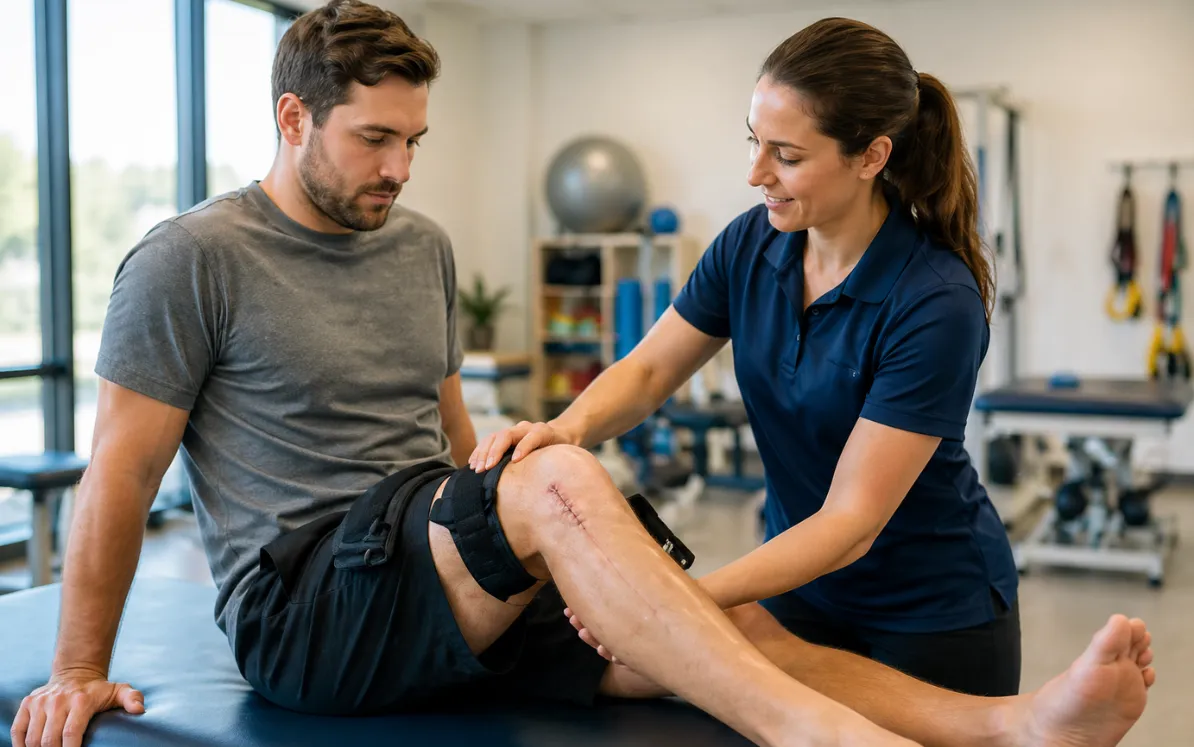
How Physical Therapy Speeds Up Post-Surgery Recovery
Surgery is a controlled intervention with a predictable outcome: the structural problem that brought the patient to the operating room is addressed. A damaged joint surface is replaced. A torn tendon is repaired. A compressed nerve is decompressed. The surgical goal, in most cases, is achieved cleanly and successfully. And then the harder work begins.
Post-surgical recovery is where the surgical outcome is either realized or left partially incomplete. The patient who leaves the hospital with a technically successful procedure and receives excellent rehabilitation can achieve functional outcomes that transform their daily life. The patient with the same technically successful procedure who receives inadequate rehabilitation may reach a plateau well short of the outcome their surgery made possible — and may accept that plateau as the inherent limit of their result rather than recognizing it as a rehabilitation shortfall.
Physical therapy is the clinical process that bridges the gap between what surgery achieves structurally and what the patient ultimately experiences functionally. Understanding specifically how physical therapy speeds recovery — not as a general claim but as a set of specific mechanisms — is valuable knowledge for any patient preparing for or recovering from a significant procedure.
Managing the Post-Surgical Inflammatory Response
Every surgical procedure, regardless of how minimally invasive, triggers a controlled inflammatory response in the operated tissues. This inflammation is part of the healing process — but when it is not actively managed, it creates a cascade of effects that slow recovery. Swelling limits joint range of motion. Pain inhibits muscle activation. The immobility that swelling and pain enforce leads to rapid deconditioning of the surrounding musculature.
Physical therapy begins managing this response from the first post-operative visit, using a combination of manual lymphatic techniques, graded movement, and in many cases advanced modalities to address the inflammatory process directly. Laser therapy, available at iMotion Physical Therapy, supports healing at a cellular level and reduces post-surgical tissue inflammation through specific light wavelength application that accelerates the biological healing response. Ice, compression, elevation, and gentle early movement protocols further manage swelling within the constraints that surgical healing requires.
This early management of the inflammatory response is not simply comfort care. It is the clinical prerequisite for the active rehabilitation phases that follow — because a joint that is significantly swollen and painful cannot begin the neuromuscular and strengthening work that functional recovery depends on. Managing inflammation effectively compresses the timeline to active rehabilitation and therefore compresses the overall recovery duration.
Restoring Neuromuscular Control After Surgery
One of the most consistently underappreciated aspects of post-surgical recovery is the neuromuscular component. Surgery on a joint or surrounding structures disrupts the sensory and motor neural circuits that allow the muscles around that joint to function with the coordination, timing, and activation intensity that normal movement requires.
This disruption — known clinically as arthrogenic muscle inhibition — is the mechanism behind the quadriceps weakness that persists after knee surgery, the rotator cuff inhibition that follows shoulder procedures, and the deep stabilizer dysfunction that accompanies spinal surgery. The inhibition is not simply weakness from disuse. It is a neurological phenomenon that persists even when the patient attempts maximal voluntary contraction, because the neural signal driving the muscle is attenuated by the joint's sensory response to surgical insult and subsequent swelling.
Physical therapy addresses this through specific neuromuscular reactivation techniques: neuromuscular electrical stimulation that bypasses the voluntary inhibition and directly activates the motor units, biofeedback protocols that help patients visualize and consciously recruit the inhibited muscles, and carefully graded progressive loading that restores both the neural drive and the mechanical capacity of the recovering musculature simultaneously. Without these specific interventions, arthrogenic muscle inhibition can persist for months beyond the point where structural healing has been completed — slowing every functional milestone in the recovery sequence.
Progressive Loading: The Engine of Functional Recovery
Once inflammation is managed and basic neuromuscular control is beginning to be restored, progressive loading becomes the primary mechanism through which functional recovery accelerates. Loading healing tissue with the right stimulus at the right intensity and progression rate drives the biological remodeling that strengthens the repair and the movement learning that restores functional capacity.
Physical therapists who specialize in post-surgical rehabilitation understand this progression with the precision that safe and effective loading requires. Too little stimulus produces inadequate remodeling and slow recovery. Too much stimulus at the wrong stage produces setbacks — increased inflammation, pain, and swelling that return the patient to an earlier recovery phase. The clinical judgment to match loading intensity and progression rate to each patient's specific presentation, surgical timeline, and tissue response is what distinguishes expert post-surgical rehabilitation from generic exercise prescription.
At iMotion Physical Therapy, the AlterG anti-gravity treadmill provides a uniquely powerful tool for progressive loading in lower extremity post-surgical rehabilitation. By reducing the effective body weight at which the patient walks or runs to as low as 20 percent, the AlterG creates a loading environment that allows gait rehabilitation and progressive strengthening to begin significantly earlier than full-weight-bearing conditions would permit. For knee replacement patients, hip arthroplasty patients, and athletes recovering from lower extremity reconstruction, this earlier initiation of movement-specific training consistently produces faster functional milestone achievement compared to protocols that defer weight-bearing exercise until full loading is clinically appropriate.
Manual Therapy: Restoring Mobility That Exercise Alone Cannot Reach
After surgery, joint capsule stiffness, soft tissue tightening from immobilization, and the scar tissue that forms as part of normal healing can progressively restrict the range of motion that functional recovery requires. These restrictions do not resolve with exercise alone — they require the skilled hands-on intervention that manual therapy provides.
Joint mobilization techniques restore the articular mobility that capsular tightening limits. Soft tissue mobilization addresses the fascial and muscular restrictions that develop in the tissues surrounding the surgical site. Scar tissue management techniques applied to the healing incision and deep tissue prevent the adhesion formation that can limit mobility if left untreated. The Mulligan Technique, available at iMotion, applies sustained joint position changes with active movement to restore joint function with remarkable efficiency for certain post-surgical mobility restrictions.
The combination of manual therapy and progressive exercise is consistently more effective for post-surgical recovery than either approach used in isolation, and the clinical skill to know when to apply each — and in what combination — is the practical expertise that experienced post-surgical physical therapists bring to every session.
The iMotion Post-Surgical Rehabilitation Environment
At iMotion Physical Therapy, post-surgical rehabilitation is delivered across Fremont, San Jose, and Los Gatos with the clinical tools, the specialist expertise, and the patient-centered approach that produces the outcomes patients came to surgery hoping to achieve.
The combination of early inflammatory management, precise neuromuscular reactivation, intelligently progressive loading using the AlterG and conventional exercise and skilled manual therapy across the recovery timeline creates a post-surgical rehabilitation environment where the gap between surgical outcome and functional outcome is reliably closed — and where the patients who commit to the process consistently discover that the recovery they achieve goes beyond what they expected when they agreed to the procedure.


