
 Menu
Menu

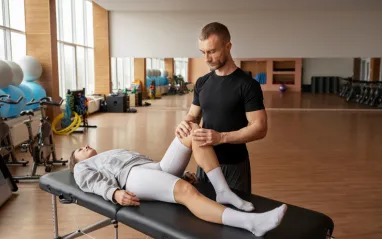
Knee Replacement Rehab Therapy for Better Mobility, Strength and Recovery
Knee replacement surgery can offer tremendous relief to those whose functional knee pain, stiffness or limited mobility has started to disrupt daily living. The operation, however, is just one step in the recovery. The knee and surrounding muscles must get time, motion and specific surgical rehabilitation to get the knee back to function. This is where knee replacement rehab therapy can be of great significance.
A set of progressive exercises will enable patients to get back movement in their knee, to build up strength and regain the ability to walk and undertake everyday activities. Progressive exercises and movement strategies, depending upon the patient's condition and stage of healing, are provided through professional therapy as opposed to attempting to heal the knee with rest alone.
Rehabilitation may be very different for people. There are a number of factors that can affect progress, such as age, general fitness, surgical technique, muscle strength and any pre-existing movement restrictions present before surgery. Patients can also benefit from a qualified physical therapist to know what to expect during recovery and choose various goals.
Understanding Knee Replacement Recovery
Typically, knee replacement recovery occurs over a period of time, not immediately. Patients might have some swelling, pain, stiffness and weakness around the surgical knee immediately following surgery. Starting to stand up, walk and ascend and descend stairs might be challenging at first.
Rehabilitation will centre around increasing the knee range of motion and strength returned, which is required to support the knee as healing occurs. Simple movements may be started and then made more difficult and complex, increasing exercise/fun activities.
Knee replacement rehabilitation isn't just about making the knee comfortable; it's about helping it to function better. It's also the idea of giving the patient the confidence in movement and physical skills needed to become an independent person in their daily activities.
Why Rehabilitation Matters After Knee Replacement
Rehabilitation is crucial to restoring patients' activities after surgery. If effective motion and building are not provided, stiffness and muscle weakness may persist during healing of the surgical site.
With the guidance of a skilled rehabilitation after knee surgery specialist, patients can then help to accelerate their progress towards greater mobility, taking it easy on the body. The therapist can observe the quality of the movement and make sure to make the exercises progressively harder and give directions about activities required throughout the different phases.
Professional rehab can also help to stop the patient from excessive use of the unaffected leg or the formation of other movement patterns. These can be addressed early, thus helping achieve balanced and efficient movement during recovery.
Whereas, the idea of structured post-op rehab services would enable healthcare companies to aid with patient recovery after surgery. A holistic rehabilitation will help maintain continuity of care and guide patients in their recovery path to the professional level.
How Physical Therapy Supports Knee Replacement Recovery
Physical therapy takes care of numerous crucial aspects of recovery. This programme may vary depending on the patients' level of strength, mobility and confidence.
Improving Knee Range of Motion
In the wake of knee replacement surgery, one of the most critical objectives is to restore range of motion (ROM). As the recovery progresses, swelling/stiffness may make it difficult to bend and straighten the knee while wearing a cast.
A physical therapist can also prescribe controlled movement exercises and gentle stretches to facilitate movement of the area in a gradual manner to help the healing process. The goal is to move forward and not put undue stress upon recovering tissues. Appropriately prescribed regular movement can be bidirectional in aiming for functional knee mobility.
Rebuilding Strength After Surgery
Surgery and less activity can make muscles around the knee/leg weaker. Strengthening will help to rebuild the ability to stand, walk, climb stairs and do more everyday activities.
Simple exercises can be used to activate muscles and also to practise controlled movements before the resistance exercises that will eventually help them strengthen their muscles. Selection of repetitions, resistance and exercises can be modified based on the therapist's interpretation of the progress made by each individual.
Strength development is especially significant, as sufficient muscle strength may aid with the control of legs operated on and confidence when moving.
Improving Walking and Mobility
After knee replacement walking is a crucial functional objective. Patients will initially need a walker and gradually be able to decrease reliance on it as their strength, balance and confidence improve.
Physical therapy can evaluate walking patterns and offer you tips on posture, weight distribution and step control. Another area of functional training may involve prepping patients for activities like getting up and down from chairs, walking longer distances or manoeuvring stairs.
This isn't about going as fast as you can for as far as you can; it's about moving more safely and efficiently than ever before.
Developing Better Balance and Stability
Significantly weak muscles and altered movement patterns and decreased activity can cause imbalance post-surgery. Balance and stability exercises can be used in rehabilitation to assist with regaining control of the operated leg.
Greater balance can help to improve one's control of the body when transitioning back to a daily routine in situations that involve surfaces, steps or changes of direction. Exercises can be increased slowly as the patient gets better.
Key Stages of Knee Replacement Rehabilitation
Each patient's journey to recovery is unique, but rehabilitation typically follows a sequence of getting patients back to mobility and advancing to increased strength and functional independence.
Early Recovery and Mobility
Very gentle knee movement, activation of muscles, transfers and supported walking exercises may be performed during the course of treatment.
The working role of the therapist is to add/remove appropriate activity according to the client's complaint of pain/swelling, surgical instructions and the patient's overall condition. Focus is on developing good movement patterns and not on progressing to an intense exercise too quickly.
Exercise caution, patience, and endurance while developing strength and flexibility.
Building Strength and Flexibility
With once-acquired mobility, rehabilitation can be more difficult. Strengthening exercises can be aimed at muscles of the lower limbs, such as the quadriceps, hamstrings, hips and more.
This is an important time for flexibility and joint mobility. Exercise rules apply here as well – starting with the correct intensity and gradually increasing it can help patients gradually build their physical fitness and stamina, which can then be used to walk further and engage in more challenging domestic activities, etc.
Returning to Functional Activities
Later rehabilitation involves the application to 'real-life' tasks of improved strength and mobility. The patient can practise what it is they live in or are important to their lifestyle: stairs used for going up and down the stairs, controlled squatting, walking, etc.
Depending on the patient's goals (to return to work, recreational or normal daily activity with the therapist, etc.), modifications of functional activities will be made by the therapist.
How Therapists Personalise Knee Replacement Rehabilitation
No one rehabilitation programme is suitable for all patients having a knee replacement. During an assessment with a professional, they assess your range of motion, muscle strength, walking ability, personal goals, pain, surgical history and your balance.
It is also important to check for progress during the course of treatment. Exercises can be progressed if the patient is progressing comfortably. Should swelling or discomfort or difficulties in movement worsen, the programme can be adapted.
Rehabilitation services are another valuable physical therapy tool, and a comprehensive rehabilitation provider may offer more than just these types of services. For instance, programmes for back pain relief from Fremont may address different musculoskeletal issues from those of back pain rehabilitation. In addition to searching for rehabilitation services in their area, patients may also be looking into physical therapy in Los Gatos or physical therapy in Los Gatos, CA.
Multispecialty businesses can potentially offer patients at a variety of recovery levels and a wider variety of medical issues. This can help deliver a more comprehensive patient-care experience and helps to build the practice's reputation as a trusted resource for rehabilitation.
When to Seek Professional Rehabilitation After Knee Surgery
Generally, it is essential to regard the use of a specialist rehabilitation programme as part of the post-operative recovery plan and not restricted to patients who are having issues. Assessment in the early stages enables the therapist to develop a logical progression and have insight into the functional limitations of the patient.
If pain is getting worse, patients should also consult their healthcare provider if they are not improving on their walking, their normal routine or are having ongoing trouble with how stiff or weak they are. A therapist is able to evaluate motion and decide if adjustments to the programme offered for rehabilitation may be warranted.
Other physical or neurological needs may be equivalent, for which rehabilitation providers may also work. For instance, therapists employed with Parkinson's disease may supply specialised movement-based therapy for people with mobility problems due to Parkinson's disease. This illustrates the role that physical therapy can play in going beyond a specific diagnosis and supporting multiple patient groups in a unique way.
Conclusion
Many individuals who have had knee replacement surgery will experience a period of rehabilitation, which involves knee replacement rehab therapy. Rehabilitation focuses on restoring motion, strength, balance and confidence to the knee so that it will be used to its full potential to compensate for the damaged joint during functioning.
All aspects of knee replacement rehabilitation serve a purpose – from improving range of motion and strengthening weak muscles to restoring the ability to walk and to function independently. A customised method can assist therapy to be progressed based on healing, physical ability and individual objectives.
Selecting a professional rehabilitation after knee surgery will enable the patients to receive organised directions and guidance on safe progression. Specialised post-operative rehabilitation, including back pain rehab and other focused programmes, can be added to physical therapy services to offer more value to patients and complement other treatments for physical therapists.
Good patient" can regain mobility, increase their confidence in daily living activities, and make progress toward better function after knee replacement surgery – with help from the right practitioner, regular involvement and realistic goals.
Frequently Asked Questions
Q1. What is the best rehab for knee replacement?
The best rehab combines physical therapy, range-of-motion exercises, strengthening, walking practice, balance training, and gradual progression under professional guidance.
Q2. How to build knee strength after knee replacement?
Build knee strength through prescribed exercises such as leg raises, knee extensions, sit-to-stands, and controlled strengthening, gradually increasing intensity.
Q3. What is the recommended rehabilitation protocol for knee replacement surgery?
Rehabilitation typically progresses from pain and swelling management to mobility, range-of-motion exercises, strengthening, walking, balance, and functional activities.
Q4. How many times a week should I do knee rehab?
Most patients benefit from regular rehabilitation exercises daily, with physical therapy sessions commonly scheduled several times weekly based on individual recovery.
Q5. What is the most important exercise after knee replacement?
Early knee-bending and straightening exercises are especially important for restoring range of motion, while strengthening exercises support mobility and long-term function.


