
 Menu

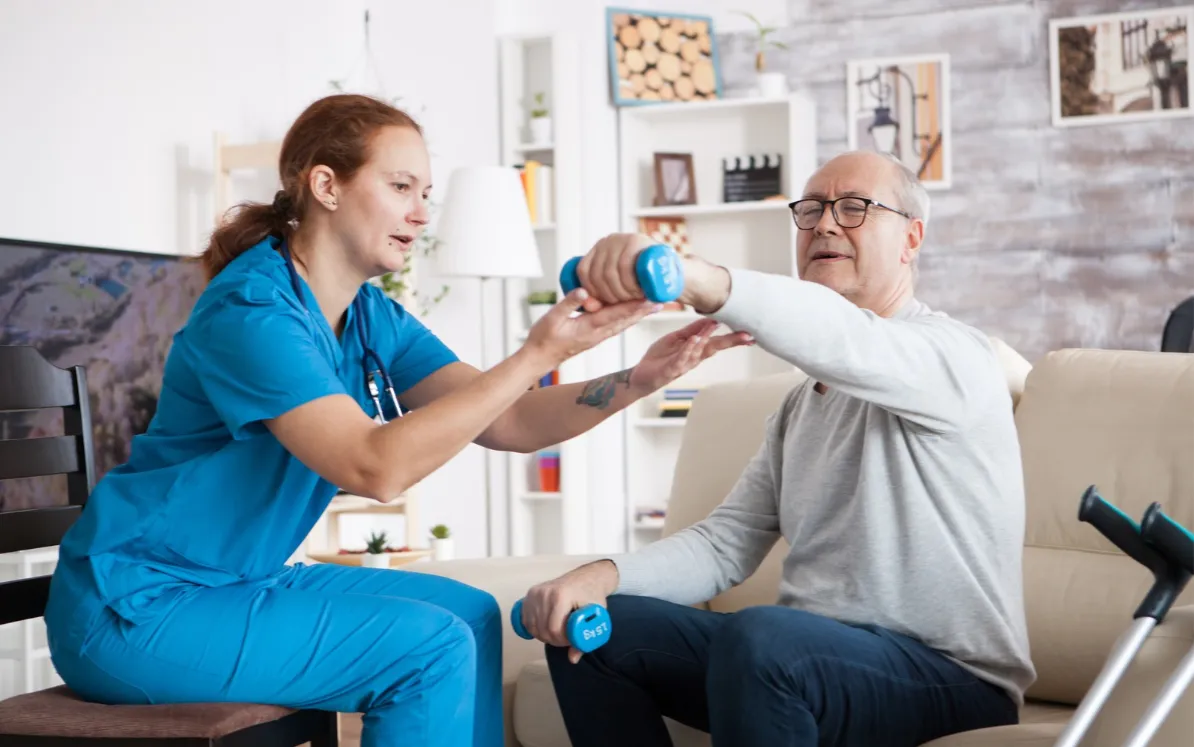
Parkinson’s Physical Therapy in Fremont: How PWR! Moves Improves Mobility
Parkinson's disease is a progressive neurological disorder that causes problems with movement, coordination, balance, and muscle control. Ordinary tasks will start to become harder and harder, including walking, standing, making a turn, and dressing. Confidence and independence may also be affected because of less speed of movement, stiffness of muscles, and changes in posture.
There's currently no cure for Parkinson's disease, but proper rehabilitation could be of assistance when it comes to managing movement issues and keeping functional abilities. At Parkinson's Physical Therapy in Fremont, patients may join a group of trained professionals for a systematic series of exercises and to find their personal treatment plan. One specialized approach is PWR! Moves: Practice larger and more meaningful movements and look to resolve common PD movement problems.
This session discusses the understanding of what PD is and how it affects movement. This session will cover the understanding of Parkinson's disease and its effects on movement.
Understanding Parkinson’s Disease and Its Impact on Movement
Parkinson's disease is a condition in which cells in the brain start to become damaged or dead in the brain that normally produce a chemical called dopamine. Dopamine is crucial for smooth and coordinated movement control. Lower dopamine levels can lead to increased brain susceptibility to levels of both overt and covert physical changes.
Symptoms affecting movements can be observed as tremor, rigidity of movements, slow movement, a loss of balance, and impaired motor coordination. Others find their steps become shorter, they use less arm movement, they have trouble initiating walking, or they experience “freezing” when they need to change direction.
The symptoms can make it difficult to carry out normal day-to-day activities and may affect physical independence. For instance, exercising as if led out of the chair, walking through a crowd, or standing up straight might take more effort. Physical Therapy in Fremont can complement this treatment by employing targeted movements, exercises to improve balance, and functional activities tailored to address the patient's specific needs and abilities.
What Is PWR! Moves and How Does It Support Parkinson’s Rehabilitation?
PWR! Moves are a type of exercise that can be used to target movement changes that are characteristic of Parkinson's. The acronym PWR is an acronym for Parkinson Wellness Recovery. Its exercises concentrate on practicing larger movements as well as enhancing physical skills required for daily tasks.
The program is based on the 4 movement patterns of PWR! Up, PWR! Rock, PWR! Twist, and PWR! Step. These movements work on changing the body, changing the weight, trunk rotation, and stepping ability. Exercises may be done in various positions and modified to support another patient's physical capabilities.
It is to facilitate performing activities that may become slower and/or smaller with the development of PD. The consistent training and professional guidance are capable of effectively helping patients improve the awareness, coordination, and functional performance of their movements.
A physical therapist who is qualified in the assessment of motion can select exercises that correspond to the individual's rehabilitation goals and symptoms. This makes PWR! Transfers a structured option from a wider program of rehabilitation for Parkinson's.
How PWR! Moves Improves Mobility in People With Parkinson’s Disease
PWR! Takes care of several movement problems that may impact independence. This intervention approach focuses not on a single symptom but on implementing various movements that can support daily functioning by the patient.
Improving Movement Amplitude and Body Control
Parkinson's patients can develop bradykinesia, characterized by abnormally slow movement, as well as hypokinesia, reduced amplitude of movement. Efforts of daily living may seem more demanding and bigger.
Patients are motivated to practice PWR exercises, which require bigger and more conscious movement. practicing larger, more deliberate movement. Reaching, extending the arms, and changing the body positions enable the development of movement awareness and control. With repetitive practice, patients might become more proficient in using these movement schemas in daily activities.
Enhancing Balance and Postural Stability
Wardrobe and balance problems can be unsettling and make walking less safe. Weight-shifting activities in PWR! exercises test patients' body position control and stability.
The activities in this section may be useful for developing postural awareness and balance reactions and increasing confidence while standing. Treatment difficulty needs to be customized to the balance abilities and safety needs of the individual.
Developing Walking Speed and Coordination
Changes in walking patterns are common in Parkinson's disease. Shorter alternation of steps, less arm swing, and inconsistencies in the rhythm of walking.
Patients can practise purposeful walking patterns in stepping, changing direction and moving in a coordinated manner. There can also be external cues loaded, such as visual floor markers and/or rhythmic counting, to facilitate movement initiation and movement step uniformity.
Increasing Flexibility and Reducing Muscle Stiffness
Muscle rigidity may limit the range of comfortable movement and the ability to turn the trunk, reach above, or move from one position to another. Stretching and rotational movements can help maintain flexibility and promote better movement.
PWR! Rock and PWR! Twist movements promote trunk rotation and shifting of the weight and encourage weight shifting to practice movements that are important for turning, reaching, and maintaining mobility.
Strengthening Muscles for Better Functional Mobility
Everyday activities are more difficult with muscle weakness and decreased levels of activity. There might be strengthening exercises that involve the legs, hips, trunk, and upper body for supporting standing, walking, and maintaining posture.
Progressive exercises can enhance muscular endurance and functional strength. Depending on the patient's condition, the intensity of the exercise is adjusted so that training is easily and appropriately executed.
What to Expect During a Parkinson’s Physical Therapy Session in Fremont
A physical therapy session in Fremont will most likely start by assessing a patient's movement skills, balance, walking, posture, strength, and functional limitations. The therapist will also review personal medical history, current symptoms, past falls, and difficulties in activities that need to be discussed.
This information will help the therapist determine each individual's treatment schedule. Sessions can have the element of PWR! Strengthening exercises, flexibility exercises, walking practice, balance exercises, and functional strengthening exercises. Patients can also exercise by sitting up from a chair, turning in and out of directions, and exercising movements that are relevant to their real life.
Therapist models appropriate techniques and adjust activities as needed. Recommendations for participation at home may also be provided to support participation between visits. Treatments will be determined by a patient's individual needs, medical factors, and effectiveness of rehabilitation.
How Physical Therapy Helps With Everyday Parkinson’s Movement Challenges
Rehabilitation for Parkinson's aims to enhance patients' movements during daily activities. In a supervised setting when performing functional activities, individuals can learn strategies to manage the typical movement challenges they may have.
Making Walking and Turning Easier
Patients may have a reduced step length and/or freezing episodes, which can cause words to become difficult to walk and turn. Stepping drills, weight-shifting exercises, and movement cues are among the techniques that therapists may employ to encourage better-controlled walking.
Deliberate and appropriate turn practice with deliberate movements can help patients adopt safer movement strategies.
Improving Sitting, Standing, and Transitions
Changing from sitting to standing, and vice versa, involves coordination, strength, and balance. Specific exercises can be used to practice the shifting of weight into the anterior direction, practice standing controlled, and practice safe sitting techniques.
These transitions can be more manageable during activities through repetitions of functional practices.
Better Posture and Body Mechanics
Some of the physical changes associated with Parkinson's disease may lead to an 'anteflexed' trunk and limited trunk motion. Activity exercises for patients in a standing position, stretches designed to attain length of the spine, and trunk rotation exercises can improve patients' awareness of their posture.
Posture improvement can also help change balance and facilitate activities of reaching and walking.
Supporting Daily Activities and Independence
Rehabilitation can include training for activities like putting on clothing, reaching, carrying something light, and moving around in the house. Use movement strategies and exercises that are appropriate to the patient's activities.
Occupational therapy could be used in conjunction with physical rehab, helping with fine motor skills, task adaptations, and home safety. These services combined can help achieve the goals of independence and participation and enable individuals to more fully enjoy daily life.
Why Choose Parkinson’s Physical Therapy in Fremont, CA?
For people suffering a progressive neurological disease, it is key to select a rehabilitation provider that is right for them. Patients will need to find a physical therapy clinic in Fremont, CA, that has an in-depth understanding of the movement impairments that may occur as a result of Parkinson's disease and provide tailored care through clinical evaluation.
Presenting an indication to physical therapy from Fremont, California, may give patients organized movement training, balance exercises, gait rehabilitation, and functional strengthening. Treatment can be tailored to patients' abilities and goals with the advice of those experienced in Parkinson's rehabilitation.
For rehabilitation businesses, providing specialized neurological services such as PWR! Moves can open up treatment opportunities and contribute to addressing an important community healthcare need. These services may also enhance patient connections, assist in the continuity of care, and educate patients about rehabilitation services available. Patients and families must have an understanding of treatment options and expected results for informed choice.
Conclusion
Parkinson's disease may impact how you walk, how your body balances, how you hold yourself, how you coordinate, and your everyday independence. However, structured rehabilitation is available to help individuals acquire successful strategies for moving and keep moving their arms and legs. PWR! The Movves approach to exercise aims to be more specialised and concentrate on weight-shifting, big movements, flexibility, balance and co-ordination.
Individual Parkinson's physical therapy in Fremont can help patients achieve their goals of improved mobility in a personalized manner by providing expert guidance and practice. Specialized exercises can be trained with functional exercises and with suitable activities at home, which allows people to have confidence in moving and stay active in their everyday lives.
Frequently Asked Questions
Q1. What are PWR! Moves exercises, and how do they work for Parkinson’s?
PWR! Moves are Parkinson’s-specific exercises that improve posture, mobility, balance, flexibility, and movement speed through targeted, functional physical activities.
Q2. How often should someone with Parkinson’s disease attend physical therapy?
Most people with Parkinson’s benefit from physical therapy two to three times weekly, depending on their symptoms, mobility, goals, and therapist’s recommendations.
Q3. Is PWR! Moves suitable for people in the early stages of Parkinson’s disease?
Yes, PWR! Moves can benefit people in early Parkinson’s stages by improving movement patterns, maintaining mobility, building strength, and supporting long-term independence.
Q4. Can physical therapy help manage freezing of gait in Parkinson’s patients?
Yes, physical therapy uses cueing techniques, balance training, and movement strategies to help manage freezing episodes and improve walking confidence.
Q5. Can regular physical therapy help reduce the risk of falls in people with Parkinson’s?
Yes, regular physical therapy improves balance, leg strength, coordination, and walking stability, helping people with Parkinson’s reduce their risk of falls.


