 Menu
Menu

Sports and Work Injury Rehabilitation: Your Path to Full Recovery
Injuries happen. In sports, they happen when the body is pushed to and sometimes beyond - its physical limits. At work, they happen through the accumulated strain of repetitive tasks, the sudden mechanics of a fall or awkward lift, or the sustained postures that turn manageable discomfort into debilitating pain over weeks and months. Whether the injury arrives in a single traumatic moment or develops gradually over time, the question that follows is always the same: how do I get back to the life I was living before the injury?
The answer, for the vast majority of sports and work injuries, runs through rehabilitation - specifically, skilled physical therapy that addresses not just the site of pain but the whole movement system, restores function progressively and safely, and prepares the body to return to the demands that caused the injury without simply repeating the same vulnerability. At iMotion Physical Therapy, this rehabilitation process is at the core of everything, delivered by licensed therapists whose expertise and approach reflect a genuine commitment to helping every patient reach their fullest recovery.
Sports Injuries: What Rehabilitation Actually Achieves
The sports injury rehabilitation process is frequently misunderstood. Many athletes — and many non-athletes who sustain injuries during physical activity — expect rehabilitation to follow a linear path: the injured structure heals, pain resolves, and the person returns to sport. The reality is considerably more nuanced and considerably more productive than this picture suggests.
Effective sports injury rehabilitation addresses multiple recovery objectives simultaneously. Healing of the injured tissue is certainly one of them - but tissue healing alone does not restore function. When a muscle, tendon, ligament, or bone is injured, the neuromuscular patterns that control movement around that structure are disrupted. The body compensates - redistributing load, altering movement patterns, reducing activation in the injured area - in ways that protect the healing tissue in the short term but create secondary vulnerabilities if left uncorrected.
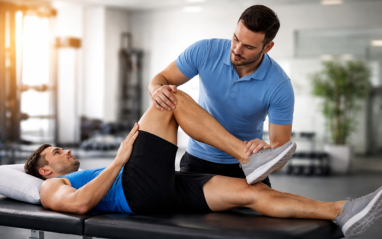
Skilled rehabilitation identifies these compensatory patterns and systematically addresses them alongside the primary injury. Strength deficits that develop during the protected healing phase are rebuilt progressively. Range of motion that has been restricted is restored through targeted mobilization and exercise. Proprioception - the body's awareness of joint position and movement - is specifically rehabilitated through balance and coordination training because proprioceptive deficits following injury are one of the primary predictors of re-injury if left unaddressed.
The progression toward return to sport is managed with the same systematic attention. Functional testing - assessing whether the rehabilitated area can manage the specific demands of the athlete's sport at the required intensity - provides objective criteria for return decisions rather than relying on time alone or symptom resolution. An athlete who is pain-free but has not restored full strength, power, and neuromuscular control is at significantly elevated re-injury risk. iMotion's sports rehabilitation programs take this full-spectrum view of recovery as their foundation.
Common Sports Injuries Seen in Rehabilitation
The range of sports injuries that respond well to skilled physical therapy rehabilitation is extensive. Knee injuries—including ACL tears, meniscal injuries, patellar tendinopathy, and IT band syndrome—are among the most common presentations and the most rewarding to rehabilitate when the process is managed with appropriate expertise and patience.
Shoulder injuries present particular rehabilitation challenges due to the joint's extraordinary range of motion and the complexity of the muscular system that controls it. Rotator cuff injuries, labral tears, and shoulder instability conditions all require rehabilitation programs that rebuild not just strength but also the precise neuromuscular coordination that makes the shoulder both mobile and stable under load. Rushing this process - returning to overhead sport or throwing activity before true functional restoration - reliably produces recurrence.
Ankle sprains are among the most frequently under-rehabilitated sports injuries. The immediate management of swelling and pain is often addressed, but the proprioceptive and strength deficits that persist after the pain resolves are frequently left unaddressed - explaining why ankle sprains have among the highest recurrence rates of any sports injury. A complete ankle rehabilitation program at iMotion restores full function at every level, significantly reducing recurrence risk.
Hamstring strains, hip flexor injuries, stress fractures, and the overuse injuries associated with running and cycling all require rehabilitation approaches specific to their mechanisms and to the sport demands involved. iMotion's therapists work across this full spectrum of sports injury presentations with the expertise that produces outcomes rather than simply managing symptoms.
Work Injury Rehabilitation: A Different Set of Demands
Work-related injuries present a rehabilitation context with distinct characteristics and objectives. The goal of sports rehabilitation is typically a return to athletic performance. The goal of work injury rehabilitation is returning to work - ideally a full-duty return - in a timeline that respects both the biological reality of tissue healing and the practical realities of employment.
The most common work-related injuries seen in physical therapy practice involve the spine, particularly the lower back, and the upper extremity - shoulder, elbow, wrist, and hand. Back injuries sustained through lifting, sustained awkward posture, or repetitive bending are among the most significant contributors to work absence across all industries. Rehabilitation that addresses not just the acute pain episode but also the underlying movement patterns, core stability deficits, and postural habits that contributed to the injury is essential for sustainable recovery and prevention of recurrence.
Upper extremity work injuries - carpal tunnel syndrome, lateral epicondylitis, rotator cuff tendinopathy, and cumulative trauma conditions - are frequently the product of sustained or repetitive demands that the musculoskeletal system was not adequately prepared to manage. Rehabilitation addresses the tissue-level condition while also examining the ergonomic and movement factors that allowed it to develop, providing the patient with the tools and understanding to manage their work demands more effectively going forward.
Conclusion
What distinguishes exceptional rehabilitation from adequate care is the quality of the therapeutic relationship, the depth of clinical assessment, and the integration of all available tools around the specific individual and their specific goals.
At iMotion, every rehabilitation journey begins with a thorough evaluation that goes beyond identifying the diagnosis to understanding the person behind it - what their daily demands require, what activities they are most motivated to return to, and what barriers may complicate recovery. Treatment is built around this complete picture.
The range of tools available at iMotion extends the scope of what rehabilitation can achieve. Manual therapy directly addresses tissue restrictions and joint mobility limitations that exercise alone cannot reach. Laser therapy supports tissue healing and reduces inflammation at a biological level. Shockwave therapy provides a powerful stimulus for healing in chronic tendon conditions that have failed to respond to other approaches. Aquatic therapy creates an environment for progressive loading that is particularly valuable in the early phases of post-surgical or severe injury rehabilitation. The AlterG anti-gravity treadmill enables progressive gait rehabilitation at body weight fractions that make walking and running possible well before full weight-bearing is tolerated.
These tools are not used in isolation. They are selected and combined around each individual patient's needs by therapists who have both the technical training and the clinical judgment to determine which approach will advance recovery most effectively at each stage of the rehabilitation process.
Recovery from sports and work injuries is not passive. It requires commitment, expert guidance, and a rehabilitation environment equipped to support every phase of the journey. iMotion Physical Therapy provides all three.


