
 Menu
Menu

Knee Rehab in Fremont: Best Therapy After Knee Replacement Surgery
What Is Knee Rehab After Replacement Surgery?
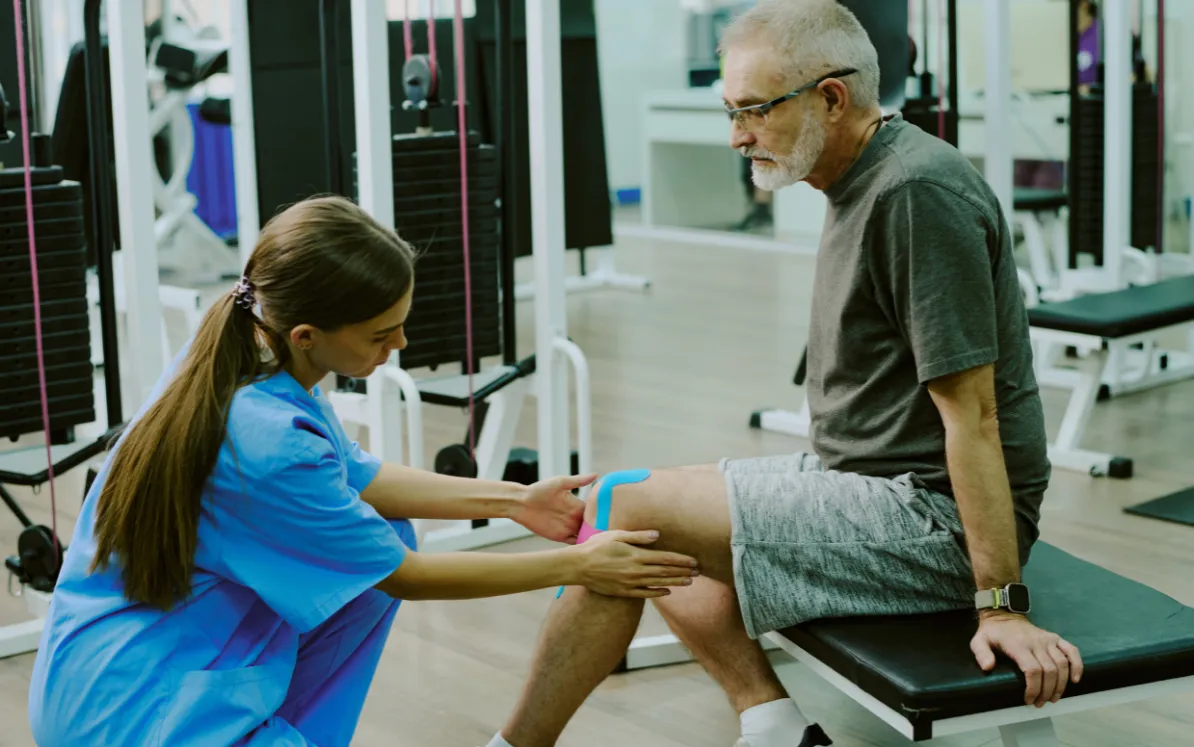
Knee rehab after replacement surgery is a structured physical therapy program that restores your strength, flexibility, and walking ability. It typically starts within 24 hours of surgery and continues for 3 to 6 months. In Fremont, iMotion Physical Therapy offers hands-on, personalized knee replacement rehabilitation at two clinic locations—with programs designed around your specific recovery stage and daily goals.
Why Knee Rehab Is Non-Negotiable After Surgery
You had the surgery. The damaged joint is replaced. But here is what most patients don't realize until they're in recovery: the surgery fixes the joint. Physical therapy teaches you how to use it again.
Without rehab, the muscles around your new knee stay weak. Scar tissue builds up. Range of motion stalls. The implant works perfectly — but your knee doesn't.
Studies consistently show that patients who commit to structured post-surgical PT:
Walk independently faster
Return to daily activities weeks sooner
Experience less long-term stiffness
Reduce their risk of secondary complications like blood clots and fall-related re-injury
The difference between a frustrating recovery and a full one is almost always the quality and consistency of rehabilitation.
What the Recovery Timeline Actually Looks Like
There is no universal timeline—every patient's age, health, and pre-surgery fitness level play a role. But here is a realistic, evidence-based picture of what to expect:
The recovery process after surgery happens in several stages and gradually improves over time. During the hospital and immediate recovery phase (Days 1–3), patients usually begin taking their first steps with the help of a walker while starting basic exercises. In the early home recovery stage (Weeks 1–3), patients continue using a walker or crutches, focus on pain management, and perform gentle movements to support healing.
By Week 2–3, outpatient physical therapy typically begins, where the focus shifts to improving range of motion and rebuilding strength. During the building independence phase (Weeks 4–6), swelling starts to reduce, walking becomes easier, and patients gradually return to basic household activities.
In the strengthening phase (Weeks 6–12), exercises become more intensive, especially for the quadriceps, hamstrings, and balance training. Finally, during the full functional recovery phase (Months 3–12), patients are generally able to return to low-impact activities such as cycling, walking, and golf while continuing to regain strength and mobility.
One important stat: Most patients can walk without assistance within 3 weeks of surgery. Full recovery — meaning stable strength and near-normal motion — typically lands between 6 and 12 months, depending on how consistently you follow your PT program.
What Knee Rehab at iMotion Physical Therapy Actually Involves
iMotion Physical Therapy in Fremont runs a dedicated knee replacement rehabilitation program. Here is what a typical treatment plan includes:
Manual Therapy
Hands-on joint mobilization and soft tissue work to reduce scar tissue formation and improve the range of motion in your new knee. This is not something a home exercise video can replace — it requires a licensed therapist who knows how a post-surgical knee responds to pressure and movement.
Therapeutic Exercise Progression
Carefully sequenced exercises that start where you are—not where a generic program thinks you should be. Phase one focuses on basic activation of the quadriceps and hamstrings. As you progress, loading increases gradually to rebuild functional strength without overloading the healing joint.
AlterG Anti-Gravity Treadmill
This is one of iMotion's most effective tools for knee rehab. The AlterG allows you to walk at a reduced percentage of your body weight—as low as 20%—which means you can work on your gait pattern and rebuild walking confidence long before your knee is ready to handle a full weight-bearing load.
For knee replacement patients, this is a game-changer. It closes the gap between "too early to walk normally" and "ready for full weight-bearing" in a controlled, progressive way.
Aquatic Therapy (San Jose Location)
Water-based rehabilitation reduces joint load significantly, making it ideal for patients who are earlier in recovery or managing significant swelling and pain. iMotion's San Jose location offers aquatic therapy as part of a comprehensive program.
Gait Training and Balance Work
A new knee changes how you walk — at least initially. Without specific gait training, many patients develop compensatory movement patterns that cause problems in the hip, lower back, or opposite knee over time. iMotion's therapists address this directly, teaching you to walk, climb stairs, and move in patterns that protect the new joint for the long term.
Real Patient Perspective
One iMotion patient recovering from knee surgery described their experience this way:
"All of the staff at iMotion are incredibly helpful — with their support, I have experienced a lot of improvement in mobility, strength, and pain levels since my knee surgeries. They have gone above and beyond in their care... I have found that everyone here is understanding and flexible, both in terms of scheduling and tweaking exercise routines."
That flexibility matters in knee rehab. Not every week goes to plan. Swelling flares up. A session gets too aggressive. A good PT team adjusts rather than pushing a rigid protocol regardless of how you feel that day.
5 Things That Slow Down Knee Rehab Recovery
Knowing the pitfalls is as useful as knowing the protocol:
Skipping sessions — Consistency is everything. Missing two weeks of PT mid-recovery sets progress back significantly.
Doing too much too soon — Overloading the knee before it's ready creates swelling and delays the next phase.
Ignoring home exercises — Clinic visits build the foundation. Home exercises are what cement the progress.
Poor pain management — Undertreated pain causes patients to guard and move incorrectly, which slows healing.
Waiting too long to start PT — The ideal window to begin outpatient PT is weeks 2 to 3 post-surgery. Waiting past week 4 allows stiffness to set in and makes range-of-motion work significantly harder.
Frequently Asked Questions
Q: How soon after knee replacement surgery should I start physical therapy?
A: PT begins in the hospital within 24 hours of surgery in most cases — a therapist helps you stand and take your first steps. Outpatient PT at a clinic like iMotion typically starts around weeks 2 to 3, once you are stable enough to travel and ready for structured rehabilitation.
Q: How many PT sessions will I need after knee replacement?
A: Most patients attend 2 to 3 outpatient sessions per week for the first 6 to 8 weeks, then taper to 1 to 2 sessions weekly as home exercise volume increases. Total session count varies — your therapist at iMotion will outline a projected plan during your initial evaluation based on your specific recovery status.
Q: Is knee rehab in Fremont covered by insurance?
A: iMotion Physical Therapy accepts most major insurance plans at their Fremont locations. It is always best to confirm your specific plan's coverage before your first appointment. Call (510) 745-7700 (Paseo Padre Clinic) or (341) 342-6003 (Mowry Ave Clinic) to verify.
Q: What is the difference between total and partial knee replacement rehab?
A: Partial knee replacement (where only one compartment of the knee is replaced) generally has a faster and less intensive rehab timeline compared to total knee replacement. Most partial replacement patients progress through PT phases 2 to 4 weeks faster. However, both procedures require a structured, progressive PT program for a full outcome.
Q: Will I need to use a walker the whole time I'm in rehab?
A: No. Most patients transition from a walker to a cane within 2 to 3 weeks and to walking unassisted by week 4 to 6, depending on their strength and confidence. Your physical therapist at iMotion determines the right progression pace based on your actual movement patterns—not a fixed calendar.
Q: What exercises should I avoid after knee replacement?
A: High-impact activities — running, jumping, contact sports, heavy squatting — are typically restricted for the first 3 to 6 months. Your surgeon will provide specific activity restrictions. Your PT works within those boundaries while maximizing what you can do, which is a significant amount even early in recovery.
Where to Get Knee Rehab in Fremont
iMotion Physical Therapy has two Fremont locations and a dedicated knee replacement rehabilitation program backed by a team serving over 21,000 patients across the Bay Area.
Conclusion
Knee replacement surgery is a significant decision — and the recovery that follows deserves the same level of care as the surgery itself. The joint is new. But walking confidently, climbing stairs without thinking about it, and getting back to the activities that matter to you—that part takes a committed, expert-led rehabilitation plan.


