 Menu
Menu

How Manual Therapy Helps Improve Flexibility and Recovery
Manual therapy is a hands-on physical therapy treatment—joint mobilization, soft tissue work, and stretching techniques applied directly by a licensed therapist. It improves flexibility by releasing restricted tissue and restoring joint movement. For recovery, it reduces inflammation response, breaks down scar tissue, and restores normal movement patterns faster than exercise alone does. Available at iMotion Physical Therapy in Los Gatos, CA.
The Session That Changed How One Los Gatos Runner Thought About Recovery
Maria had been running the Los Gatos Creek Trail three mornings a week for six years. After a hamstring strain that she ignored for two months — telling herself it would sort itself out — she finally walked into a physical therapy clinic in Los Gatos unable to run a full mile without stopping.
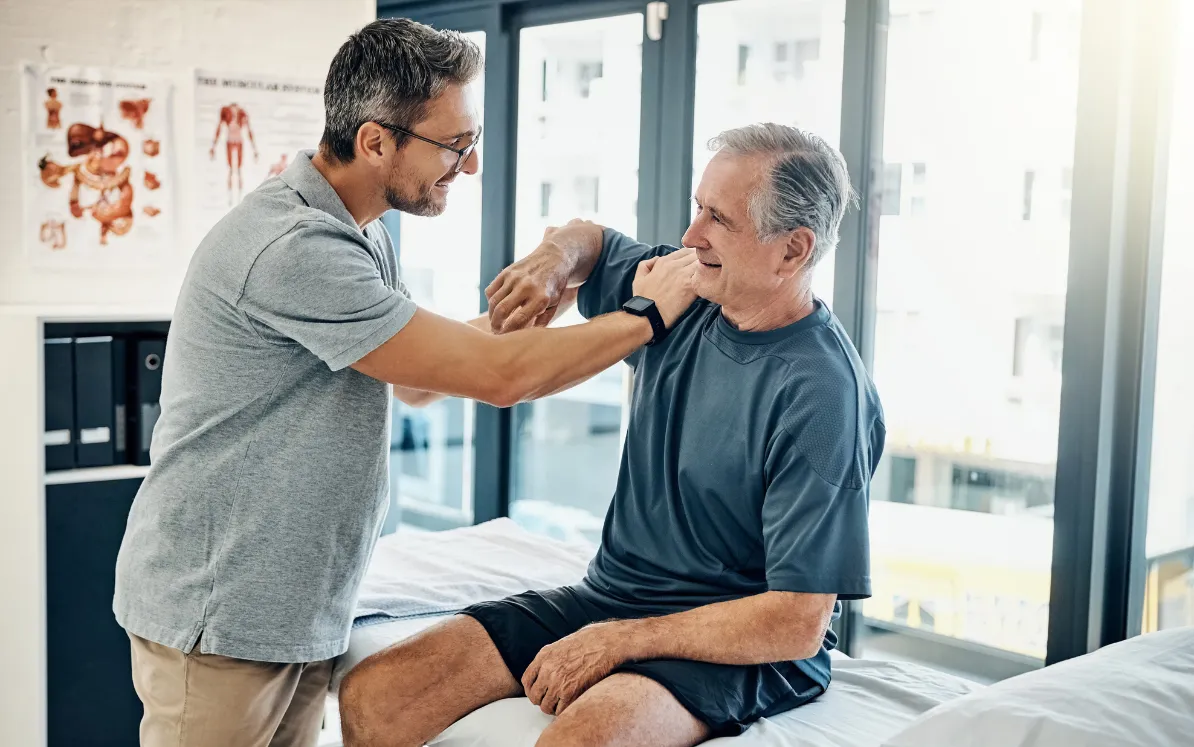
Her therapist did not start with a resistance band circuit. He spent the first twenty minutes with his hands on her hip flexors, her lumbar spine, and the hamstring attachment at the sit bone. By the end of the session, her stride length had already improved. Not because of an exercise. Because of direct, skilled, hands-on work.
That is manual therapy. And it is consistently the most underexplained tool in physical rehabilitation.
What Manual Therapy Actually Is
Manual therapy is a clinical approach within physical therapy where a licensed therapist uses their hands — not machines, not resistance equipment — to assess and treat musculoskeletal and neurological conditions. It is not massage. It is not passive stretching. It is a precise, evidence-based set of techniques applied with clinical intent.
The main manual therapy techniques used in modern physical therapy practice include:
Joint Mobilization Graded, rhythmic movement applied to a joint to restore its normal range of motion. Grades I through IV represent increasing amplitude and depth of movement. Grade V—the manipulation or high-velocity thrust—is used selectively and only when appropriate. Joint mobilization is particularly effective for stiff spinal segments, restricted shoulder joints, and post-surgical knees that have lost range of motion.
Soft Tissue Mobilization (STM) Direct work on muscle, fascia, and connective tissue to release adhesions and restore normal tissue mobility. When scar tissue forms after injury or surgery, it does not organize itself in the same directional pattern as healthy tissue—it lays down chaotically. Soft tissue mobilization physically reorganizes this tissue, improving both flexibility and the quality of movement.
Instrument-Assisted Soft Tissue Mobilization (IASTM) A variant of STM using beveled stainless steel tools—commonly associated with the Graston Technique—to detect and treat areas of fibrosis and scar tissue. IASTM can reach tissue depths that manual finger pressure alone cannot.
Myofascial Release Sustained, low-load pressure applied to the fascial system—the connective tissue network that runs continuously throughout the body. Restrictions in fascia at one location frequently create tension and movement limitations at sites seemingly unrelated to the original injury.
Neuromuscular Techniques Techniques like proprioceptive neuromuscular facilitation (PNF) stretching combine manual resistance with the patient's own muscle activation to achieve flexibility gains that passive stretching cannot produce alone.
How Manual Therapy Improves Flexibility
Flexibility is not simply about muscle length. It is about the combined mobility of muscle, fascia, joint capsule, and the nervous system's tolerance for movement at end range. This is why stretching alone — the thing most people try first — produces inconsistent results.
Manual therapy addresses flexibility at each of these levels:
Releasing Restricted Joint Capsules
When a joint has been immobile due to injury, surgery, or chronic poor posture, the joint capsule—the fibrous sleeve surrounding the joint—thickens and shortens. No amount of muscle stretching addresses this. Joint mobilization directly stretches the capsule, restoring the joint's ability to move through its full arc.
This is particularly relevant for Los Gatos residents who spend significant time at a desk or in a car. Prolonged hip flexion shortens the anterior hip capsule. Thoracic extension becomes restricted in people who sit forward for hours. These capsular restrictions do not respond to foam rolling or yoga. They respond to skilled joint mobilization.
Breaking Down Scar Tissue
After any injury — even a minor one — the body deposits collagen to repair damaged tissue. This scar tissue is functional but inflexible compared to normal tissue. Over time it can bind to surrounding structures, creating what clinicians call adhesions.
Adhesions limit flexibility mechanically. They create that sensation of tightness that persists despite regular stretching. Soft tissue mobilization physically breaks these adhesions down, allowing the tissue to slide normally against adjacent structures.
Calming the Nervous System's Protective Response
This is the part most people do not know about. The nervous system actively limits flexibility when it perceives a threat to a joint or tissue. This protective guarding is not a structural limitation — it is a neurological one.
Manual therapy, particularly gentle joint mobilization, has a documented neurophysiological effect: it stimulates mechanoreceptors in joint capsules that inhibit pain signaling and reduce protective muscle guarding. In plain terms, the joint is moved skillfully, the nervous system registers that the movement is safe, and it releases its grip on flexibility.
This is why flexibility improvements after manual therapy often appear faster than expected. The tissue itself has not changed in 45 minutes. The nervous system's threat response has.
How Manual Therapy Supports Recovery
Accelerating Post-Surgical Rehabilitation
After joint replacement, ACL reconstruction, rotator cuff repair, or spinal surgery, the body's healing response creates scar tissue aggressively. Without skilled manual intervention, this scar tissue can permanently limit the joint's range of motion—regardless of how diligently the patient performs their exercises.
iMotion Physical Therapy's Los Gatos clinic integrates manual therapy from the earliest appropriate stage of post-surgical rehabilitation. The goal is not to push through healing tissue — it is to guide the healing process so that scar tissue forms in organized, flexible patterns rather than restrictive ones.
Sports Injury Recovery in Los Gatos
For athletes recovering from sprains, strains, tendinopathies, and overuse injuries common in the Los Gatos active community—trail runners on the Lexington Reservoir trails, cyclists on Highway 9 and swimmers at local aquatic centers—manual therapy accelerates return to sport by addressing the tissue restrictions that exercise alone does not resolve.
Los Gatos sports therapy at iMotion specifically integrates manual therapy with sport-specific movement retraining. The manual work restores the tissue capacity; the exercise work rebuilds the movement pattern. Neither alone produces the same outcome as both together.
Neurological Rehabilitation: LSVT BIG and Manual Therapy
This combination is less discussed but clinically important. LSVT BIG—the evidence-based amplitude training program for Parkinson's disease—relies on patients being able to access full movement range with high effort. When neurological patients have concurrent musculoskeletal restrictions—stiff thoracic spines, restricted hip mobility and tight shoulder capsules—those physical limitations act as a ceiling on what LSVT BIG can achieve.
Manual therapy removes that ceiling.
At iMotion Los Gatos, therapists working with neurological patients combine joint mobilization and soft tissue work with LSVT BIG and LOUD protocols. The manual therapy ensures the body is physically capable of the large, high-effort movements that LSVT BIG requires. The result is better movement amplitude, improved posture, and more functional carry-over into daily activities.
A patient cannot be asked to take a big step if their hip capsule physically prevents full hip extension. That restriction has to be addressed manually — then the LSVT BIG training can do its work.
What to Expect at Your First Manual Therapy Session in Los Gatos
Understanding the process reduces the anxiety that some patients feel about hands-on treatment.
The evaluation comes first. Your therapist will spend meaningful time assessing your movement, identifying restrictions, and understanding what you are trying to recover from or achieve. This is not a rushed intake — at iMotion Los Gatos, the evaluation shapes every treatment decision that follows.
Communication is continuous. Manual therapy techniques are applied with your feedback. Pressure, depth, and direction are adjusted in real time based on your response. You should never be passive during a manual therapy session.
Some techniques produce temporary soreness. Soft tissue mobilization in restricted areas can create post-session soreness similar to an intense workout. This is normal and typically resolves within 24–48 hours. It reflects tissue that has been worked, not tissue that has been harmed.
Improvement is usually immediate and cumulative. Most patients notice a change in movement or pain level within the first session. This improvement builds with each subsequent treatment as restrictions are progressively released and the nervous system recalibrates.
Manual Therapy at iMotion Physical Therapy, Los Gatos
iMotion Physical Therapy's Los Gatos clinic provides manual therapy as a core component of treatment across orthopedic, sports, and neurological rehabilitation programs. The team includes therapists with specific expertise in post-surgical recovery, Los Gatos sports therapy, and neurological programs, including LSVT BIG.
The clinic serves the broader Los Gatos community — including patients from Monte Sereno, Campbell, Saratoga, and the Santa Cruz Mountains corridor — with one-on-one, unhurried care that prioritizes hands-on treatment over volume-based exercise programs.
Frequently Asked Questions
Q: Is manual therapy the same as massage?
A: No — and the distinction matters clinically. Massage therapy focuses on muscle relaxation and circulation through soft tissue work, typically without joint assessment or rehabilitation goals. Manual therapy is performed by a licensed physical therapist using specific, clinically targeted techniques—joint mobilization, IASTM and PNF stretching—within a broader treatment plan. The intent is therapeutic: restoring function, improving joint mobility, and supporting recovery from injury or surgery.
Q: How many manual therapy sessions will I need?
A: This varies significantly by condition, severity, and how long a restriction has been present. Acute injuries with recent onset typically respond faster—sometimes 4–6 sessions. Chronic restrictions from long-standing postural patterns or post-surgical adhesions may require 8–12 sessions before full mobility is restored. Your iMotion therapist in Los Gatos will outline a realistic treatment timeline after your initial evaluation.
Q: Can manual therapy help with flexibility even if I am not injured?
A: Yes. Many Los Gatos residents seek manual therapy for movement restrictions related to desk work, previous minor injuries that were never fully addressed, or athletic performance goals. Joint capsule restrictions and fascial adhesions are common in active, otherwise healthy adults and respond well to targeted manual therapy regardless of whether a formal injury is present.
Q: How does LSVT BIG work alongside manual therapy for Parkinson's?
A: LSVT BIG is an intensive, high-amplitude movement training program specifically designed for Parkinson's disease. It trains patients to make movements bigger than they perceive as necessary, which recalibrates the brain's movement amplitude over time. Manual therapy supports this by addressing any musculoskeletal restrictions—stiff joints, tight tissue—that physically limit the large movements LSVT BIG requires. Together they produce better functional outcomes than either approach alone.
Q: Does iMotion Los Gatos accept insurance for manual therapy?
A: iMotion Physical Therapy accepts most major insurance plans. Contact the Los Gatos clinic directly at (408) 358-3631 to verify your specific plan's coverage before your first appointment.
Conclusion
There is something the fitness industry spends a great deal of energy obscuring: that some of the most effective physical rehabilitation still happens through direct, skilled, human contact between a therapist's hands and a patient's body.
Manual therapy is not old-fashioned. It is not being replaced by technology. The research base for joint mobilization, soft tissue techniques, and neurophysiological pain modulation has strengthened consistently over the past two decades. What has changed is how well we understand why it works — not whether it does.
For Los Gatos residents recovering from surgery, managing a sports injury, working through Parkinson's disease with LSVT BIG, or simply trying to move better after years of accumulated restrictions, manual therapy delivered by a skilled, experienced physical therapist remains one of the most direct paths from where you are to where you want to be.


