
 Menu
Menu

How Physical Therapy Can Help You Live Pain-Free and Active
There is a moment that many people recognize - when getting up from a chair becomes something you brace for, when the walk to the mailbox requires conscious effort and when a sport you have loved for decades starts to feel like something that belongs in the past. Pain, stiffness, and limited mobility have a way of quietly shrinking the boundaries of daily life until the world you move through becomes smaller and less joyful than it used to be.
Physical therapy exists to push those boundaries back. Not through quick fixes or passive treatments alone, but through a systematic, personalized, evidence-based process of restoring movement, reducing pain, rebuilding strength, and returning people to the activities and quality of life that matter most to them. At iMotion Physical Therapy, this process is the core of everything - a commitment to helping patients not just recover from injury or illness, but genuinely thrive in their bodies over the long term.
What Physical Therapy Actually Does
There is a common misconception that physical therapy is primarily about recovery after surgery or injury - important, certainly, but limited in scope. The reality is considerably broader. Physical therapy addresses the full spectrum of musculoskeletal, neurological, and functional challenges that affect movement and quality of life, from acute sports injuries to chronic pain conditions, from post-operative rehabilitation to balance disorders, from pediatric developmental challenges to Parkinson's disease management.
At its foundation, physical therapy works through a combination of skilled assessment, hands-on treatment, and progressive therapeutic exercise. A licensed physical therapist evaluates not just the site of pain or limitation but the whole movement system - how different parts of the body interact, compensate, and affect one another. This systemic view often reveals that the source of a problem is not where it hurts but somewhere upstream in the movement chain that has been contributing to stress and dysfunction over time.
Treatment then addresses both the symptomatic site and the underlying contributors, creating changes that are more durable and more meaningful than symptomatic relief alone. This is why physical therapy produces lasting results where passive treatment approaches often fall short.
The Conditions Physical Therapy Addresses
The range of conditions that respond well to physical therapy is broader than most people realize. iMotion treats patients across the full spectrum of musculoskeletal conditions - head, neck, and spine issues, including cervical pain and disc problems; shoulder conditions from rotator cuff injuries to frozen shoulder; elbow, wrist, and hand problems that can severely limit daily function; hip conditions including labral tears and post-replacement rehabilitation; knee issues spanning ligament injuries, osteoarthritis, and post-surgical recovery; and foot and ankle problems including plantar fasciitis, Achilles tendinopathy, and ankle instability.
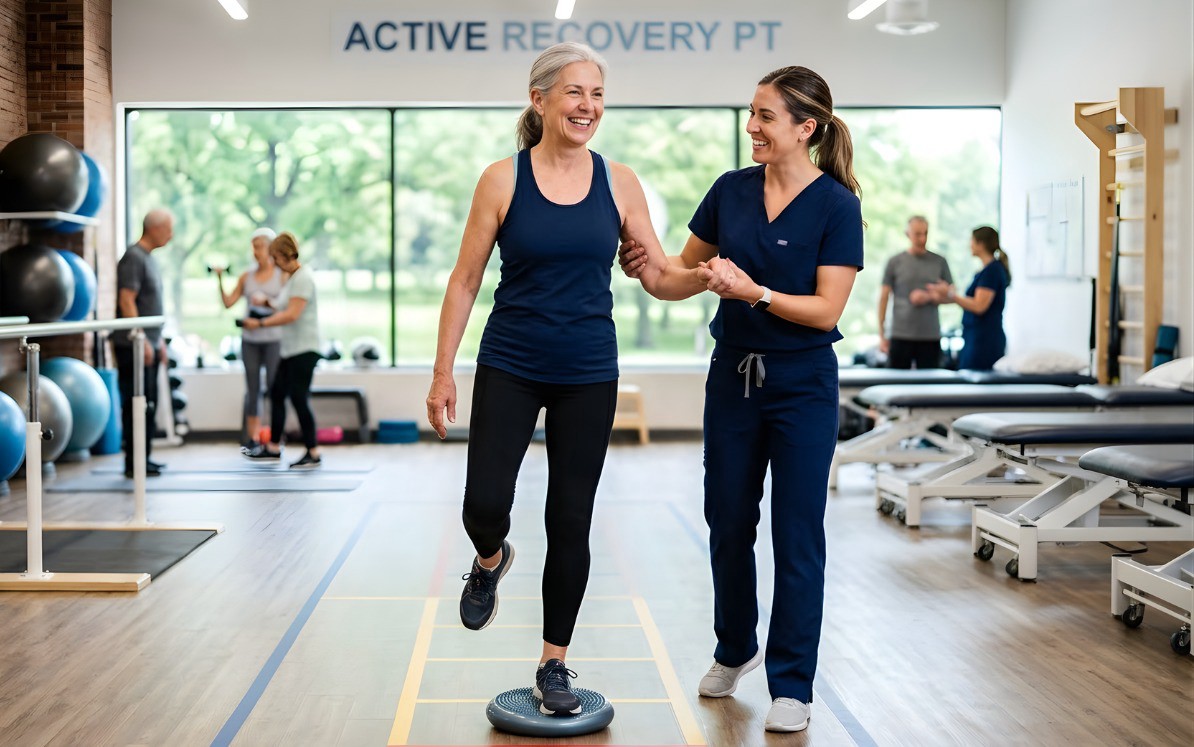
Beyond the musculoskeletal, iMotion's care extends to neurological and systemic conditions. Balance disorders and fall prevention programs address one of the most significant safety concerns for older adults, combining assessment of vestibular function, proprioception, and strength to create comprehensive balance rehabilitation. The Parkinson's Wellness Recovery program offers specialized neurological physical therapy to people with this progressive disease, helping them stay independent, mobile, and functional at all stages.
Chronic pain conditions like fibromyalgia, complex regional pain syndrome, and ongoing pain that hasn't improved with other treatments can improve with the complete care that skilled physical therapy offers. Understanding the relationship between movement, nervous system sensitization, and pain experience is a sophisticated clinical skill that iMotion's therapists bring to every patient encounter.
The Techniques That Make the Difference
The range of conditions that respond well to physical therapy is broader than most people realize. iMotion treats patients across the full spectrum of musculoskeletal conditions - head, neck, and spine issues, including cervical pain and disc problems; shoulder conditions from rotator cuff injuries to frozen shoulder; elbow, wrist, and hand problems that can severely limit daily function; hip conditions including labral tears and post-replacement rehabilitation; knee issues spanning ligament injuries, osteoarthritis, and post-surgical recovery; and foot and ankle problems including plantar fasciitis, Achilles tendinopathy, and ankle instability.
Manual therapy involves hands-on techniques like moving joints, working on soft tissues, and releasing tight areas, which help with problems that exercise alone can't fix. The Mulligan Technique is a type of manual therapy that involves changing joint positions while the patient moves, and it works well for some joint problems that haven't improved with other treatments.
Shockwave therapy delivers focused acoustic energy to chronic tendon and soft tissue conditions - Achilles tendinopathy, plantar fasciitis, calcific shoulder tendinitis - where healing has stalled and conventional approaches have provided insufficient relief. The biological response to shockwave energy stimulates tissue regeneration and neovascularization in a way that can restart a healing process that has plateaued.
Laser therapy uses specific wavelengths of light to support cellular energy production and reduce inflammation in injured tissues, accelerating the healing response and reducing pain with a non-invasive, comfortable treatment. Laser therapy offers a powerful complement to manual and exercise-based treatment for patients with acute injuries, post-surgical inflammation, or conditions that involve nerve sensitivity.
Aquatic therapy provides a special setting for patients whose pain or functional limitations make land-based exercise difficult or counterproductive. The buoyancy of water reduces joint loading while the resistance it provides challenges muscle strength and coordination. For post-surgical patients, individuals with severe osteoarthritis, or anyone for whom weight-bearing exercise is currently too painful, aquatic therapy creates a pathway to movement and strength gains that would otherwise be unavailable.
The AlterG anti-gravity treadmill lets patients walk or run while supporting some of their body weight, which helps them recover their walking ability, leg strength, and heart health after surgery, neurological issues, or injuries that make it too soon for them to do full weight-bearing exercise. This technology dramatically expands what is possible in the early stages of rehabilitation.
The iMotion Approach: Comprehensive, Personalized, Whole-Person Care
What distinguishes exceptional physical therapy from adequate physical therapy is not the equipment or even the individual techniques - it is the quality of clinical reasoning, the depth of patient-therapist relationship and the integration of all available tools around a clearly understood individual goal.
At iMotion, the care model begins with thorough evaluation and a genuine conversation about what the patient wants to be able to do - not just the symptom they want to reduce, but the activity they want to return to, the independence they want to maintain and the life they want to be living. Treatment is then built around that goal, drawing on the full range of iMotion's capabilities across physical therapy, occupational therapy, acupuncture, medical massage, and speech-language pathology when the clinical picture calls for it.
This integrative approach reflects a fundamental truth about human health: the body is not a collection of separate parts, and the conditions that limit movement and quality of life rarely have single, isolated causes. The patients who achieve the best outcomes are those whose care addresses the whole picture - and whose therapists have both the skills and the institutional support to do so.
Conclusion
Living with pain and limited mobility is not inevitable. For most people dealing with muscle and joint pain, trouble moving, recovery after surgery, or changes in how their body works, physical therapy provides a proven way to help them live a more active and comfortable life.
The first step is simply beginning. iMotion physical therapists meet patients exactly where they are - without judgment, without assumptions about what is or isn't possible - and build from there, one session at a time, toward the goals that matter.


