
 Menu
Menu

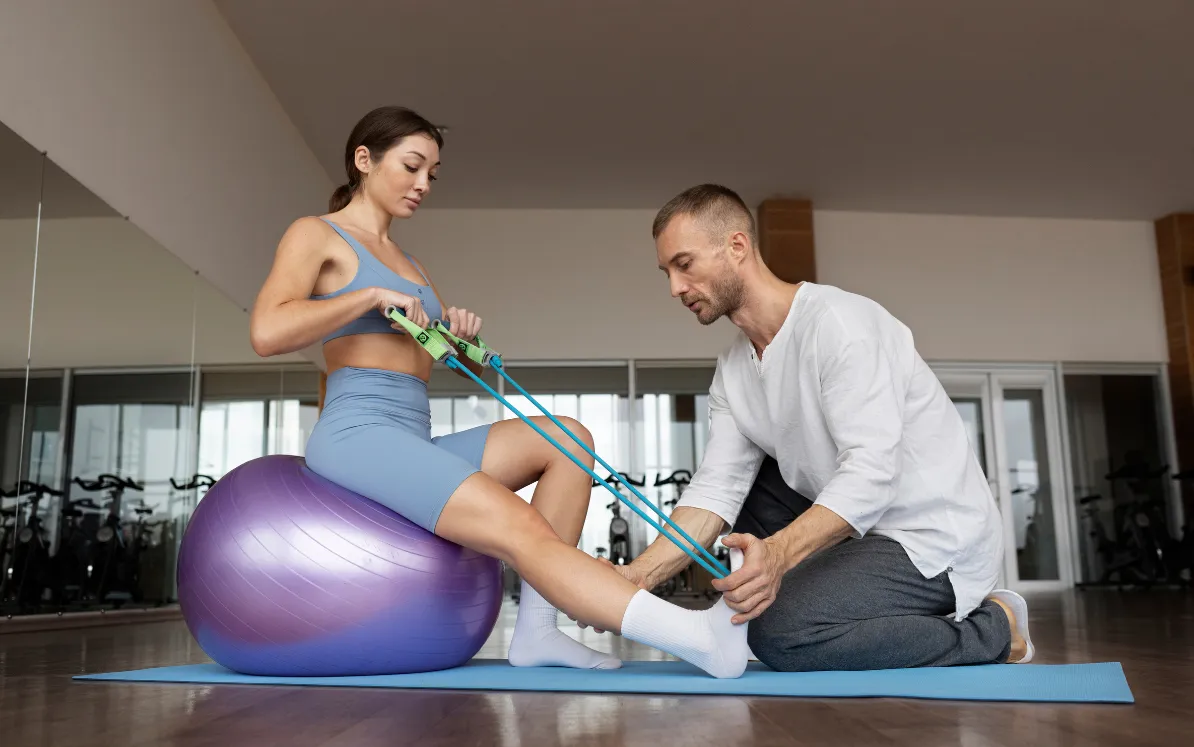
How Sports Physical Therapy Builds Strength, Stability, and Flexibility
Success in the athletic arena is not solely the outcome of a person's natural talent or continual rigorous physical rehearsal. The strength, stability and flexibility help the body to function efficiently by helping it adapt to physical load and recover from activity with ease. If one of these areas is restricted, athletes can suffer from diminished performance, limitation of movement and/or increased risk of injury. At Sports Physical Therapy we offer a systematic and effective means of enhancing these physical attributes and facilitating safe and sustainable athletic development.
Before designing a programme based on the goals and sport participation of the individual, a sports physical therapist can evaluate the sport and goals, along with the individual's movement patterns, muscle strength, joint function, and joint flexibility. Targeted therapy can be used in conjunction with regular training to develop proper movement habits and increase physical capacity regardless of whether the athlete has sustained an injury and/or recovery or is simply looking to enhance their physical capacity.
Understanding the Role of Sports Physical Therapy
Physical therapy for sports emphasises the biomechanical aspects of sports during training. It can be used by injured athletes looking for recovery time to make up for weaknesses, mobility restrictions and body movement patterns which could pose an adverse effect on performance. Pain treatment is not restricted to the area of pain. A therapist might make a kinematic assessment to see how all joints and muscles move together when moving.
Strengthening activities, mobilising activities, balance activities, neuro-muscular activities and sport-specific activities may be included in a personalised programme. To enhance the control and condition of the athletes to maximise development without exacerbating unduly the load on vulnerable areas.
If you're looking for rehabilitation that's nearby, sports injury therapy from Fremont offers authoritative assistance for prevalent sports-related conditions. There is also a specialist sports injuries clinic which may be able to provide assessment and rehabilitation to an athlete based on their activity, injury history and return-to-sport goals.
Why Strength, Stability, and Flexibility Matter in Sports
Strength, stability and flexibility are intimately linked and contribute to efficient controlled movement. Sports' training needs to be balanced, and sticking with one item could mean another physical ability is missed out.
Importance of Strength for Athletic Performance
Strength is the ability to produce and regulate force within the muscles during running, jumping, lifting, throwing and other physical movements associated with sport. Well-developed muscles can also assist joints and movements of the body under physical strain.
In sports physical therapy, areas of strength may be discovered throughout the body or between muscles on one side compared to the other. The correct exercises for strengthening can then be gradually introduced, starting with controlled movement and working up to increasing resistance and sport-specific strengthening.
Building up strength following an injury is also a key component after injury because there may be a time period when someone experiences a lower level of activity which results in weakness in the muscles. Rehabilitation can be accomplished with a progressive programme and respecting the healing process.
Role of Stability in Injury Prevention
Stability is the ability to be able to control the body and joint positions during the movement. Athletes should have stability when changing direction, landing, accelerating, decelerating or staying balanced during sport.
If there is poor stability, there can be inefficient movement patterns, and they may put extra pressure on surrounding tissues. Under controlled movement, physical therapists can enhance joint stability and co-ordination, assisting athletes to move with more control when performing basic and complex movements.
Benefits of Flexibility for Better Movement
Flexibility means that joints and muscles can move the proper amount. Good quality movement can lead to efficient athletic movements and could help athletes keep their movement good.
Flexibility exercises may be included in flexible programmes, including dynamic movements, controlled stretch and mobility exercises selected based on the athlete's needs. Instead of trying to be as flexible as possible in all directions, therapy is directed towards attaining beneficial mobility that will meet the requirements of a specific athletic activity.
How Physical Therapy Improves Stability and Balance
Players who engage frequently in quick and unpredictable or single-leg movements must be balanced and stable. These skills can be gradually tested using physical therapy exercises that enhance body awareness and use of movement.
Balance and Proprioception Exercises
Proprioception: The perception of body position and of bodily movements. It assists in helping athletes locate their limbs without having to always use visual cues.
Single-leg balance exercises, unstable surface activities and sport-specific drills, and controlled weight moves are just some of the activities a physical therapist might teach to challenge your proprioception. As the athlete gains control over his movements, the exercises can gradually be increased in difficulty.
Joint Stability Training
Joint stability training targets strengthening muscle movement around and supporting major joints like the ankle, knee, hip and shoulder. Resistance and functional movement patterns can be used in exercises, as well as controlled loading.
Joint stability exercises may be especially beneficial when rehabilitating an injured athlete, as they allow for restoration of confidence and control prior to moving over to more demanding movements.
Movement and Neuromuscular Training
Neuromuscular training emphasises the co-ordination of muscle movement from a neuromuscular perspective. Practising landing mechanics, changes of direction, accelerating, decelerating and controlled sport-specific movements are allowed for athletes.
These patterns can be improved to facilitate more optimised movement, and athletes can develop awareness of the body's response to various physical demands.
How Sports Physical Therapy Supports Injury Prevention
Prevention of injuries is an important component of sports recovery. While no good programme can exclude the possibility of injuring an athlete, remedying limitations to the athlete's movement can help support safer movement and preparation for demanding movements.
A sports physical therapist might be able to recognise strength imbalances, limited movement, poor movement mechanics, and inadequate conditioning. These findings can be used to plan a preventative programme using exercises that target particular areas.
Sports therapy for athletes may also teach athletes the importance of workload management. A rapid increase in training intensity could put undue strain on joints, tendons and muscles. Gradual increase enables the body to build up to the demands.
Businesses offering sports rehabilitation may also expand on the value they offer sports preventative and performance services. A clinic which focuses on the rehabilitation of injuries, as well as strength, mobility and movement education, can assist athletes at various stages of their sports careers, not just after an injury.
What to Expect During a Sports Physical Therapy Programme
Each sports physical therapy programme will vary in its plan and approach due to the nature of the condition, the sport and the goals of the athlete. Most programmes are accompanied by discussing the assessment at the start and progressing as per individual response.
Initial Physical Assessment
The first assessment typically looks at strength, flexibility, joint mobility, balance, coordination and movement patterns. The therapist might even talk about specific sporting needs, previous injuries and training plans that the athlete has.
This information enables priorities to be set and provides a benchmark to measure progress to.
Personalised Exercise Programme
After the assessment, the therapist designs drills based upon what the athlete is able to do. Basic strength and movement activities may be practised initially and then worked up to balance activities, resistance movements and sport-specific movements.
The programme may be modified as fitness for strength/control increases. Slow gradation helps to keep exercises challenging but not too demanding.
Ongoing Progress Monitoring
The therapist can determine progress and the need for further work using regular monitoring. Exercises can be progressed by increasing resistance, repetitions, and the complexity of the movement or sport-specific demands.
Monitoring can be particularly beneficial for athletes who are returning to play, as one must assess the athlete's physical status in conjunction with his/her confidence and functionality.
Building Long-Term Athletic Performance Through Physical Therapy
Sports physical therapy can exert a long-term impact on sporting progress in different methods, such as educating athletes in their unique human body movements and reactions to exercise. The benefits might not just be for a person's injury.
By regular strengthening, physical ability can be enhanced and mobility work will facilitate movement. By making use of balance and neuromuscular training, athletes will have control in difficult movements; education can help them understand the need for recovery, preparation and slow pacing.
Physical therapy for los gatos, los gatos physical therapy and los gatos sports therapy can offer your athletes professional evaluation and rehab services. Athletes looking for sport injury management, performance enhancement and preventative rehabilitation needs will be able to access local sport therapy services that benefit businesses, as a one-stop approach is possible.
A comprehensive approach also can provide care continuity opportunities. An athlete may start by treating an injury and then be able to progress in a rehab programme before transitioning to a strength or movement programme. This can enhance patient experiences and improve physical therapy practices by allowing them to offer services that meet various levels of athletic development.
Conclusion
Strength, stability and flexibility go hand in hand with effective athletic movement. Sports physical therapy offers a systematic approach to building these attributes and addressing individual causes of limitations and previous injuries and sport-specific demands.
Physical assessment, individualised exercise plans, balance training, joint stability training and neuromuscular exercises enable athletes to slowly develop the physical course that's necessary for their advanced tasks. Another way in which sports therapy can help is when it comes to preventing injuries; progression of weakness and movement restrictions can be detected before they are of consequence.
Sports injury therapy from Fremont Care or support from a sports injuries clinic or specialised Los Gatos sports therapy can facilitate a focused and progressive treatment for sports injuries. Sports therapy professionals can support the evolving needs of sports people by delivering integrated assessment, rehabilitation and performance services to help provide a consistent professional service to sports people across their sporting careers.
Frequently Asked Questions
Q1. How does flexibility improve performance in sports?
Flexibility improves range of motion, movement efficiency, balance, and coordination, helping athletes perform sports-specific movements more effectively while reducing muscle strain.
Q2. How does physical therapy help athletes?
Physical therapy helps athletes recover from injuries, restore strength and mobility, improve movement patterns, and safely return to training and competition.
Q3. Does sports therapy help prevent injuries?
Yes, sports therapy can help prevent injuries by identifying movement limitations, strengthening weak areas, improving flexibility, and teaching proper movement and exercise techniques.
Q4. How does physical therapy improve flexibility?
Physical therapy improves flexibility through stretching, mobility exercises, manual techniques, strengthening, and personalised movement programmes designed to increase joint and muscle range.
Q5. Is sports physical therapy useful after an injury?
Yes, sports physical therapy supports recovery by reducing movement limitations, rebuilding strength, restoring function, and guiding athletes through a safe return-to-sport programme.


