
 Menu
Menu

LCL, MCL, or PCL Injuries
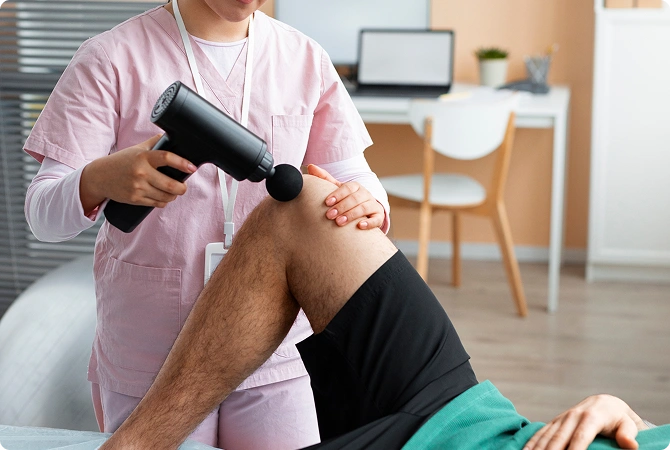
LCL, MCL, and PCL injuries involve stabilizing ligaments in the knee that help control how the joint responds to force and direction during movement. Many people notice symptoms during activities that involve uneven surfaces, sudden direction changes, twisting, or unexpected stress through the knee. For some, symptoms begin suddenly. For others, they develop more gradually or appear only during specific movements.
The knee relies on several ligaments working together to guide motion. When one of these ligaments is involved, certain movements may feel more challenging or less predictable. Knee ligament injury symptoms often vary depending on activity level, surface, and how the knee is being used.
Understanding LCL, MCL, And PCL Injuries
Ligaments are strong bands of tissue that connect bones and help guide joint movement. In the knee, different ligaments manage stability in different directions. While these injuries are often grouped together, each ligament plays a distinct role and affects movement in ifferent ways.
LCL Injuries (Outer Knee Support)
What the LCL does: The LCL (lateral collateral ligament) supports the outer side of the knee and helps control movement when force is applied from the inside toward the outside of the knee.
How LCL injuries affect movement: When the LCL is involved, movements that stress the outer knee—such as side-to-side shifts or uneven ground—may feel less supported.
What people often notice:
- Discomfort along the outer knee
- Difficulty with side-to-side movements
- Uneasiness on uneven surfaces
MCL Injuries (Inner Knee Support)
What the MCL does: The MCL (medial collateral ligament) supports the inner side of the knee and helps resist inward stress during weight-bearing activities.
How MCL injuries affect movement: With an MCL injury, movements that load the inner knee—such as turning or pivoting—may feel more uncomfortable or less controlled.
What people often notice:
- Discomfort along the inner knee
- Sensitivity during twisting or turning
- Difficulty trusting the knee during daily movement
PCL Injuries (Backward Stability Control)
What the PCL does: The PCL (posterior cruciate ligament) helps control backward movement of the lower leg and supports the knee during bending and weight-bearing.
How PCL injuries affect movement: When the PCL is involved, activities that require controlled bending—such as stairs or downhill walking—may feel more ifficult.
What people often notice:
- Discomfort during bending movements
- Difficulty with stairs or downhill walking
- Stiffness or swelling after activity
How LCL, MCL, And PCL Injuries Can Affect Daily Life
Although each ligament plays a different role, injuries to any of them can influence how comfortable and controlled movement feels throughout the day.
People may notice changes with:
- Walking on uneven or unpredictable surfaces
- Turning or changing direction
- Weight-bearing tasks such as standing or stairs
- Daily movement routines that require balance and control
Over time, some people adjust how they move to stay comfortable, which can influence activity choices and routines.
How Physical Therapy Can Help
Physical therapy for knee ligament injuries focuses on improving how the knee responds uring real-world movement. Care emphasizes strength, coordination, balance, and how the knee works with the hips and ankles.
A physical therapist may assess walking, turning, stair use, and other functional tasks. Care is guided by how LCL, MCL, or PCL injury symptoms affect your daily life and which movements are most important to you.
Common Features Of LCL, MCL, And PCL Injuries
These describe general behavior patterns, not diagnostic criteria.
Common features may include:
- Direction-specific discomfort or instability
- Symptoms that appear during certain movements
- Swelling or stiffness after activity
- Symptoms that change with activity level
LCL, MCL, And PCL Injury Symptoms You May Experience
This section describes what these injuries may feel like during daily life. You may notice:
- Knee discomfort during specific activities
- A sense that the knee feels less supported in certain directions
- Swelling after movement
- Tightness or stiffness around the knee
Frequently Asked Questions
ACL injuries often affect forward and rotational control. LCL, MCL, and PCL injuries more commonly affect side-to-side or backward stability. A physical therapy evaluation can help identify movement patterns without relying on assumptions.
Recovery experiences vary. Some people notice improvement with time and movement support, while others benefit from guided care. Physical therapy focuses on helping the knee move more comfortably and confidently rather than predicting timelines.
Each ligament supports the knee in specific directions. If a ligament is involved, instability may show up only during movements that challenge that direction, such as turning, uneven surfaces, or bending under load.
Not always. Many movement patterns and symptoms can be understood through a physical therapy evaluation focused on function and movement, rather than imaging alone.
Yes. Many people notice symptoms during daily activities like walking on uneven ground, turning, or using stairs.
No. Many people manage LCL, MCL, or PCL injury symptoms conservatively. Physical therapy often focuses on improving movement quality and confidence.
Yes. Physical therapy can help address movement challenges even when symptoms vary.
Related Conditions
Some people with LCL, MCL, or PCL injuries also explore:
These pages focus on different knee-related movement experiences that may overlap but have istinct patterns.
Learn More About Physical Therapy
If you’d like more information about what to expect during physical therapy, visit our Patient Resources page.
Get Started
If you’re experiencing LCL, MCL, or PCL injury symptoms and they’re affecting your daily life, a physical therapy evaluation may help identify movement patterns, contributing factors, and next steps for care.


