
 Menu
Menu

Sports Injuries
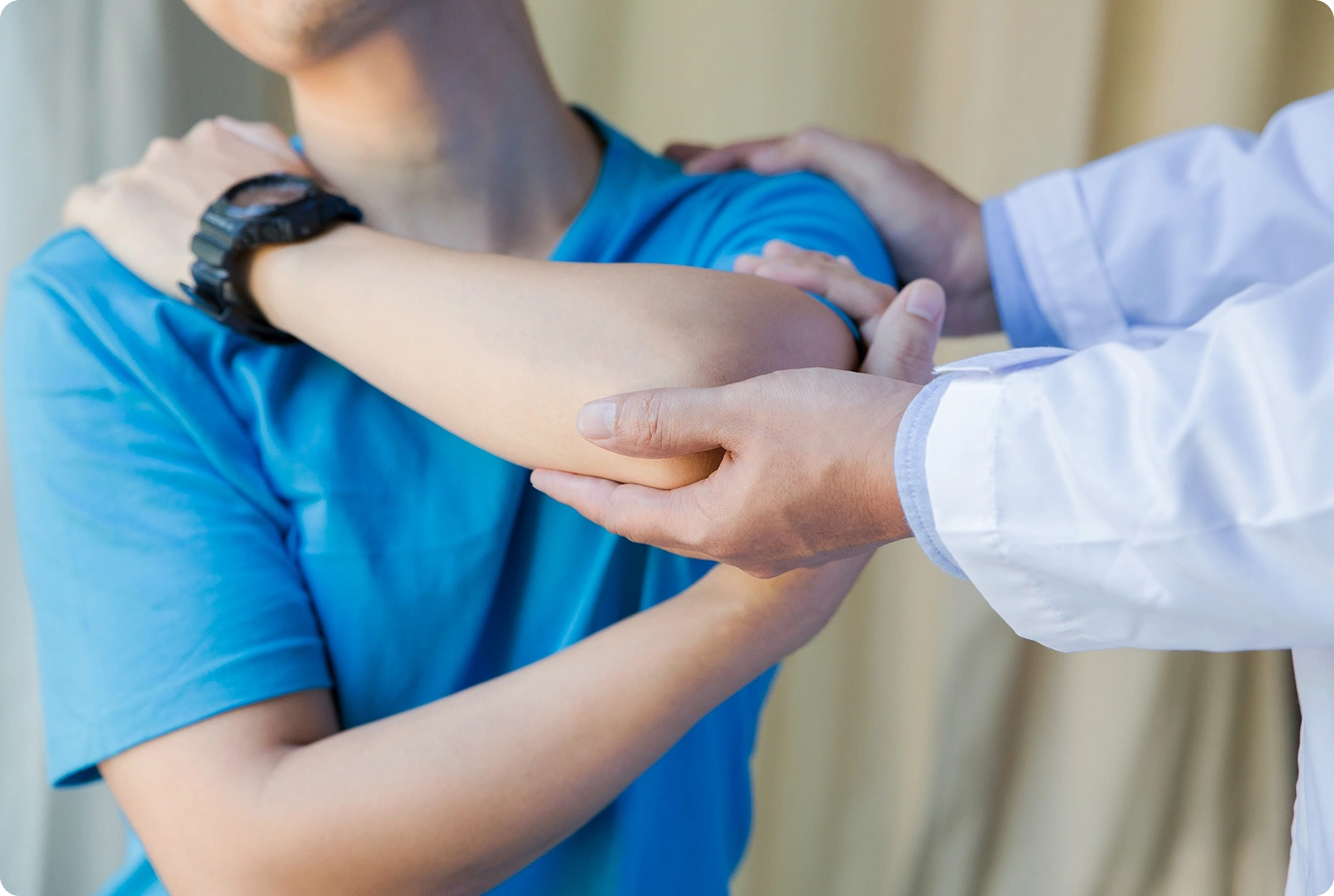
Sports-related elbow injuries, sports-related wrist injuries, and sports-related hand injuries occur when the upper extremity is exposed to repetitive stress, high-force demands, impact, or sudden changes in load during athletic or recreational activity. These injuries affect how the arm and hand move, stabilize, and transfer force during performance.
Symptoms may begin suddenly after a specific incident or develop gradually as training volume, intensity, or frequency increases. While these injuries often start during sport, they frequently carry over into daily life—making routine tasks that require strength, coordination, or endurance feel more difficult.
Because sports place unique and repeated demands on the elbow, wrist, and hand, recovery often requires restoring movement efficiency and tissue tolerance rather than rest alone.
How Sports-Related Injuries Affect Movement And Performance
Athletic activities challenge the upper extremity through speed, repetition, load absorption, and precise coordination. When tissues are stressed beyond their current tolerance, movement may become uncomfortable, less efficient, or harder to control—especially under fatigue or higher intensity.
To keep coverage balanced, sports-related injuries commonly affect each region in ifferent ways:
Sports-Related Elbow Injuries
Elbow injuries in sports often affect throwing, pushing, pulling, or weight-bearing movements. Athletes may notice discomfort, stiffness, or reduced control during repetitive or high-load arm activity, particularly with increased volume or intensity.
Sports-Related Wrist Injuries
Wrist injuries in sports commonly affect activities that require force transmission through the hand, such as racquet sports, weight training, or impact-based movements. Symptoms are often most noticeable during weight-bearing or rapid changes in wrist position.
Sports-Related Hand Injuries
Hand injuries in sports tend to affect precision, reaction, and endurance during gripping or object handling. Rather than constant pain, athletes may notice early fatigue or reduced control during activity.
Across all regions, symptoms often fluctuate with training demands, recovery time, and overall workload.
How Physical Therapy Supports Sports Injury Recovery
Physical therapy for sports-related elbow, wrist, and hand injuries focuses on restoring movement quality, strength, and load tolerance while addressing the specific demands of sport and activity.
Rather than focusing only on symptoms, care is designed to rebuild capacity for speed, repetition, and control so the arm and hand can safely handle return-to-sport demands.
Physical therapy may help by:
- Restoring range of motion and joint control
- Improving strength, endurance, and coordination
- Addressing movement patterns that increase tissue stress
- Gradually reintroducing sport-specific speed, load, and repetition
- Supporting a safe and confident return to sport and activity
Care is individualized and progresses based on symptoms, activity demands, and performance goals.
Common Features Of Sports-Related Elbow, Wrist, And Hand Injuries
Athletes with sports-related upper extremity injuries often experience:
- Symptoms that appear during or after activity
- Reduced tolerance for repetition or sustained effort
- Stiffness or soreness between training sessions
- Changes in movement quality or timing
- Hesitation or reduced confidence with sport-specific tasks
These patterns often reflect tissue overload rather than a single traumatic event.
Symptoms You May Experience
Symptoms associated with sports-related elbow injuries, sports-related wrist injuries, and sports-related hand injuries may include:
- Activity-related pain or soreness
- Localized stiffness or swelling
- Reduced endurance with repetitive use
- Changes in coordination or movement control
- Difficulty performing sport-specific skills at usual intensity
Symptoms may ease with rest but often return when activity demands exceed current tolerance.
Frequently Asked Questions
No. These injuries are common in recreational athletes, fitness participants, and individuals whose hobbies place repeated demands on the upper extremity.
Not always. Many sports injuries of the elbow, wrist, and hand develop gradually due to repetitive stress, training progression, or insufficient recovery.
Complete rest is not always necessary. Many people benefit from guided activity modification and gradual progression, which physical therapy helps support safely.
Physical therapy helps rebuild movement efficiency, strength, and tolerance so sport-specific demands can be reintroduced in a controlled and progressive way.
Related Conditions We Treat
Sports-related injuries are part of a broader group of elbow, wrist, and hand injuries, including:
Learn More About Physical Therapy
If you’d like more information about what to expect during physical therapy, visit our Patient Resources page.
Get Started
If pain, stiffness, or reduced performance from a sports-related elbow injury, sports-related wrist injury, or sports-related hand injury is limiting your ability to train, compete, or enjoy your activities, a physical therapy evaluation can help guide appropriate next steps for recovery and return to activity.


